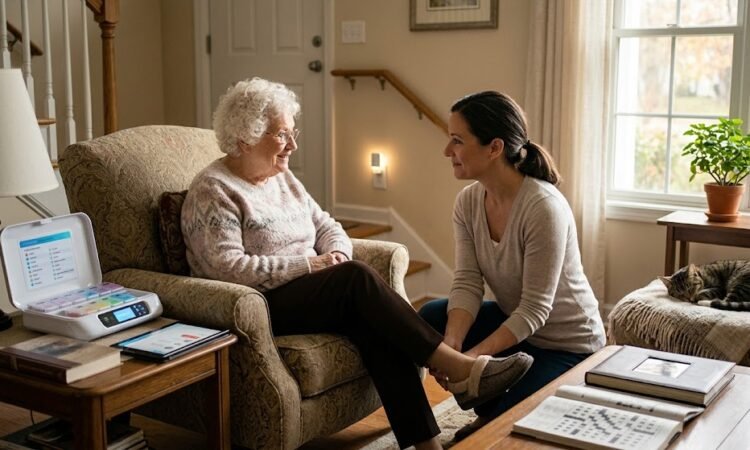
As our parents and loved ones ages, their daily routines, mobility, and healthcare requirements naturally increased due to their weak health condition, reduced mobility and special digestive needs, and in this situations they need more support from other family members and even sometimes also needed external nursing care. In this article we have explored about parents ageing transition, which may feel difficult for families initially, who are balancing both professional careers, personal lives, and also have to take care of an Old age relative a their home.
Today, aging, means staying in the comfort, familiarity, and independence of one’s own home, has transitioned from a personal preference into a new era of technology supported activity. Thanks to modern AgeTech, Remote Patient Monitoring (RPM), and personalized care strategies, todays older adults can maintain their independence far a longer time with staying more safer that they used to be earlier.
In this article we are braking down everything which you need to know about setting up effective and complete elderly care at home, from evaluating functional mobility needs to implementing smart safety modifications and saving expensive external nursing cost.
- Understanding the Spectrum of Home Care Needs
Before implementing a elderly care plan, families must evaluate their loved one’s current life skill abilities. In eldercare, functional independence is assessed using following two clinical benchmarks:
- Activities of Daily Living (ADLs): Identifying Essential basic tasks required for personal self-care. These include functional mobility including getting in and out of bed/chairs, personal hygiene, bathing, dressing, toilet hygiene, and self-feeding etc.
- Instrumental Activities of Daily Living (IADLs): Identifying More complex daily tasks necessary for community living. These includes meal preparation, light housekeeping tasks, managing finances, taking prescribed medications correctly, shopping for necessities, and handling transportation etc.
Evaluating all the Care Needs to Elderly People:
- Companion Care Focuses on light IADLs such as meal preparation, Doing House Chores, social interaction etc.
- Personal Care Aides Assists with core ADLs including bathing, dressing, mobility support etc.
Skilled Home Health Clinical care such as Wound dressing, Physical therapy, chronic disease management etc. - Specialized Memory Care including support for Alzheimer’s and cognitive decline
By Understanding where other family members are unable to support elderly across the above mentioned ADLs and IADLs, needs necessity to arrangement and support required even from External Nursing Assistants and Facilities so elderly can do those tasks with easing to their personal capacity.
- The Modern AgeTech Revolution: Enhancing In-Home Safety
The area of senior care has changed significantly today with more technology based support. Aging in place is now supported by smart home ecosystems and advance clinical technologies and on time support that may offer peace of mind to families without compromising their senior’s privacy and their own hectic schedule.
Understand the AgeTech Home Ecosystem
- Remote Patient Monitoring (RPM), this sends important alerts directly sent to doctors, nursing assistants and family members
- Ambient Motion Flooring & Fall Sensors, as by Installing soft floor mat and wooden floor, radar tech to track mobility and fall detectors helps to detect and reduce fall damage of old age people.
- Smart Medication Dispensers including Time bound automatic dispensing, locking and alerts for medicines helps to keep their medication on track.
- Voice-Activated Smart Assistants: including Hands-free emergency calls devices are useful for easy help calling as and when required to old age people.
Key Technologies Which are Transforming Adult Home Care:
- Remote Patient Monitoring (RPM): Wearables and connected health devices track blood pressure, glucose levels, heart rate, and oxygen levels in real-time. Abnormal readings will automatically trigger alerts to health providers or family member, by preventing health emergency with early updates.
- AI-Enabled Fall Detection Systems: Modern fall monitoring has moved above manual panic buttons. Ambient radar sensors and smart flooring detect apps detects sudden impacts or unusual prolonged inactivity without requiring the old age person to actually wear a device.
- Automated Medication Management: Smart dispensers organize daily doses, unlock only at scheduled times, sound audio reminders, and notifications to caregivers and family members via a mobile app if a dose is missed by elderly.
- Telehealth Hybrid Models: Virtual Routine Health check-ups, Online wound assessments, and cognitive therapies can now be conducted directly from the living room, saving fragile seniors from high-stress trips to medicals aid centers and clinics.
- Apps for Immediate Nursing and Medical Care: There are many applications available which provide facility to call immediate nursing help as well as online prescribed medicines delivery which eased life of Elderly and their family members.
- Room-by-Room Home Safety Audit for Adult Care
Surrounding and Home hazards are remain a primary cause of accidental injury in elderly people. According to the World Health Organization and CDC, regular physical activity combined with home hazard elimination drastically reduces fall risks among older the adults.
Conduct a walkthrough of the home using this targeted safety assessment:
Room-by-Room Safety Priorities
- Bathroom: Heavy-duty grab bars, non-slippery rubber mats, walk-in hand held shower area, shower pipes or shower chair
- Hallways & Stairs: Dual handrails, motion-sensor on-off lights, high safe step edges and home lifts and elevators
- Living Room: Clear walkway paths, eliminate throw rugs, tuck away electrical cords
Bedroom: Firm mattress edge, remote operated or easy accessible bedside and room lights, clear bedside to bathroom path
Key Surrounding Modifications for Elderly Safe Home:
- Eliminate Tripping Hazards: Remove all decorative rugs, secure loose carpets, and extension cords and baseboards for easy access.
- Upgrade Lighting Architecture: Older eyes require higher contrast and up to three times more light. Replace low-wattage bulbs with bright LED fixtures in stairwells, dark entryways, and hallways. Install motion-activated electrical lights on rooms and or along the route from the bed to the toilet.
- Reinforce High-Risk Zones: Bathrooms falls are happens on major level with elders. Install a grab bars next to the toilet and inside the shower helps to prevent bathroom falls. Never rely on regular towel racks for support as they can break. Use non-slippery tiles and silicone mats and consider a modified easy to access toilet seat and handheld showerhead helps more easy and safe access for elderly.
- Holistic Health: Nutrition, Cognitive care, and Social Connection
Physical safety is only one half of the challenge against elderly as mostly there is need of mental, emotional, and nutrition care also required to old age people from their family members.
4 PILLARS OF ELDERLY WELLNESS
- Nutritional Balance: Every elderly needs a special diet as their body is changing due to ageing and needs specific nutrition for better body energy retention.
- Easy and gentle Mobility: Personal Mobility is at risk as body joints starts weakening over the age, an effective mobility support eases life of elderly.
- Mental Ability and Cognitive Stimulation: Alzheimer and loss of memory are the primary signs of Ageing, many elderly has to undergone medical treatment and therapy to keep their mental ability up.
- Strong Social Connection and Empathy: Social and family member empathy and support is necessary to every elderly in their day to day routine.
Nutritional Balance and Hydration of Old Age Poeple
Sense of thirst and appetite often loses with the ageing. Serve nutrient-rich, high-protein, and high-fiber diet every day to support muscle retention and digestive health in Elderly. If chewing or swallowing becomes difficult due to teeth issue, then provide softer food options such as mashed food items, soups, purées, or small, snack-sized food items throughout the day for better satity and nutrition. Keep fresh water, herbal teas, or hydration liquids within easy reach to elderly at all times, so they dont have to struggle.
Gentle Physical Mobility
Inactivity for a longer hours in elderly can accelerates functional mobility loss and joints stiffness. Simple daily routines, such as a 15 minute morning walk, chair exercises, or light body stretching can preserve better joint flexibility, build leg strength, and boost better mood.
Cognitive Stimulation & Memory Support
To help slow cognitive and mental remembering ability, try of engage aging adults in purpose-driven mental skill involved activities. Word games, jigsaw puzzles, reading, listening to calm and classic music, or participating in simple household chores such as folding laundry or gardening can nurture their sense of accomplishment and preserve their cognitive strength.
Combating Isolation
Chronic loneliness carries major health risks in comparable to smoking or obesity. Establish a weekly schedule that includes regular video calls and physical visit with distant family members, visits from friends or neighbours or local volunteers, and trips to local community centers. As this will refresh their day and help to bring positivity and happiness in elderly.
- Protecting Family Caregivers from Excess Life Stress
Caring for an aging parent is not that easy, and managing it alone can lead to extreme physical and emotional stress. Caregiver person may go into depressed and can compromises health of both self and elderly person well-being and it impacts on the quality of elderly caregiving.
Essential Tips: Seeking support is not a failure, it is a need for providing sustainable long-term care.
Strategies for Sustainable Caregiving:
- Specialized Old Age People Events and Programs & Respite Care: Adult day centers offer supervised socialization, meals, and activities for seniors during business hours, giving family caregivers essential sessions of time to work, rest, or handle personal tasks.
- Divide Equal Family Responsibilities among Family Members: Avoid placing the entire work load of elderly care on a single person. Create a shared care calendar in entire family members and even appoint external nursing care expert to divide duties the elderly care duties. Such as, One person may handles online grocery ordering or physical delivery, another manages insurance paperwork, and another handles weekend doctor visits and medicine supply. One handles their nutrition and required mobility care.
- Join Local or Online Support Groups: Interacting with people who are doing similar caregiving for their elders helps to understand the important aspects, validation and practical tips so one can take better care of their elderly.
- Comparing Care Pathways: Home Care vs. Assisted Living
Choosing the right care setup requires a balancing independence, medical necessity, and separate family budgets and support.
- Criteria: Living Environment, In-House Care: Private home surrounded by familiar items, Living Facility: Private or semi-private apartment in a community residency preferably with a joint family.
- Criteria: Care Flexibility, In-House Care: Customizable (from 2 hrs/day to 24/7 care), Living Facility: Standardized care tiers and on-site staff
- Criteria: Technology Integration, In-House Care: Highly personalized (AgeTech, RPM, Smart Sensors, Living Facility: Community-wide monitoring systems
- Criteria: Social Dynamics, In-House Care: Requires intentional scheduling of regular community visits, Living Facility: Built-in social events, communal dining, and Social and Elderly clubs
- Criteria: Cost Model, In-House Care: Hourly or service-based fees, Living Facility: Self or Close Family member Owned House, Monthly residential rental fees + care add-ons
- Criteria: Best Fit For, In-House Care: Seniors wanting independence with fulfilling required help, Living Facility: Seniors needing continuous supervision & community support
7. Actionable Checklist: How to Start Today
- Conduct a Needs Assessment: List our activities and tasks where your elderly family member needs support across core ADLs and IADLs.
- Perform a Safety Audit: Clear walkways, proper lighting, and install bathroom and home, stairs handles grab bars and Lifts, Wheel Chair Ramp, Escalators etc.
- Integrate Basic Technology: Introduce simple AgeTech solutions like automated pill dispensers, motion-sensor lights, or smart voice assistants will provide ease and experience of self reliance to elderly.
- Assemble a Care Network: Involve family members, consult with home healthcare agencies, and schedule regular primary care with routine physician visits and consultation.
- Start Step by Step: Add elderly care with step by step changes, such as a helper visiting twice a week, to help your old age relative to adjust comfortably with their new routine.
We hope the above step by step information on New Age Elderly Care will help you for supporting aging family members in their daily routines and supports in improving their lifestyle.

Senior Editor, Holistic Wellness & Preventive Health
M.Sc. in Public Health Nutrition, Delhi University
Pooja Mehta joined Gymbag in 2018 with a background in public health and community-based wellness education. With over a decade of experience in nutrition strategy and preventive care, she specializes in practical, culturally-aware health tips that empower people to make long-term changes.