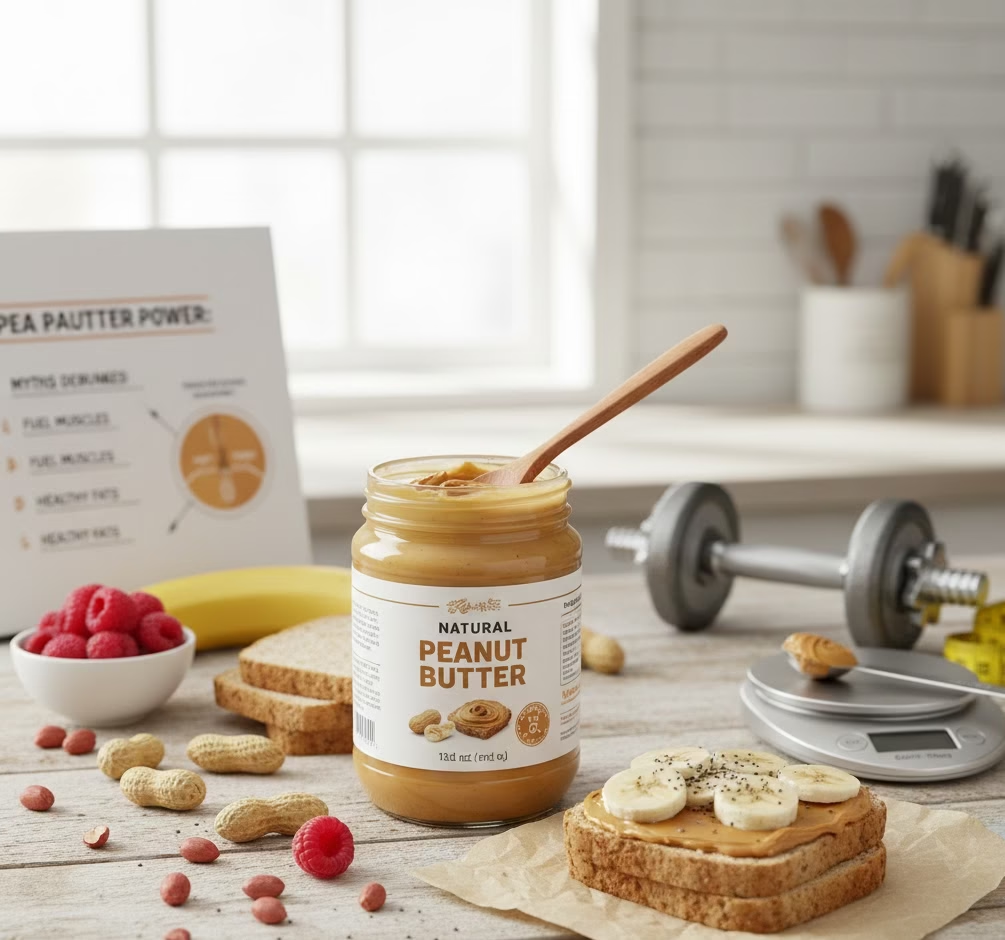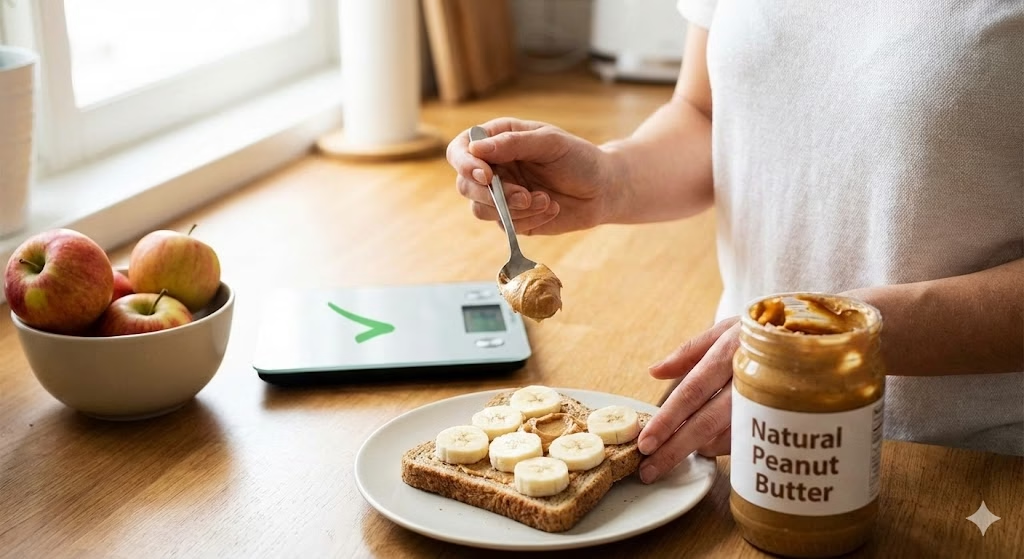
Peanut butter is very loved staple in today’s kitchen, but it often finds itself on the do not eat list for those who are trying to loose weight. Because it is rich in fats and calories, a common question echoes through the fitness and diet communities, that Does peanut butter increase weight?. The short answer for it is? Not in really. In fact, when it is consumed correctly, it might actually help you to manage your weight. Let’s deep dive into the nutritional facts, and debunk the weight-gain myth, and explore how this delicious spread actually interacts with your waistline.
The Root of the Myth, Why the Peanut butter have a Bad Reputation?
The fear of peanut butter stems from a simple mathematical fact, it is a calorie rich food. A standard serving of about two tablespoons contains roughly 190 calories and 16 grams of fat.
For decades, diet culture have today demonized all dietary fats, which results in leading people to believe that eating fat based food increases body fat. Because peanut butter is also high in fat, it was incorrectly labeled as weight-gain food. However, for modern nutritional science shows a very different picture of peanut butter.
The Nutritional Profile of Peanut Butter
To understand why peanut butter is not the enemy, we need to look above its calorie count and examine what those calories are made of. A typical 2-tablespoon serving provides:
- Healthy Fats: The majority of the fat in peanut butter is monounsaturated and polyunsaturated fat. These are heart-healthy fats that help lower bad cholesterol and reduce inflammation.
- Protein (approx. 7g): Essential for muscle repair and maintenance.
- Dietary Fiber (approx. 2g): Aids in digestion and helps regulate blood sugar spikes.
- Micronutrients: Packed with Vitamin E, Magnesium, Potassium, and Vitamin B6.
Weight gain is not caused by a single food item, it is the result of consistently eating more calories and low workout plan which results in saturation of fat in the body and weight gains.
How Peanut Butter Can Actually Support Weight Management
Far from causing automatic weight gain, adding peanut butter to a balanced diet can actively support your health and weight loss goals. Here is how:
- It Keeps You Full for a Longer time
The combination of protein, fiber, and healthy fats makes peanut butter incredibly gut filling. Adding a spoonful of peanut butter in your morning oatmeal or with an apple can keep you full for many hours, preventing mindless mid-morning snacking and reducing your total daily calorie intake helps to curb fat, gain more energy and improve health.
- Stabilizes Blood Sugar
Unlike sugary snacks that can cause a rapid spike and crash in blood sugar levels which makes you hungry and fatigued, peanut butter has a low glycemic index. This slowly release energy, which helps to keep your food craving low and control calorie intake.
- Supports Muscle Growth
If you are exercising to lose weight, you need more protein to preserve and build healthy muscle mass. Muscle burns more calories at than the fat tissue, meaning peanut butter can indirectly support a healthier metabolism.
The Catch: When Does Peanut Butter results to Increase Weight?
While peanut butter itself isn’t a weight-gain food, Here are the common pitfalls which results in weight gain:
- Poor Food Portion Control: Because it is calorie rich food, hence, mindlessly scooping peanut butter with huge quantity daily can easily add 400 to 500 calories to your day without you realizing you are overeating it. Stick with the 1 to 2 tablespoon peanut butter serving size per day.
- Choosing the Wrong Brand: Commercial peanut butters are often loaded with added sugars, hydrogenated vegetable oils (trans fats), and extra salt. These additives increase the calorie count and lowers its health benefits.
- Eating in a Caloric Surplus: If you are already eating more calories rich food to maintain your weight, adding a heavy serving of peanut butter on top of your daily calorie intake will lead to weight gain.
How to Choose the Best Peanut Butter
To get the most out of your peanut butter spread without compromising your health goals, then first become an expert label reader.
- Feature: Ingredients, Natural Peanut Butter (The Goal): Just peanuts (and maybe a little salt), Commercial Peanut Butter (To Avoid): Peanuts, sugar, molasses, hydrogenated oils.
- Feature: Texture, Natural Peanut Butter (The Goal): Oil usually separates at the top (requires stirring), Commercial Peanut Butter (To Avoid): Perfectly smooth and solid at room temperature.
- Feature: Added Sugar, Natural Peanut Butter (The Goal): 0g to 1g (naturally occurring), Commercial Peanut Butter (To Avoid): 2g to 4g+ per serving.
And finally, does the peanut butter increase weight? Only if you eat it with too much quantity and choose its heavily processed version packed with added salt and sugar. When eaten it in low quality can be a part of a balanced, calorie-conscious diet. Natural peanut butter is a nutrient powerhouse that can keep you full, fuel your workouts, and satisfy your food cravings.
Enjoy your peanut butter, just measure your portions and check your product labels.