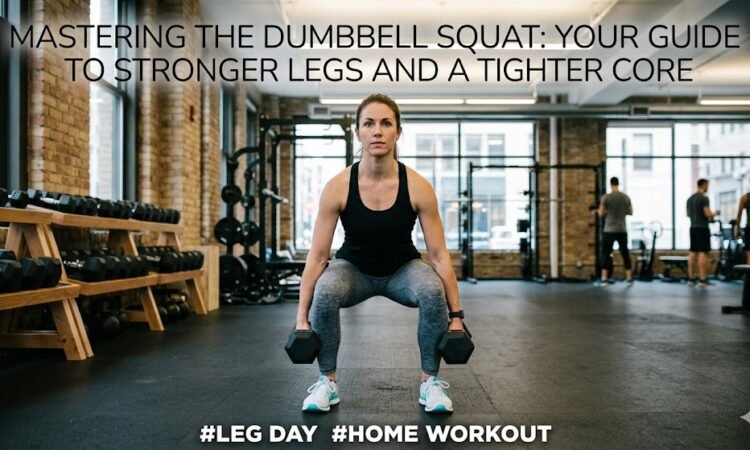
If your aim of your daily workout is to build up your lower body strength without lifting heavy barbell, then doing workout of squats with dumbbells is considered as the best.
Routinely doing squats with dumbbells workout is mult beneficial, easy and more effective, squatting with dumbbells allows for a natural body movement to your quads, glutes, and hamstrings and strengthens your lower body.
Let’s break down how the best variations of squats helps to benefit your during your exercise routine.
Why Choose squats with dumbbells over barbells?
As the barbell squat is done for heavy lifting, but the dumbbell squats offers a low intensity unique advantages and safeguard your body from weight based stress injuries:
- Improved Balance: Holding weights at your both sides and chest helps to lower your body center of gravity, making it easier to stay up during the workout even with holding weight.
- Joint Safety: Dumbbells allow your wrists and shoulders to move more freely in comparison of being locked during a heavy barbell grip and lowers the intensity and injury risk.
- Core Body Engagement: Many dumbbell workouts, such as the Goblet squat, force your core body to work closely and keep your torso from bending forward.
- Accessibility: You can do these anywhere, from a high-end gym to your living room the dumbbell squats are one of the easiest exercise.
How to do the Perfect Dumbbell Squat:
To get the most out of the routine dumbbell squat workout and and avoid injury, doing it correctly is very important. Follow these steps for the standard body suitcase squat with holding weights in your both side arms:
- The Setup: Stand with your feet shoulder-width apart, keep your toes pointed slightly outward. Hold a dumbbell in each hand with your arms hanging towards straight down of your sides.
- The Descent: Inhale and hinge at your hips, sitting back as if you are lowering yourself into an invisible chair sitting position. Keep your chest up and your body gaze forward.
- The Depth: Lower yourself until your thighs are at least parallel to the floor. Ensure your knees are tracking over your toes, not leaning inward.
- The Drive: Exhale as you press through your heels to return to the starting position. Squeeze your glutes at the top.
Top 3 Dumbbell Squat Variations:
Once you have mastered the basics, mix it up with these variations to target your different body muscle groups:
- Type of Squat: Goblet Squat, Primary Focus: Quads & Core, Best For: Beginners and improving depth
- Type of Squat: Sumo Squat, Primary Focus: Inner Thighs (Adductors) & Glutes, Best For: Developing lower body width and power.
- Type of Squat: Bulgarian Split Squat, Primary Focus: Single-Leg Stability, Best For: Correcting muscle imbalances
- The Goblet Squat : Hold a single dumbbell vertically against your chest with both hands similar to a cup holding. This is considered as the best way to learn a proper squat technique because the front-loaded weight acts as a counterbalance.
- The Sumo Squat: Take a wide position with your toes pointed out at a 45 degree angle. Hold one heavy dumbbell with both hands hanging between your legs. This workout may puts an extra burn on your inner thighs.
- Dumbbell Front Squat: Keep resting one end of each dumbbell on your shoulders. This shifts the load to the front sideo of your body, gradually increase the weight according to the need on your quadriceps and upper back.
Common Mistakes to Avoid during dumbbell squats:
Rounding the Back: Always keep a proud chest. If your back turn to round, you are likely using weight that is too heavy.
Heels Lifting: If your heels come off the ground, your weight is shifting too far at forward side. Focus on driving the floor away with your entire foot.
Short Change in the Range of Motion: Unless you have any body injury, go for body parallel workout movement. Remember Half-squats may provide half-results and full workout provide all.
Ready to Improve Up Your Leg Workout Day?
Routinely doing squats with Dumbbells workout proves that you do not need other hard workouts to build an impressive leg strength. Start with a weight that allows you to complete each 3 sets of 10 to 12 reps with perfect form before moving up.