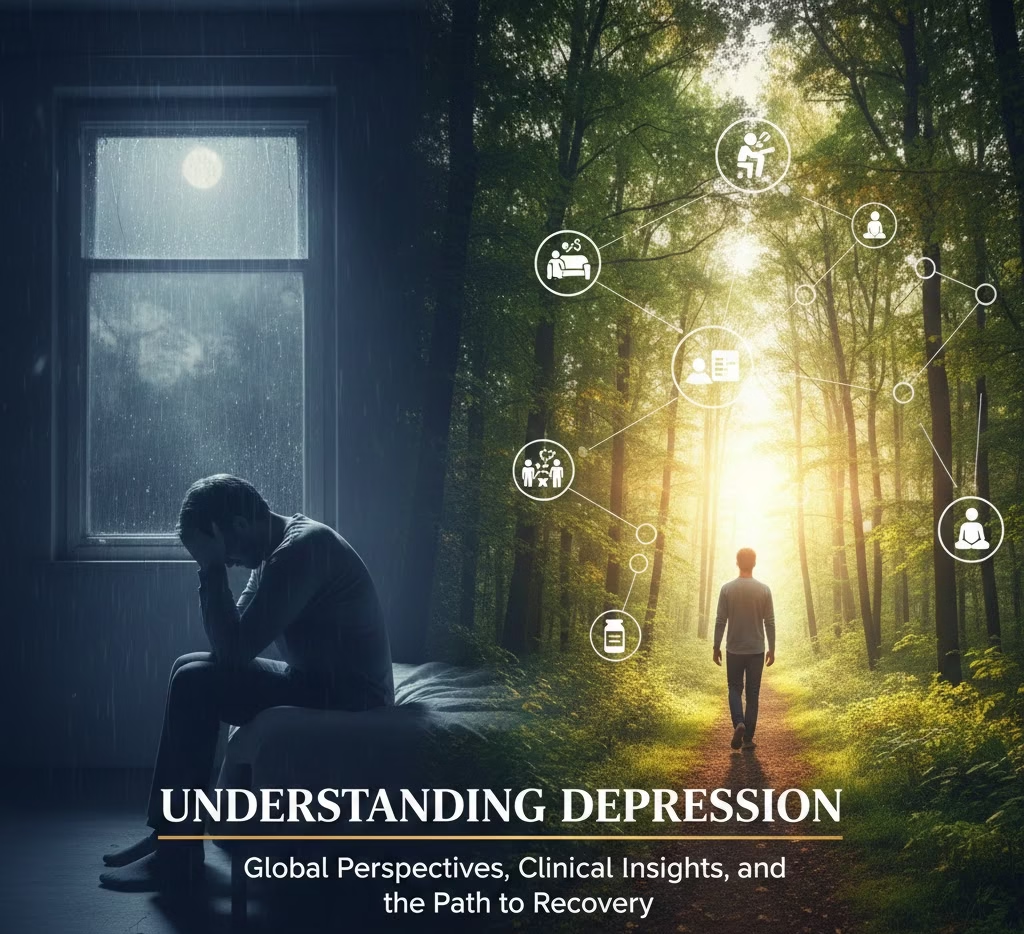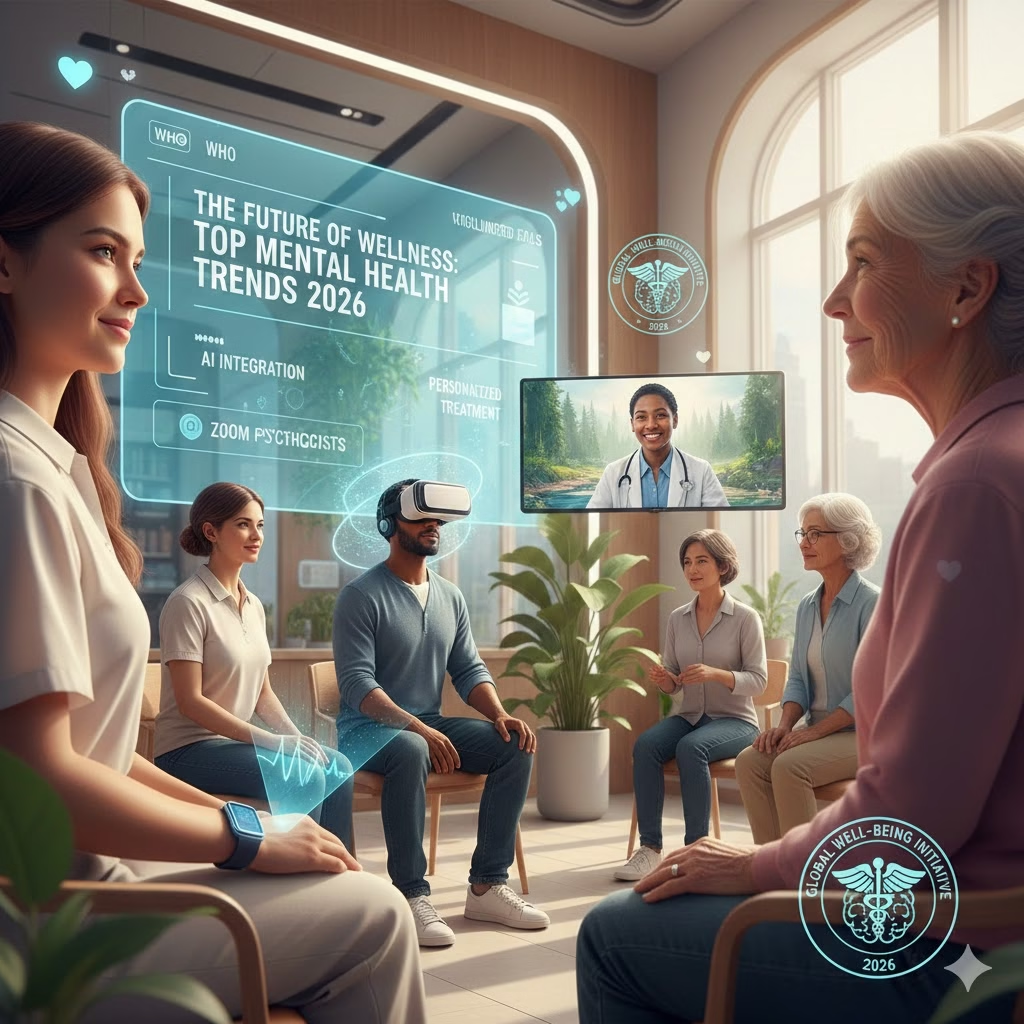
New York: 24-01-2026] Today Mental health is no longer just a health issue. In 2026, it is recognized as a fundamental human right and a main pillar of overall health. According to the World Health Organization (WHO), mental health is more than just the a mental disorder. It becomes a state of well-being where individuals can cope up with life’s stresses effectively, realize their potential, and contribute to the community around them to fight with this global increasing issue.
With nearly 1 in 5 adults globally are struggling with a mental ability issues, and the medical tech industry is responding with innovations that bridges the gap between clinical expertise and patients to effectively regularize their routine life by coping up the mental health issues. Here are the recent advancement trends that are shaping mental issues this year.
Whether you are looking to support a loved one or improve your own emotional strength, understanding the area of mental well-being is the first step toward a healthier life forward.
What is Mental Health?
As defined by MedlinePlus (a service of the National Library of Medicine), mental health includes our emotional, psychological, and social well-being. It affects every aspect of our lives, including:
- How we think and feel: Our internal thinking and emotional control.
- How we act: The choices we make and how we handle stress.
- How we relate to others: Our ability to build and maintain healthy relationships with others.
- Mental health is fluid: It exists on a complex continuum, and it can change at any stage of life, from childhood and adolescence through adulthood.
Common Signs of Mental Health Issues
Recognizing the early warning signs of a mental issues can lead to faster and more effective treatment. While everyone has off days Wikipedia’s comprehensive overview notes that a mental disorder typically involves significant distress or impairment in functioning.
Key warning signs to watch for include:
- Changes in Habits: Sudden shifts in eating or sleeping patterns (too much or too little).
- Social Withdrawal: Pulling away from people and activities you usually enjoy while soializing.
- Low Energy: Feeling numb or like nothing matters.
- Unexplained Physical Pain: Aches and pains with no clear physical cause.
- Mood Swings: Severe fluctuations in mood that cause problems in relationships.
Factors That Influence Your Well-Being
No single factor determines mental health, instead, it is a combination of:
- Biological Factors: Genes, brain chemistry, or physical trauma.
- Life Experiences: Trauma, abuse, or the loss of a loved one.
- Socioeconomic Factors: The WHO emphasizes that poverty, violence, and inequality are significant risk factors that can generate mental issues in a healthy person.
Strengthening Our Response with The Global Perspective
The WHO’s Strengthening Our Response initiative highlights that mental health is a global priority. Governments are now moving toward Community-Based Care, which shifts the focus away from long-term psychiatric hospitals and toward integrated care in local communities.
This global response focuses on:
- Early Intervention: Identifying issues in childhood before it become chronic.
- Rights-Based Care: Protecting the human rights of people with mental disabilities.
- Affordable Access: Bridging the treatment gap so that mental health services are available to low income group people.
How to Improve Your Mental Health?
Taking proactive steps can help protect your mind state. As Experts from MedlinePlus recommend:
- Routine Physical Activity: Exercise releases endorphins that naturally boost mood and reduce mental issues.
- Quality Sleep: Sleep is the brain’s primary way of recovering from daily stress and boost your mood.
- Social Connection: Strong, positive relationships act as a protecting shield against mental distress and anxiety.
- Professional Help: Don’t wait for a crisis. Psychotherapy (Talk Therapy) and medication are highly effective tools for early recovery of mental issues.
Factors which are helping to cope up with increasing mental health issues
1. The Rise of Continuous Care and AI Integration are helping these days as a mental health support including a 50-minute weekly session. In 2026, Continuous Care has become popular among the people facing mental health issues. This model utilizes AI-powered tools and digital platforms to provide easy support during traditional therapy appointments.
Predictive Analytics: Doctors are now using AI to analyze digital phenotyping data—patterns in sleep, movement, and social interaction tracked via wearables, to identify early warning signs of a depression and or anxiety spike before it happens.
The AI Ethics Shift: While AI chatbots are popularly used for immediate emotional support, 2026 marks a turning point for regulation. New guidelines now classify higher-risk AI tools as a Software in Medical Devices (SaMD), ensuring they meet strict clinical safety standards.
2.Workplace Wellness conversions are discussed and acted on high Priority, as the pressure at workplaces are increased and identified bow a days. The corporate actions are evolved positively at today’s advanced workplace with more mental wellness focused work culture. Companies are no longer just offering meditation app subscriptions, they are redesigning work cultures to support employee satisfaction, more happiness fun activities at workplace, and actions to cope up with neurodiversity and mental health issues.
Integrated EAPs (Employee assistance program: Modern Employee Assistance Programs (EAPs) are now offering 24/7 access to Zoom psychiatrists and asynchronous messaging, allowing employees to seek help without the logistical barriers of traditional office commuting, Financial assistance for mental health treatments, Fun at work programs, routine health checkups, mental well-being counselling, health facilities such as gym passes etc.
Tackling Presenteeism: There is a growing focus on presenteeism, being at work but not functioning due to poor mental health, which is estimated to cost the global economy nearly $1 trillion annually in lost productivity.
3.Breakthroughs in Personalized Treatment 2026 is popular along with personalized psychiatry, moving away from a routine single approach to medication and therapy to diversified treatments according to patient needs.
A) Part 1
Innovation: Genomic Testing
Description: Tailoring prescriptions based on an individual’s genetic profile.
Primary Use: Reducing trial and error in antidepressants.
B) Part 2
Innovation : VR Therapy
Description: Immersive Virtual Reality environments for exposure therapy.
Primary Use: Treating PTSD and specific phobias.
C) Part 3
Innovation: Ketamine & Psychedelics
Description: Expansion of clinical, supervised use of novel treatments.
Primary Use: Treatment-resistant depression.
4.The Youth Mental Health Issues are also found increasing day by day due to competitive studies. And early Intervention with nearly 50% of mental health conditions identified by the age 14, 2026 are pushing to promote the school-based mental health awareness and action programs. Following progressive moves like Australia’s social media ban for minors, there is an increased global focus on safe digital use and protecting students from the documented impact excess screen and internet use.
A Holistic Future Mental health treatment with the use of technology.
The mental health theme of 2026 is collaborative. We are finally seeing the walls fall between physical and mental health. Whether it’s through the gut-brain connection research or appointing mental health therapists into primary health clinics, the goal is clear of making mental well-being an important part of overall health.
Resources for Immediate Help
If you or someone you know is struggling with such mental issues then, help is available. You can call or text 988 (in the U.S. and Canada) to reach the Suicide & Crisis Lifeline which is available 24/7.
Global: Contact your local emergency health services office or look in the WHO local mental health services directory of your region.