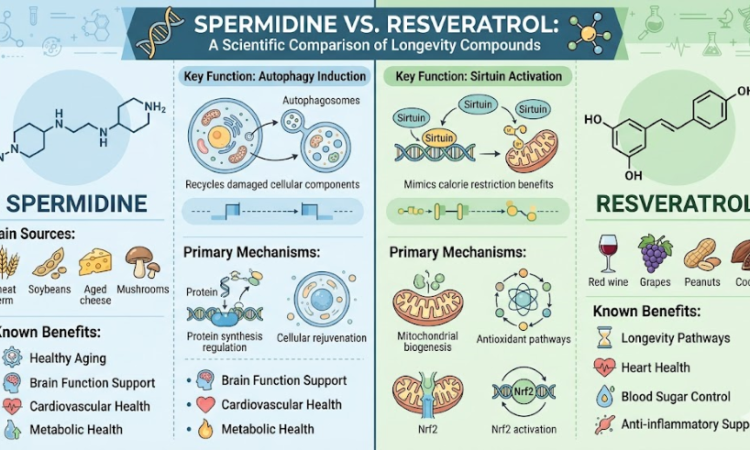
In todays rapidly advancing health world with biohacking and longevity, we are today moved above the multivitamins supplements to more data driven health habits. This article will help you to know Spermidine vs. Resveratrol benefits towards your body cellular health, specifically, about how we can optimize our body at a microscopic level with delay the ageing decline.
Two molecules are trending in the fitness science world Spermidine and Resveratrol:
Both compounds are known for their ability to replicate the effects of caloric restriction and activate longevity process, but they do so through very different biological mechanisms. If you are looking to optimize your cellular health, understanding the nuance of Spermidine vs. Resveratrol is very important.
What is Cellular Health? (And Why It Matters):
Before reaching out to the supplements, we must define our health goals. Cellular health is not just the reduction the threat of critical disease, but it is the maintenance of proteostasis (protein balance), mitochondrial function, and autophagy.
As we age, our body cells accumulate junk proteins and dysfunctional our important body organs. This may leads to systemic inflammation, which is often called inflammaging. Supplements such as Spermidine and Resveratrol works as a cellular housekeepers, by effectively helping our body to identify, repair, or recycle the damaged cell components.
What is Spermidine? The Autophagy Activator:
Spermidine is a natural polyamine found in all living organisms. It is found in high concentrations in foods such as wheat germ, aged cheese, soy products, and mushrooms.
The Mechanism of Autophagy:
The primary claim to fame for Spermidine is its role as a potent inducer of autophagy.
Autophagy (n): The name comes from the Greek history, and it meaning self-eating. This is the body’s internal recycling program where cells break down old, damaged components to create energy and new cellular structures.
By stimulating autophagy, Spermidine helps clear out toxic protein residues, which is also associated with neurodegenerative diseases, and supports heart health by rejuvenating cardiac cells.
Key Benefits of Spermidine:
- Cardiovascular Support: Studies suggest it can reduce blood pressure and arterial stiffness.
- Cognitive Function: By clearing cellular trash in the brain area, it may support memory and better mental ability.
- Hair and Nail Vitality: Spermidine is known to prolong the anagen (growth) phase of hair follicles.
What is Resveratrol? The Sirtuin Stimulator:
Resveratrol is a polyphenol found most famously in the skins of red grapes, blueberries, and Japanese knotweed. It gained mainstream popularity as the explanation for the French Paradox, the observation that French populations had low rates of heart disease despite a diet high in saturated fats.
The Mechanism: Sirtuin Activation:
Resveratrol works primarily by activating a group of proteins called Sirtuins (specifically SIRT1).
Sirtuins are often called as the guardians of the human genome. They plays a critical role in DNA repair and mitochondrial biogenesis ie. the creation of new energy factories in your body cells. Resveratrol acts as a caloric restriction mimetic, tricking your body into thinking it’s in a fasted state, which triggers protective metabolic shifts.
Important Benefits of Resveratrol:
- Mitochondrial Health: Increases the efficiency of energy production.
- Insulin Sensitivity: May help stabilize blood sugar levels and improve metabolic flexibility.
- Anti-Inflammatory: Acts as a powerful antioxidant to neutralize free radicals.
Spermidine vs. Resveratrol: The Head-to-Head Comparison:
While both support longevity, they play different positions on the cellular bonds.
- Feature: Primary Mechanism, Spermidine: Autophagy (Cellular Recycling), Resveratrol: Sirtuin Activation (DNA Repair/Energy)
- Feature: Main Food Source, Spermidine: Wheat Germ, Soy, Mushrooms, Resveratrol: Red Grapes, Berries, Knotweed
- Feature: Focus Area, Spermidine: Waste Removal & Heart Health, Resveratrol: Metabolism & DNA Protection
- Feature: Effect on Weight, Spermidine: Minimal direct impact, Resveratrol: May improve metabolic rate
- Feature: Synergy with Fasting, Spermidine: Enhances the effects of fasting, Resveratrol: Mimics the biological signals of fasting
The Synergy: Can You Take Both?
In the debate of Spermidine vs. Resveratrol, the most exciting answer is not anyone, but how they work together.
Because they target different pathways, they are often considered synergistic. Resveratrol turns on the protective genes, while Spermidine cleans out the cellular debris. Using them in tandem provides a multi-angled approach to cellular aging.
How to Use Them:
- Morning: Resveratrol is often taken in the morning, ideally with a small amount of fat such as yogurt or olive oil to increase absorption, as it is fat-soluble.
- Evening/With Meals: Spermidine can be taken with your largest meal to mimic the body’s natural polyamine cycles.
Potential Side Effects and Considerations
While both compounds are generally recognized as safe (GRAS), there are things to keep in mind:
- Spermidine: If you have a severe wheat allergy or celiac disease, be cautious. Many Spermidine supplements are derived from wheat germ. Look for synthetic or soy based options if you are gluten-sensitive.
- Resveratrol: In very high doses, it can cause gastrointestinal upset. It may also have a mild blood-thinning effect, so consult a doctor if you are on anticoagulant medication.
Which is Better for You?:
Choosing between Spermidine and Resveratrol depends on your specific health goals:
- Choose Spermidine if: Your primary concerns are cognitive longevity, hair health, and proper cleansing. It is the superior choice for someone focused on the recycling aspect of aging.
- Choose Resveratrol if: You are focused on metabolic health, blood sugar management, and protecting your DNA from oxidative stress. It is the go-to for mitochondrial support.
The Lifestyle Factor
No supplement can change is one is with a poor lifestyle. To get the most out of either compound, you should pair them with:
- Intermittent Fasting: This naturally boosts both autophagy and sirtuin activity.
- Resistance Training: Essential for maintaining muscle mass as cells rejuvenate.
- Better rest / Sleep: Sleep is the best time when the most intensive cellular repair occurs.
Frequently Asked Questions (FAQ)
Q 1: Does Spermidine cause weight loss?
While it is not a weight loss magic pill, but with improving cellular efficiency and autophagy, Spermidine may support a healthier metabolism. However, Resveratrol generally has more research regarding metabolic rate and insulin sensitivity.
Q 2. Can I get enough Resveratrol from red wine?
Unfortunately, no. You would have to drink hundreds of glasses of red wine daily to reach the dosages used in clinical trials ie. typically 250mg to 1000mg. Supplementation is necessary for therapeutic levels.
Q 3. Which is better for anti-aging skin care?
Spermidine is showing significant promise in skin health by promoting keratinocyte one type of skin cell function. Resveratrol is excellent as a topical antioxidant to protect against UV damage.
The Future of Cellular Health lies in between the battle of Spermidine vs. Resveratrol, there is no loser, only a more clear understanding of how we age. Spermidine offers to detox of your body cells need to function without the burden of toxic waste. Resveratrol offers the reset which your DNA needs to remain strong against the stresses of modern life. For the ultimate health protocol, many experts now suggest that a balanced approach, with adopting a nutrient rich diet, strategic interval fasting, and a combination of these two powerhouses can provide more strength and cellular health.
Note: This article is for informational purposes only and does not constitute medical advice. Always consult with a healthcare professional before starting any new supplement based routine.