


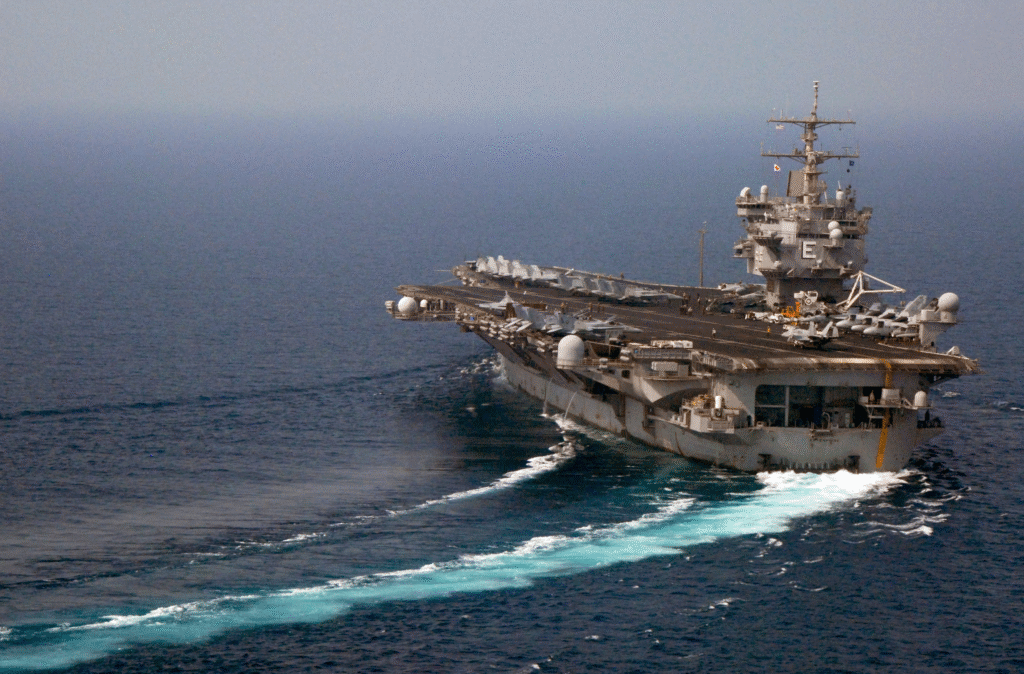
For over a century, aircraft carriers have been the focal point of American naval power. These enormous ships, literally floating airbases, have revolutionized warfighting, crisis response to distant parts of the globe, and served as unmistakable signs of U.S. military reach. But their history is not merely one of steel and flight decks; it’s one of ceaseless innovation, inter-service competition, and ongoing evolution to keep up with the constantly changing needs of global security.

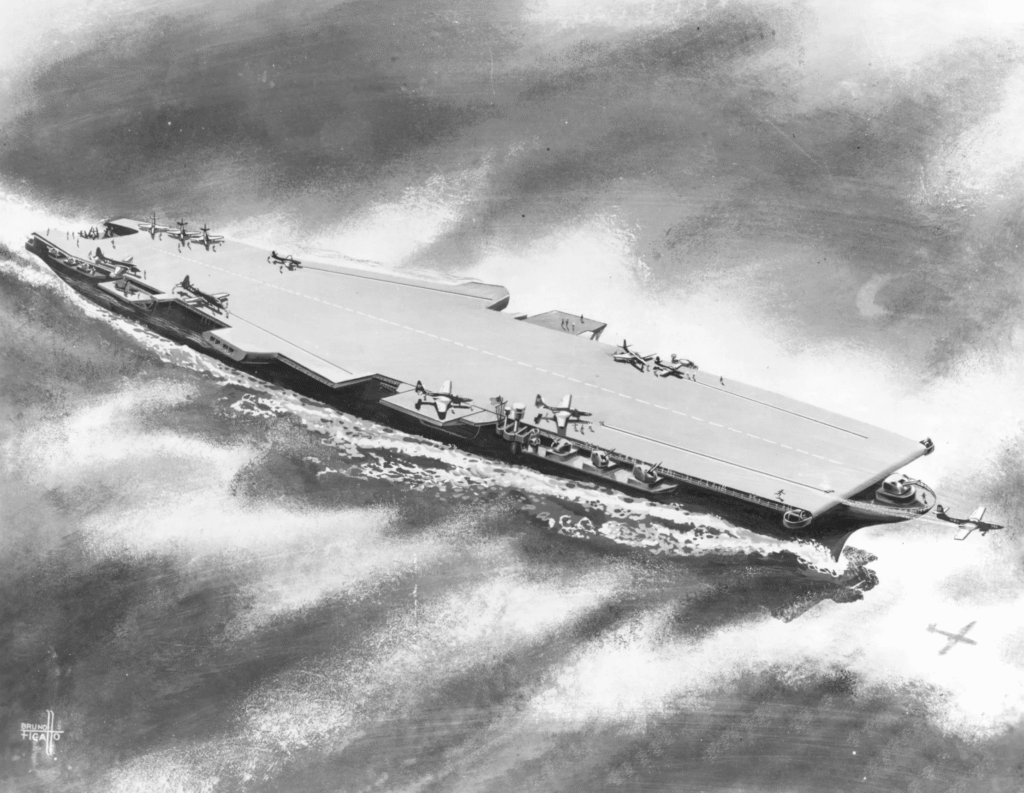
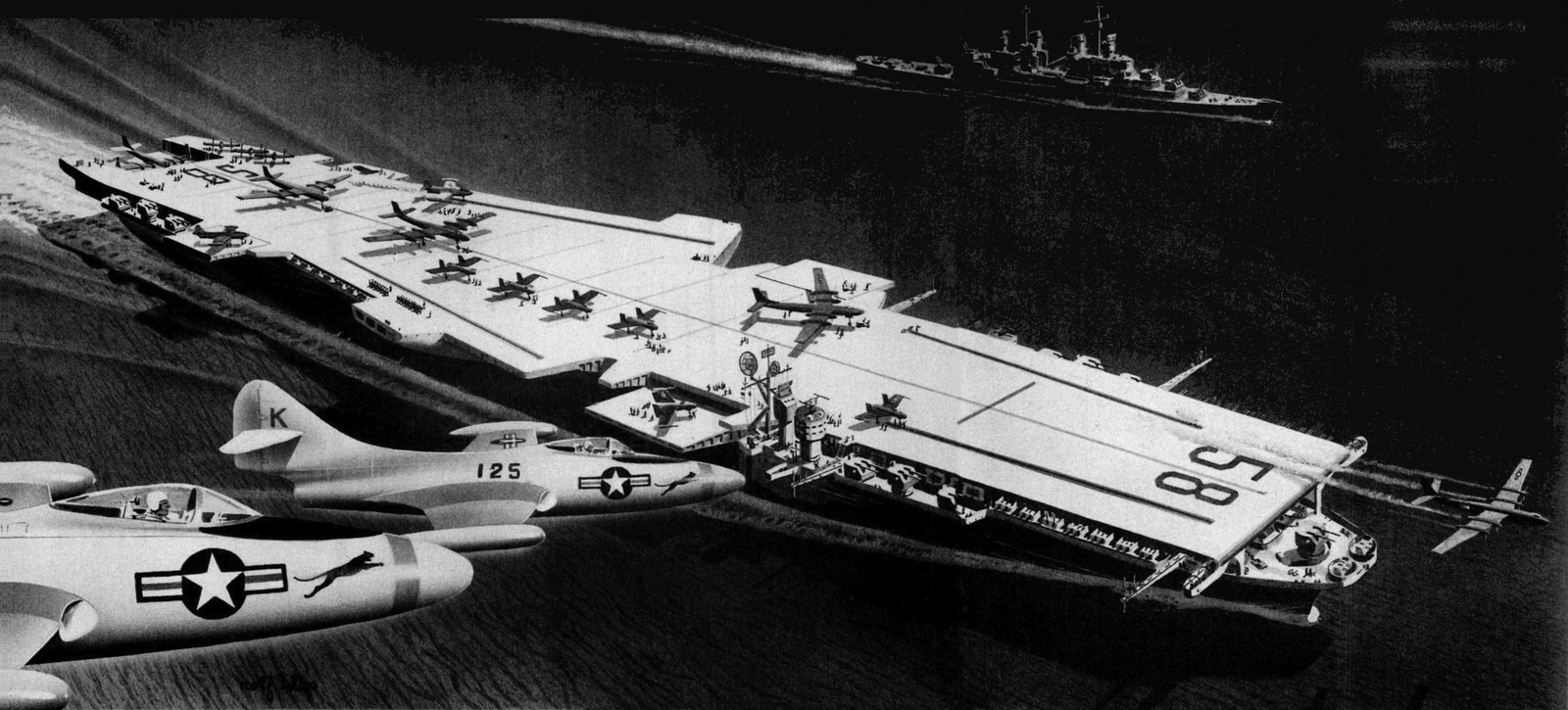
Following the conclusion of World War II, with the onset of the Cold War, the Navy came to understand that it required a new class of carrier, one that could handle large, long-distance nuclear-armed bombers. This concept produced the USS United States (CVA-58), a radical design aimed at giving America greater capacity for power projection during an era where nuclear deterrence was the focus of military theory.

The ship’s open deck, without an island tower, was designed to maximize space for massive aircraft. It would have stretched over 1,090 feet and weighed more than 83,000 tons fully loaded, with four deck-edge elevators and four catapults to handle the largest planes. Its weaponry was also impressive, ranging from 5-inch naval guns to smaller anti-aircraft defenses.

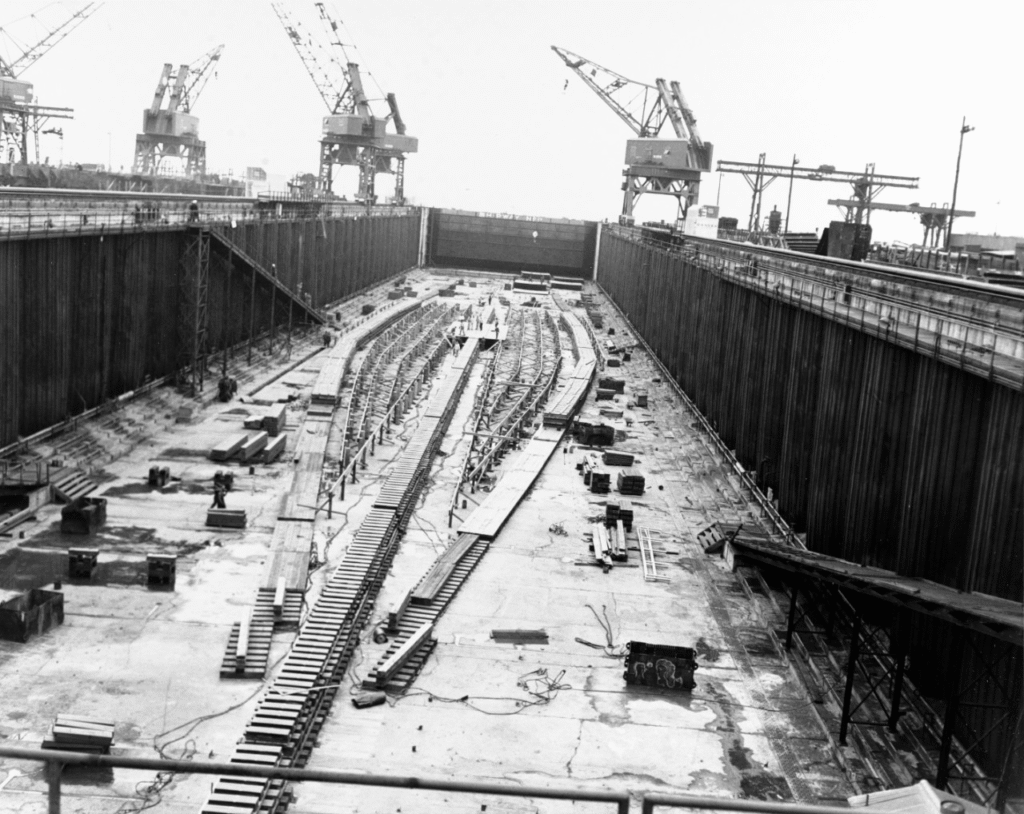
The project, however, quickly ran into political difficulties. The Air Force, now newly formed, viewed the supercarrier as a threat to its mission of strategic nuclear delivery, contesting that land-based bombers were already in place. Defense Secretary Louis A. Johnson concurred, and just five days into construction in April 1949, the project was canceled. The move provoked the “Revolt of the Admirals” as senior Navy officials opposed what they saw as an ominous error in national security planning. Though they complained, the ship was never constructed, and the drydock was used for other purposes.

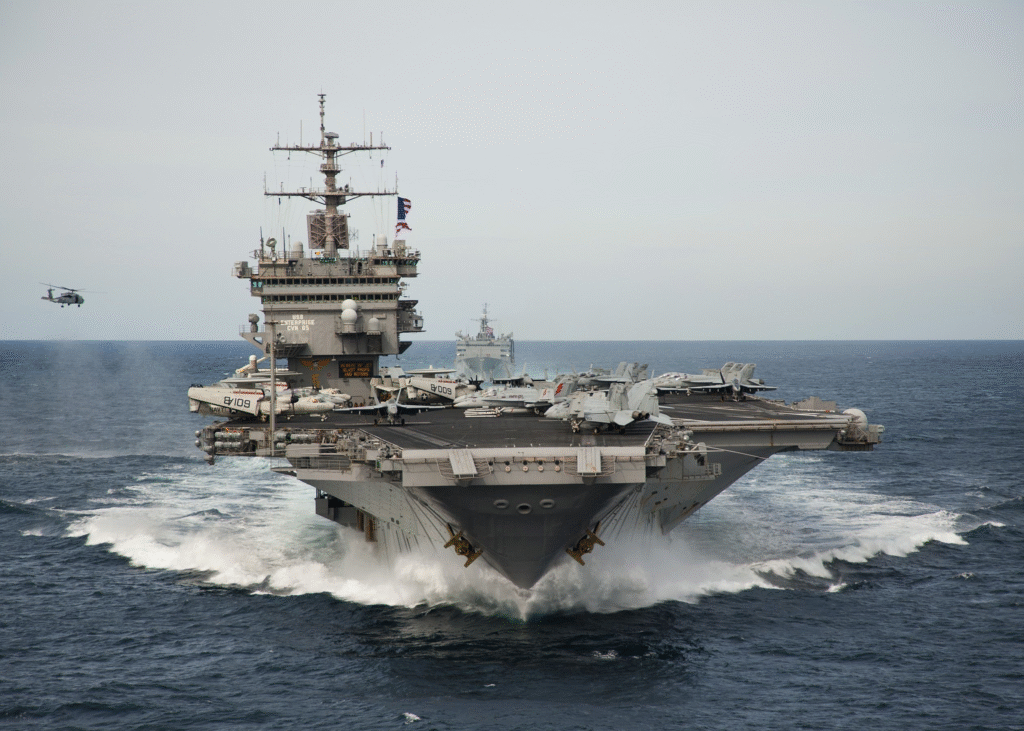
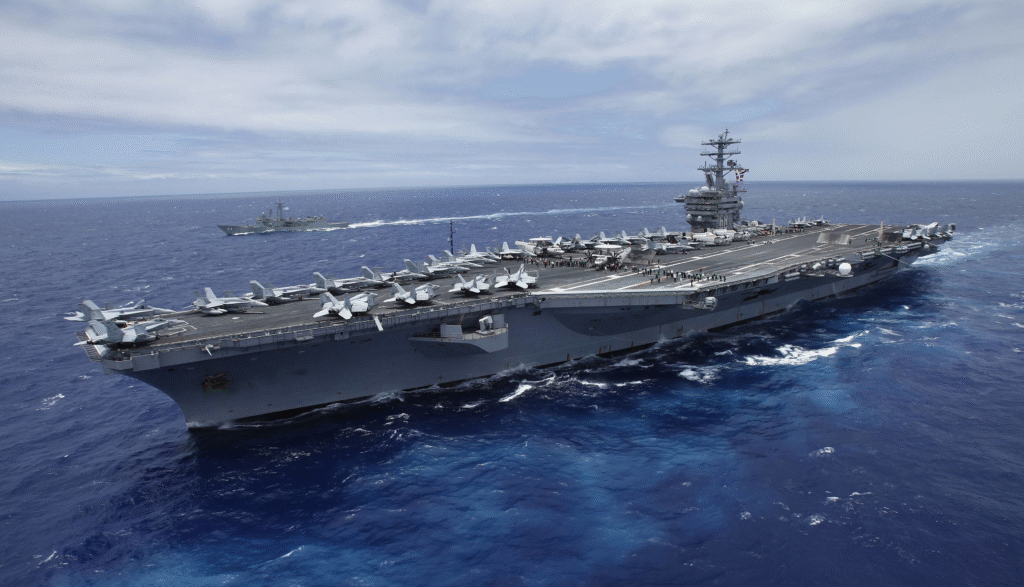
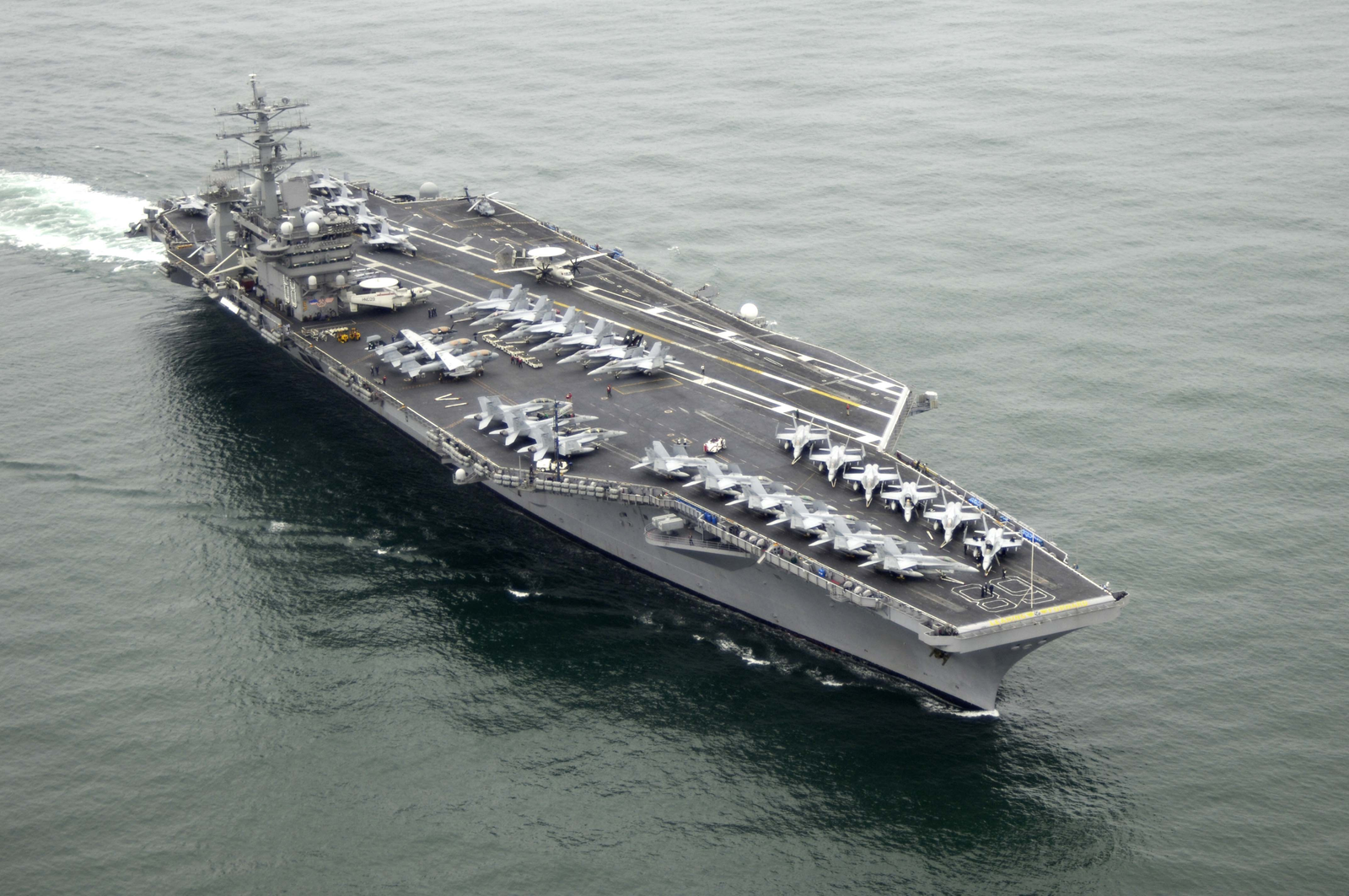
Even then, the cancellation drove the Navy in the direction of an even higher innovation: nuclear propulsion. The USS Enterprise (CVN-65), commissioned in 1961, was the world’s first nuclear-powered aircraft carrier, providing the fleet with unprecedented range, endurance, and operating flexibility. This innovation led to the USS Nimitz (CVN-68), commissioned in 1975 as the lead ship of a new class of supercarriers. Originally designated CVAN-68, the Nimitz was soon redesignated CVN-68, and throughout the decades has been homeported in more than one place to accommodate shifting strategic priorities. Now it is the oldest operating carrier in the U.S. fleet.

Because of nuclear energy, Nimitz-class carriers will stay at sea for months without refueling. A complete air wing of fighters, helicopters, and support planes flies from the flight deck, with a combination of combat, reconnaissance, and humanitarian missions possible. The carriers have been the backbone of U.S. naval power for decades and remain so today.

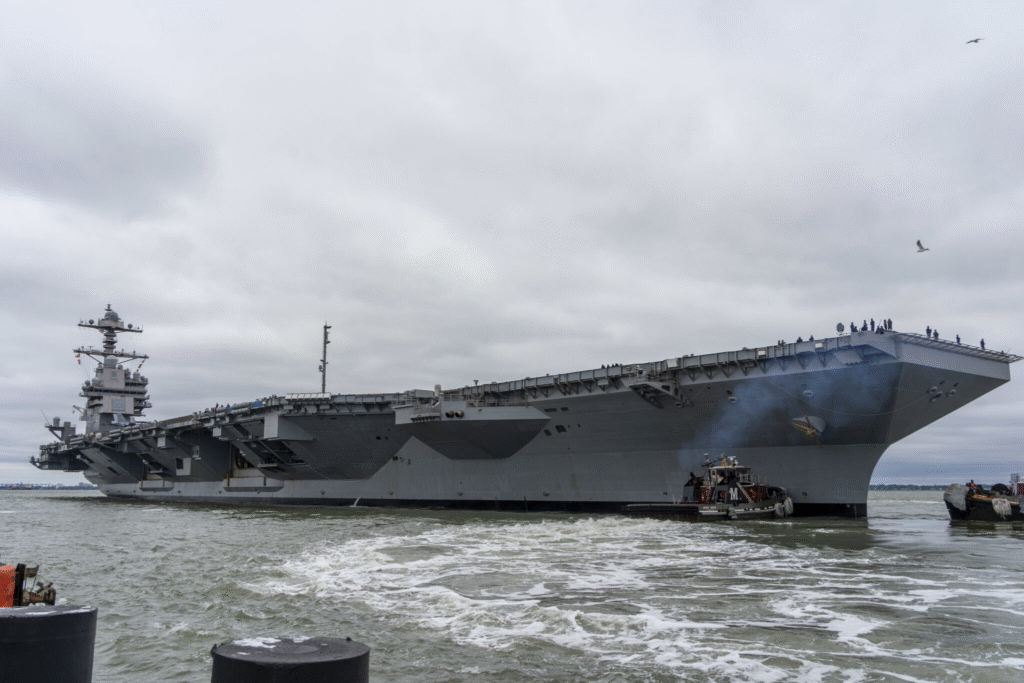
The modern aircraft carriers are engineering masterpieces. Decades of experience and innovation have resulted in them being quicker, tougher, and more powerful than ever before. With nuclear-powered propulsion, advanced radar, high-level communications, and electronic warfare technology, they are able to operate nearly anywhere on the planet. Their flight decks include angled arrangements, arresting wires, and either steam or electromagnetic catapults to safely launch and recover a broad spectrum of aircraft. Safety is always a top concern, with sophisticated fire suppression and damage control systems at the ready.
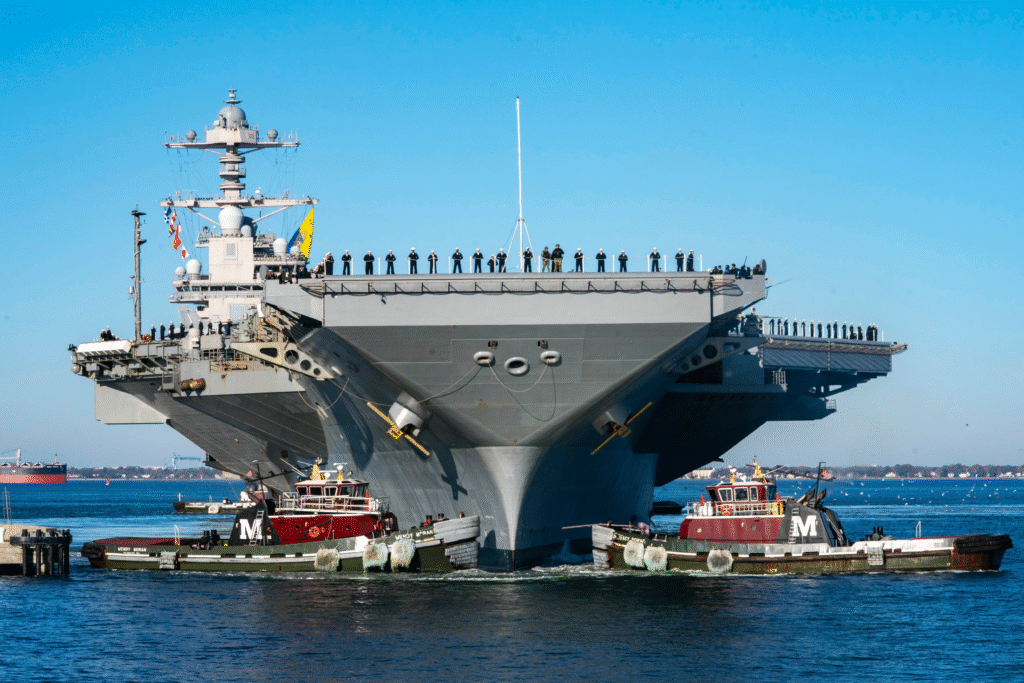
The Nimitz-class and Gerald R. Ford-class carriers measure more than 1,090 feet long and can travel in excess of 30 knots. Their flight decks are more than three football fields in length, and their adaptable air wings can shift rapidly between missions, whether dominating the skies, hitting targets, moving aid, or helping with disaster relief.

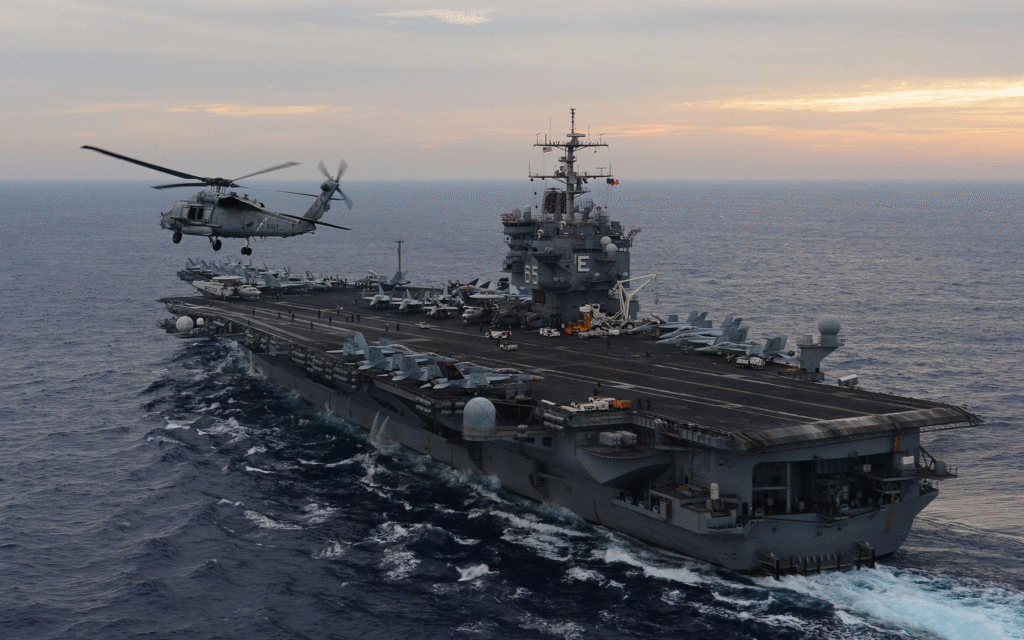
Strategically, carriers offer something that few other weapons can: presence. Based in international waters without the need for host-nation approval, they can deploy quickly to respond to crises and aid allies. They are usually the first U.S. forces to arrive in emergencies, projecting power in the Pacific or bolstering allies in Europe or the Middle East.

However, carriers are not without challenges. They cost a lot to construct, operate, and keep in operation, and new technologies mean new dangers. Next-generation anti-ship missiles, cyber attacks, and drones all challenge the assumptions about how carriers will perform in future battles. Commentators observe that contemporary warfare requires carriers to be faster, stealthier, and more adaptable. Hypersonic missiles, autonomous unmanned systems, and artificial intelligence-based systems are redefining military strategy, compelling the Navy to evolve carrier tactics, insert new technologies, and investigate smaller or distributed platforms to augment traditional carrier groups.

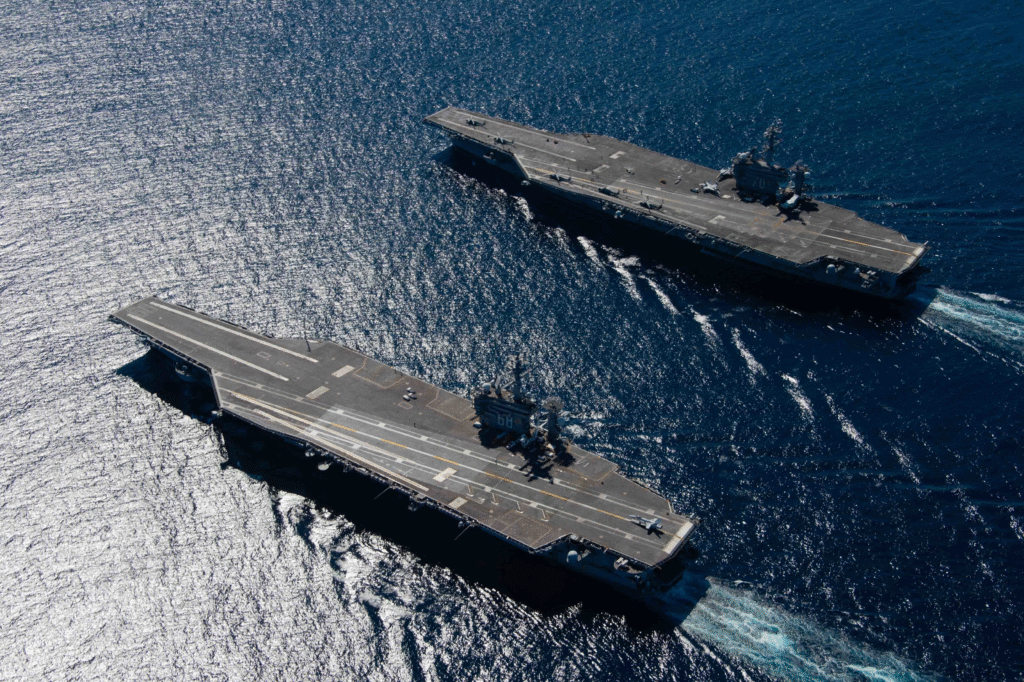
Nevertheless, aircraft carriers continue to be at the center of U.S. military strategy. Theirs is a history of unremitting change, prompted by world events, inter-service competition, and a desire to improve. As these giant ships continue to travel the oceans of the world, they remind us just how far the American Navy has evolved—and just how essential it is in a world filled with uncertainties.