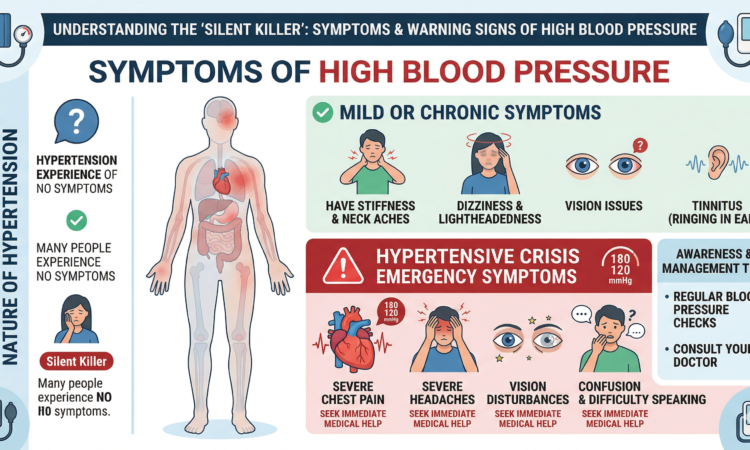
Today High blood pressure, or hypertension is become one of the most critical disease around the world and is often called as the silent killer. Millions of people globally live with high blood pressure for years without ever realizing, that, their heart and arteries are under stress due to the excess blood pressure due to its non identified symptoms. By the time noticeable symptoms of high blood pressure arrives, the body may reached to critical condition with major damages. In this article we will explore the basic warning symptoms and signs of High Blood Pressure and the scientific ways to manage it.
Lets undestanding what is blood pressure and which are the Symptoms of High Blood Pressure
What is Blood Pressure?
Blood pressure is a measurement of the force that your blood flows in your arteries as your heart pumps. Think of it like water pressure in a hose, the more blood being pumped and the narrower the arteries become, creates the higher the pressure.
When you get a BP readings, it is expressed as two numbers in millimeters of mercury (mmHg), such as 120/80.
Understanding the Numbers
- Systolic (Top Number): This measures the pressure in your arteries when your heart beats (contracts).
- Diastolic (Bottom Number): This measures the pressure in your arteries when your heart rests between beats.
General Guidelines for Adults
- Category: Normal, Systolic (Top): Less than 120, Diastolic (Bottom): and Less than 80
- Category: Elevated, Systolic (Top): 120 to 129, Diastolic (Bottom): and Less than 80
- Category: Hypertension (Stage 1), Systolic (Top): 130 to 139, Diastolic (Bottom): or 80 to 89
- Category: Hypertension (Stage 2), Systolic (Top): 140 or higher, Diastolic (Bottom): or 90 or higher
- Category: Hypertensive Crisis, Systolic (Top): Higher than 180, Diastolic (Bottom): and/or Higher than 120
Lets know the 7 Facts avbout Blood Pressure
- Why High Blood Pressure is Often Symptomless:
The most dangerous myth about hypertension is that you will feel it. Many people believe they will experience anxiety, sweating, or a flushed face if their blood pressure is high.
In reality, the American Heart Association and WHO confirm that most individuals with stage 1 or stage 2 hypertension have no visible or easily identifiable symptoms at all. Your body is remarkably good at adapting to periodic increase in the pressure, and as that pressure weakens by the time, the internal walls of your arteries and kidneys are already damaged.
- Common Symptoms of High Blood Pressure:
As the most symptoms are silent, some individuals may experience few symptoms when their blood pressure reaches to a higher levels. These are often dismissed as stress or exhaustion:
- Persistent Headaches: Unlike a typical tension headache, a hypertension headache often feels like a intense pressure and typically occurs on both sides of the head.
- Shortness of Breath: If you find yourself winded during activities that were previously easy, it may be a sign that high blood pressure is affecting your heart’s pumping efficiency.
- Nosebleeds: While usually caused by dry air or allergies, frequent, unexplained nosebleeds can sometimes be linked to the early stages of severe hypertension.
- Dizziness or Lightheadedness: While not a direct symptom, dizziness can be a side effect of the vascular changes caused by long-term high pressure.
- Blurred Vision: High blood pressure can damage the tiny, delicate blood vessels in the eyes ie. retinopathy, leading to sudden changes in sight.
- The Hypertensive Crisis and When to Seek Emergency Care:
When blood pressure spikes to 180/120 mmHg or higher, it is known as a hypertensive crisis. This is a medical emergency that requires immediate intervention to prevent a stroke, heart attack, or organ failure.
Symptoms of a Hypertensive Emergency:
- Severe, thunderclap headache.
- Chest pain i.e. angina or palpitations.
- Sudden confusion or altered mental state.
- Nausea and vomiting.
- Seizures or sudden weakness i.e. signs of a potential stroke.
- Severe anxiety or a feeling of impending doom.
If your blood pressure monitor given readings of 180/120 mmHg, wait five minutes and test again. If it still feels high and you feel any of the symptoms above, call emergency services immediately.
- Risk Factors: Who is Most at Risk?:
Understanding your risk is more important than waiting for symptoms. Several factors determine your likelihood of developing hypertension:
- Category: Non-Modifiable / Critical Stage, Risk Factors: Age (65+), Family History, Ethnicity (higher prevalence in Black communities).
- Category: Lifestyle, Risk Factors: High salt and sugar diet, physical inactivity, excessive alcohol, smoking/vaping.
- Category: Ongoing Medicines for critical diseases, Risk Factors: Obesity, Diabetes, Chronic Kidney Disease, Sleep Apnea.
- How to Check Your Blood Pressure Correctly:
As the symptoms of Blood pressure are silent, regular monitoring with the help of device is your only best defense against it.
To get an accurate reading at home do follows:
- Rest: Sit quietly for 5 minutes before taking the measurement.
- Position: Keep your feet flat on the floor and your arm at heart level.
- Consistency: Take your pressure at the same time every day (morning and evening are best).
- Avoid Stimulants: Do not smoke or drink caffeine 30 minutes before BP testing.
- Management and Prevention:
Modern medicine has evolved to focus on Multi-factor Lifestyle Management. You can often lower your numbers without medication by following these steps:
The DASH Diet
The Dietary Approaches to Stop Hypertension (DASH) focuses on fruits, vegetables, lean protein, and low-fat dairy. It specifically limits salt intake to under 2,300mg, ideally upto 1,500mg per day.
Wearable Tech & Symptoms monitoring:
Today there are many smartwatches and wearable gadgets offer continuous blood pressure and other important health readings. While not as accurate as a traditional cuff BP Reading at hospital, but they are capable enough alert you to spikes caused by stress or poor sleep.
Natural Vasodilators:
Increasing regular potassium intake such as bananas, spinach, and sweet potatoes helps your body to naturally detox by flushing out excess salt and relaxes the blood vessels.
- Complications of Untreated Hypertension:
If you ignore the symptoms of high blood pressure or the lack of medication, the long-term consequences are severe:
- Aneurysms: Constant pressure can cause a section of an artery wall to bulge and eventually burst.
- Vascular Dementia: Reduced blood flow to the brain can lead to memory loss and cognitive decline.
- Kidney Failure: Hypertension is the second leading cause of kidney failure globally.
- Heart Failure: The heart muscle thickens to pump against the high pressure, eventually becoming too stiff or weak to function.
Why It Matters:
Maintaining a healthy blood pressure is very important because high blood pressure ie. hypertension usually has no symptoms but, it can lead to a serious health issues over time, Which including:
- Heart Attack or Stroke: High pressure can damage and harden arteries.
- Aneurysm: Increased pressure can cause blood vessels to weaken and bulge.
- Kidney Damage: It can weaken the blood vessels in your kidneys, affecting their ability to filter waste.
Common Influences:
Several factors can cause blood pressure to fluctuate throughout the day, such as:
- Activity Level: Exercise temporarily raises it.
- Stress: Sudden stress triggers a temporary spike.
- Diet: High salt (sodium) intake is a major contributor to long-term high blood pressure.
- Hydration: Dehydration can actually cause blood pressure to drop or spike depending on how the body compensates.
The most important takeaway from the above is that, even in the absence of symptoms, the danger is still there. High blood pressure earns it’s reputation as a silent killer because it waits until the damage is done before showing its face.
If you are tracking your blood pressure on regular basis then, it is an important health practices. It is better to take regular readings and note them at the same time every day for seeing the exact changes. Always consult with a healthcare professional to understand your blood pressure test results. Schedule a routine health check-up, and or else buy a reliable home blood pressure measurement equipment, and take control of your cardiovascular health before the silent critical condition converts into an unwanted health emergency.
Symptoms of high blood pressure, Hypertension warning signs, hypertensive crisis, how to lower blood pressure naturally, silent killer, Are you at risk? Learn the hidden symptoms of high blood pressure, what a hypertensive crisis feels like, symptoms-of-high-blood-pressure-guide,
Dr. Monica Reyes is a Clinical Health Psychologist & Mindfulness Educator
She has done her Ph.D. in Clinical Psychology, University of Michigan
She is also a licensed psychologist with over 15 years in behavioral health, Dr. Monica Reyes specializes in integrating mental wellness with everyday lifestyle practices. Associated with Gymbag4u.com since its initial days.