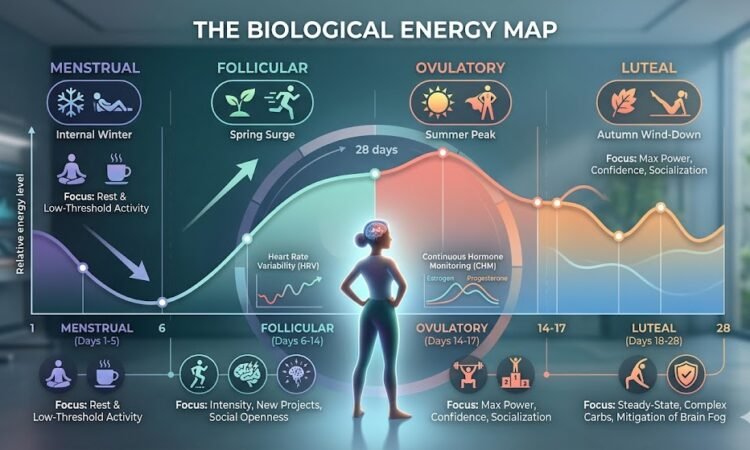
In the todays changed practices of fitness and health, a single approach of workout is not effective to achieve complete wellness. As we are steping up in 2026, the wellness era focus has shifted from workout with consistency to a more sophesticated and wellness aiming workout. The most important findings in personal wellness is the ability to predict energy levels through hormonal fluctuation cycle tracking, a practice known as Cycle Syncing.
For years, the fluctuating energy levels experienced by many were dismissed as lack of discipline or moodiness. However, acording to the recent research confirms that these shifts are measurable neurophysiological and metabolic events. By understanding the Energy Map of the menstrual cycle, you can stop fighting your ageing and start gaining a better performance.
- The Biological Foundation: Why Energy Isn’t Static?
Your energy isn’t static because your body hormones are in a constant state of routine change. Throughout a typical 28 days cycle, four key phases dictate your metabolic rate, body temperature, and even your brain’s attentional efficiency. According to a 2026 review published in SciTePress, approximately 71.2% of studies now confirm that these phases majorly influence lifestyle behaviors, including physical activity and calorie intake.
The Science of the Four Phases:
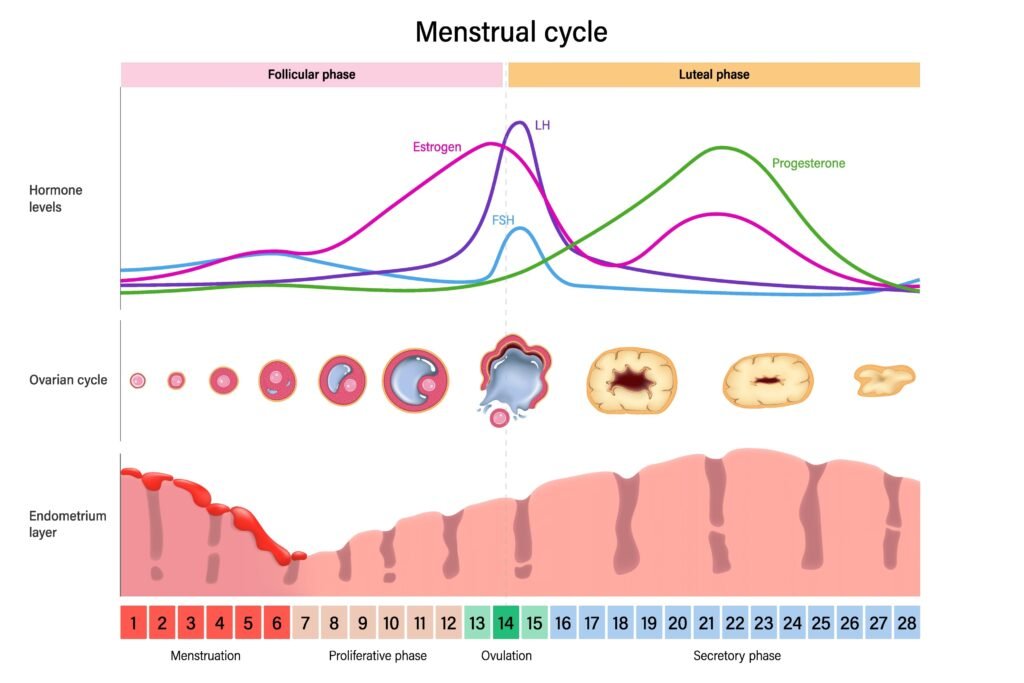
Phase I: The Menstrual Phase (The Internal Winter):
Timeline: Days 1 to 5
Hormonal Profile: Estrogen and progesterone are at their baseline.
Energy Prediction: This is typically the lowest physical energy point. Your body is spending energy and important resources on internal body processes.
The 2026 Research: New pilates studies on athletes (PMC, 2026) highlight a decrease in acceleration and perceived strength during this time.
Optimization Strategy: Focus on low-threshold activities. Calming yoga, mobility work, and routine walking are best here. This is a time for internal reflection rather than external PRs.
Phase II: The Follicular Phase (The Spring Surge):
Timeline: Days 6 to 14
Hormonal Profile: Estrogen begins a stable, steep climb.
Energy Prediction: This is your socially open brain condition. Estrogen is neuroprotective and improves insulin sensitivity.
The 2026 Research: Research published by the Frontiers in Sports and Active Living (2025) suggests that strength training during the late follicular phase leads to the highest gains in muscle hypertrophy.
Optimization Strategy: High-intensity interval training (HIIT), heavy lifting, and starting new, complex workouts, leads you to gain more strength and endurance.
Phase III: The Ovulatory Phase (The Summer Peak):
Timeline: Days 14 to 17
Hormonal Profile: Luteinizing Hormone (LH) and Estrogen reach their zenith.
Energy Prediction: This is your physiological superpower window.
The 2026 Research: Data indicates that high power output and social confidence combines with this hormonal surge.
Optimization Strategy: This is the time for Personal Records. Whether in the gym or the boardroom, your capacity for high-output performance is maximized.
Phase IV: The Luteal Phase (The Autumn Wind-Down):
Timeline: Days 18–28
Hormonal Profile: Progesterone rises to dominance while estrogen takes a secondary dip.
Energy Prediction: You may feel sluggish, yet your body is actually working harder.
The 2026 Research: Studies in Frontiers (2026) show that Resting Metabolic Rate (RMR) increases by 30 to 120 kcal/day during this phase. Your core body temperature rises, making high-intensity work feel much harder than it actually is.
Optimization Strategy: Focus on Pilates, steps hiking or walking, and strength workout. helps to Increase complex carbohydrate burn and stabilize the mood shifts, which often triggered by progesterone.
- The Neurological Shift: Brain Fog vs. Biological Reality:
One of the most exciting developments in 2026 is the use of Resting-State EEG to track hormonal impacts on the brain. We now know that mental calmness is not just a feeling, it’s a measurable shift in brain wave activity.
During the Luteal phase, there is an increase in Theta wave activity, which is associated with a more relaxed or dreamy condition, and a decrease in Alpha wave efficiency, which handles alert processing. This explains why it is more difficult to do routine tasks during the period of menstruation. By predicting these shifts, professionals can betterly schedule their focus at work during the Follicular phase and crate changes during the Luteal phase.
- Metabolic Optimization: Fueling the Fluctuations:
The Standard 2,000 Calorie Diet is a myth for anyone whon are tracking their regular cycle. Because the Luteal phase increases your metabolic rate, where your body requires more energy to burn.
- Protein Sparing: During the Luteal phase, the body becomes more efficient at breaking down protein (proteolysis). To prevent muscle loss, increasing protein intake is very important.
- Insulin Sensitivity: In the Follicular phase, you are more insulin sensitive, which makes your body handling carbohydrates more efficiently. This is the best time for higher-carb burning to increase power by intense workouts.
- The Magnesium Connection: Progesterone can reduce body magnesium levels, which can leads to the chocolate cravings, which is associated with the premenstrual window. Supplementing with magnesium-rich foods during the late Luteal phase can reduce the energy crashes.
- 2026 Technology: The Cycle Score and Wearables:
We have moved above the simple calendar ticking apps. The todays availble Hi Tech Digital Health Technology (DHT) boom has given the sophisticated health-predictive tools. Today’s high-performers look at three key metrics to determine their Cycle Score:
- Heart Rate Variability (HRV): High HRV indicates a nervous system ready for the stress of a heavy workout (common in the Follicular phase).
- Basal Body Temperature (BBT): A sustained rise in temperature is the clearest indicator that you have shifted into the Luteal phase.
- Continuous Hormone Monitors (CHMs): The 2026 equivalent of glucose monitors, these small patches provide real-time data on progesterone and estrogen levels, allowing for to-the-hour energy predictions.
- Implementation: A Step-by-Step Guide to Cycle Syncing:
If you are ready to transition from reactive to proactive health management, follow this implementation roadmap:
Step 1: The 3-Month Audit:
Before making any major changes changes, track your symptoms, energy levels, and workouts for three full cycles. Look for patterns, When do you crave sugar? When do you feel most vocal in meetings? and When does your 5k running feel effortless?
Step 2: The Calendar Shift:
Once patterns emerge, audit your calendar.
High-Intensity Work: (Presentations, negotiations) -> Follicular/Ovulatory.
Deep Analysis/Review: -> Luteal.
Rest/Planning: -> Menstrual.
Step 3: Progressive Loading:
In the gym, do not aim for a linear progression every week. Use a Cycle-Based Periodization model:
Week 1 (Menstrual): De-load or mobility.
Week 2 (Follicular): High volume/High intensity.
Week 3 (Ovulatory): Max effort/Strength testing.
Week 4 (Luteal): Moderate intensity/Maintenance.
- The Future of Performance: Individualism
The popularity of cycle tracking, with over 250 million app downloads in recent years, which highlights a global shift toward modern health tracking & practices. We are no longer satisfied with general advice, as now we want more reliable health data that reflects our unique internal body environment related to long term wellness.
Recent systematic reviews (Nexha et al. 2024) have linked these biological changes to a broader circadian health. We are discovering that how we sleep, eat, and move is part of a complex and highly predictable hormonal changes.
Keep up your routine:
Predicting energy levels through hormonal cycle tracking is not just about being rstricted to your health, it’s about being motivated by it. When you understand that a bad workout in your Luteal phase is actually a sign of a high-functioning metabolic shift, you remove the guilt and replace it with strategy.
By leveraging 2026 technology, honoring the metabolic demands of each phase, and respecting the neurological changes in your brain, you unlock a level of sustainable, high-level performance that hustle culture simply cannot match. It’s time to stop working against your body and start flowing with it.
Cycle syncing, energy prediction, hormonal fluctuations, 2026 fitness trends, menstrual cycle tracking, Luteal phase metabolism, follicular phase strength training, bio-optimization, HRV cycle tracking, neurophysiology of hormones, Learn how to predict energy levels through hormonal cycle tracking. Discover the 2026 research-backed guide to cycle syncing for peak physical and mental performance.

She is an Editor of segment Behavioural Wellness & Motivation
She is done her M.A. in Health Psychology, University of North Carolina | Certified Health Coach (NBHWC)
Rachel joined Gymbag in 2018 with a mission to help readers stay consistent, not just inspired. With more than a decade of experience in behavioral change, she specializes in building motivation, managing wellness setbacks, and turning small wins into lasting habits.