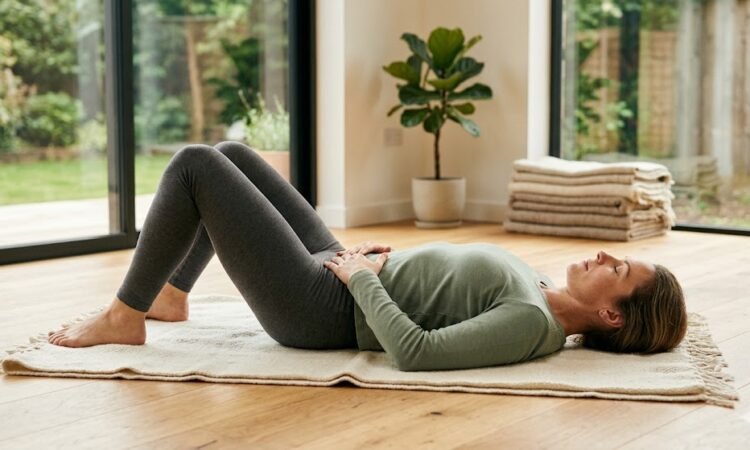
In todays busy and a high-performance world where no pain, no gain is observed by people to achieve success in their day to day life. But, they don’t understand that, our body pays a harsh price for it. We are currently living under a global stress epidemic, and with the adoption of traditional high-intensity interval training (HIIT) or heavy weightlifting are popular workouts which again adds more physical stress to an already overburdened nervous system. Where Somatic exercises not only beneficial for stress relief, but also to reduce trauma and helps to achieve the aimed wellness just by changing the way of caring yourself with a dedicated healthy body approach to maintain our mental health and physical recovery.
If you have ever felt tired, with experiencing a tightness in your jaw, or realized your shoulders were up to your ears while answering emails, you are experiencing the physiological situation of trapped stress. This article will explores why somatic movement can help in todays modern fitness world and how you can use it to reclaim your mental peace.
What are Somatic Exercises? Understanding the Soma
The word somatic derived from the Greek word soma, which means the living body. In the area of fitness and recovery, somatic exercises are movements performed consciously with focusing the internal strengthening rather than the external body appearance or aerobic flexible body.
Apart from the missed gym workout, where you might distract yourself with music or a TV screen, somatic movement requires you to be in the workout flow with muscle concentrated movement. It is a sensory-motor training method that helps our brain to reconnect with muscles that have become frozen or chronically tight due to stress, a phenomenon known as Sensory Motor Amnesia (SMA).
The Main Principles of Somatics:
- Slowness: Moving slowly allows out brain to process the body sensory information.
- Awareness: Focusing entirely on how the movement feels from the inside out.
- Gentleness: There is no stretching or forcing, it’s about ease and efficiency.
The Science of Stress: Why Your Body Holds Tension
To understand why somatic exercises are so effective for health enthusiasts, First we have to know about the Autonomic Nervous System (ANS). Your ANS has two primary branches:
The Sympathetic Nervous System: The Situational Fight or Flight response.
The Parasympathetic Nervous System: The Rest and Digest or Social Engagement response.
When we experience a stressor, whether our body prepares for the action. Muscles contract, heart rate increases, and breath becomes shallow. In modern fitness world, we rarely get this type of energy through routine physical movement. Consequently, the body remains in a state of low level sympathetic arousal.
Chronic stress causes the psoas muscle the deep hip flexor and the trapezius i.e. shoulders and neck to stay perpetually contracted. Over the time, your brain forgets how to fully relax these muscles. This is why you can’t simply relax on command, your nervous system has literally forgotten the way back to its normal state.
Top Benefits of Somatic Workouts:
As we move forward towards the more holistic wellness, the benefits of somatics are being backed by clinical interest:
- Regulation of the Vagus Nerve:
Somatic movements involve gentle rocking or humming like vibrations that stimulate the Vagus Nerve, the main component of the parasympathetic nervous system. A healthy vagal means you can bounce back from stressful situations more quickly.
- Improved Mobility Without Stretching:
Traditional stretching often triggers the reflex of flexibility, where the muscle actually tightens to protect itself from being pulled. Somatic workout followers pandiculation, just like the way a cat wakes up and stretches her body, which resets the muscles from resting state to active state by signaling your brain.
- Emotional Release and Trauma Healing:
Many health practitioners finds that as physical tension in the hips or chest dissolves, suppressed emotions are released. This makes somatic as a very powerful tool for those who are dealing with burnout, PTSD, or general anxiety.
5 Very Important Somatic Exercises for Stress relief:
You don’t need a yoga mat or expensive workout gear to do somatic workout. You only need a quiet floor and 10 to 15 minutes from your day.
- The Somatic Body Scan (The Awareness Phase):
- Before moving, you must listen. Lie on your back with your legs long.
- Notice yourself aout wwhich heel feels heavier?
- Find Is there a gap between your lower back and the floor?
- fees that Is any one shoulder closer to your ear than the other?
- The Arch and Flatten (Lower Back Pain Relief)
This is the best somatic movements.
- The Move: Inhale and gently arch your lower back, creating a space between your spine and the floor. Feel your tailbone as pressing down. As you exhale, slowly flatten your back into the floor, tilting your pelvis toward your ribs.
- Why it works: It relaxes the muscles of the lower back and abdomen simultaneously.
- The Flower Twist (Spinal Rotation)”
Lie on your side with your knees tucked in a resting position and arms extended in front of you.
The Move: Slowly lift the top arm and make a large arc over your body, reaching toward the floor on the other side. Let your head follow your hand.
The Key: Don’t push for a longer range of motion. Move only as far as it feels comfortable and easy going.
- Psoas Release (Hip Tension):
The psoas is often called as the muscle of the soul because it’s where we store deep life traumas.
The Move: While lying on your back, slowly slide one heel along the floor until the leg is straight. Then, very slowly, slide it back up. Focus on the deep internal muscles of the groin and hip.
- Shoulder Shrugging (Pandiculation):
The Move: Pull your shoulders up to your ears. Squeeze. Now, instead of just dropping them, take 10 full seconds to lower them down. Feel the fibers of the muscle lengthening inch by inch.
Somatic exercises for stress, Nervous system regulation, Vagus nerve stimulation, somatic movement for anxiety, psoas release, pandiculation vs. stretching.
Most of the people who are today seen searching for at-home, low-impact, and beginner-friendly solutions for chronic tension or burnout which somatic workouts can fulfil with better results.
Adopting Somatics Workout into Your Fitness Routine
You don’t have to give up your favorite daily gym sessions. In fact, somatic can make your heavy lifts more effective if done regularly with your routine workout.
- Pre-Workout: Use the Arch and Flatten to wake up your core and ensures that your pelvis is aligned before squatting.
- Post-Workout: Use somatic releases to signal to your brain that promotes your workout routine by allowing a faster recovery.
- Before Bed: A 5-minute somatic routine can significantly lower your body cortisol, by making it one of the best sleep hygiene hacks available.
The Power of Slowing Down:
The benefit of doing somatic exercise helps with shifting your focus from how your body looks to how it feels, you unlock a sustainable way to manage stress that no treadmill or diet plan can provide.
Start Immediately tonight. Lie on the floor, take a breath, and simply notice. Your nervous system and do the above given simple workout along with your daily exercise session. And you will feel a betterment in your mental and physical health by the time.
somatic exercises for trauma release
Somatic exercises support trauma release by reconnecting the mind to physical sensations, working directly through the nervous system rather than depending on body recovery and cognitive processing alone. When a traumatic event occurs, the body’s innate an immediate survival response, which can make your other body sensations stopped, by leaving the autonomic nervous system stuck in a hypervigilance or shutdown situation.
Gentle somatic workouts, including slow body movements, grounding techniques, controlled shaking, and mindful body scanning, helps in safely release this saturated muscular tension and harmful physical situation.
By prioritizing careful attention towards internal body sensation over dynamic physical effort, these exercises signal safety to the brain, regulating the amygdala, and complete stress cycles that were stucked. Over the time, this process restores your nervous system regulation, expands emotional capacity, and allows our body to release the tension in more safer way.
Here are 3 accessible somatic exercises you can practice at home to help downregulate your nervous system and release stored tension:
- The Butterfly Hug (Body Tapping)
This workout technique uses bilateral muscle stimulation, alternating touch across both sides of the body, to soothe the nervous system, reduce hypervigilance, and restore emotional stability.
How to do it:
- Cross your arms over your chest, resting your hands gently below your collarbones or on your upper arms.
- Close your eyes or soften your gaze down toward the floor.
- Alternately tap your left hand and right hand slowly, like the rhythmic flapping of butterfly wings.
- Continue it for 1 to 3 minutes while keep breathing slowly by your nose, focusing on the rhythmic physical contact.
- Neurogenic Shaking (Therapeutic Tremoring)
You have observed in past around you that, many times domestic Animals such as Cow, Dog, Cat etc, seen naturally shaking their body after escaping from danger to discharge the excess adrenaline and reset their body nervous system. Voluntary somatic shaking mimics this natural muscle tension release mechanism to untighten the saturated muscular tension.
How to do it:
- Stand on your feet with a feet hip width distance and knees slightly bent, or lie down comfortably on your back with knees bent and feet flat on the floor.
- Begin by gently bouncing on your heels or shaking out your hands, arms, and legs.
- Allow loose, involuntary trembling or slowly shaking to spread through your limbs and torso.
- Keep your breath steady and loose. Continue it for 2 to 5 minutes, then sit or lie on floow for some time to experience the shift in sensation.
- Orienting and Grounding Body Scan
Trauma often causes us to check out or feel disconnected from our existing situations. Orienting actively sends signals of safety from your eyes and skin to the amygdala.
How to do it:
- Sit comfortably by keeping your feet flat on the floor. Take a moment to notice the pressure of your weight against the chair.
- Slowly turn your head and let your eyes naturally see around the room, taking in shapes, colors, and textures without judgment.
- Pause on an object that feels visually comforting. Let keep your steady attention on it for a few seconds.
- Take a deep breath by your nose, exhale with a slow sigh, and notice the physical grounding sensation in your feet and back body seat portion.
Frequently Asked Questions (FAQs)
- How often should I do somatic exercises?
For best results, practice 10 to 15 minutes daily. Consistency is more important than duration because you are retraining your brain.
- Are somatic exercises are same as yoga?
While they share few similarities, but yoga often focuses on specific workout poses (asanas) and flexibility. Whereas Somatic exercise is strictly concentrated around the internal body sensory feedback and neuromuscular reprogramming.
- Can somatics help with chronic pain?
Yes, by addressing the Sensory Motor Amnesia, many people find relief from chronic back, neck, and hip pain that hasn’t responded to traditional physical therapy.
We hope above article on Somatic Exercises for Stress relief and wellness will help you to gain more knowledge and, you will also experience its health benefits by adding this multi-beneficial workouts in your daily routine.

Editor
Professional Naturopathy, Holistic Wellness & Preventive Health Specialist
Doctor of Naturopathic Medicine, Bastyr University | Certified in Lifestyle Medicine (ACLM)
Dr. Blake takes a whole-body approach to health, blending medical knowledge with daily wellness practices. She’s worked in integrative clinics and now advises digital health platforms on sustainable self-care routines. on Gymbag4u.com, since 2019, she provides guidance on sleep, energy management, immune health, and how to balance wellness with real-world demands.