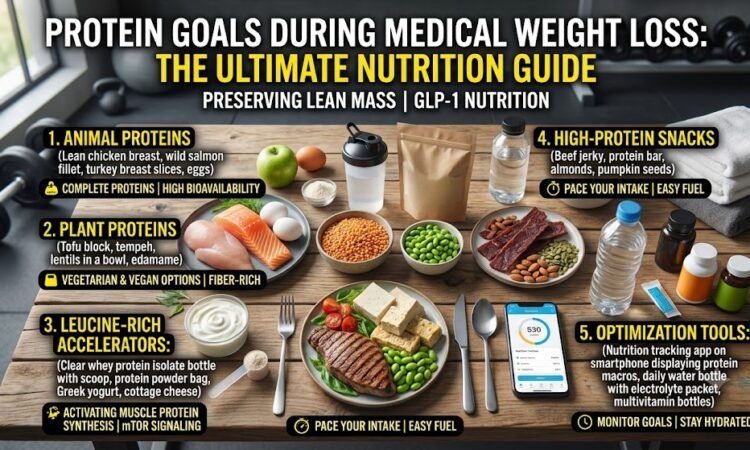
The wide acceptance of anti-obesity medications, such as Semaglutide such as Ozempic, Wegovy and tirzepatide ie. Mounjaro, Zepbound, which has completely revolutionized the todays modern clinical weight management. By quieting unhealthy food habits, stabilizing blood sugar levels, and slowing down gastric process, these medical advancements allow every individuals to achieve a sustained calorie deficit with lesser metabolic stress than traditional dieting practices.
However, faster weight loss achieved by these advanced therapies, which comes with a strict health rule, when you drastically cut daily calories intake, your body does not just burn body fat, but it also actively targets body muscle.
Large-scale clinical data and dual-energy X-ray scans such as DEXA scans indicate that up to 25% to 40% of the total weight lost, which happens through the high calorie restriction or GLP-1 therapy and can be directly from the actual body mass. Losing this important, metabolically active tissue can slows down your resting metabolic rate (RMR), and triggers systemic physical fatigue, and compromises long-term functional health.
To counter this catabolic issue, adjusting your body’s adequate macronutrient supply is very important. Understanding and hitting your strategic protein goals during medical driven weight loss is the single most critical factor in protecting your body muscles, maintaining your long-term metabolic health, and achieving a healthy body transformation.
Why Medical driven Weight Loss Shifts Your Biological Protein Needs
During a standard, self-directed lifestyle change, your appetite drops gradually as a person manually restricts food portion sizes. However, medical supported weight loss interventions accelerate this timeline. The strong, immediate satiety caused by GLP-1 and GIP receptor agonists often results as patients struggle to eat even required essential food, which further results in accidental crash diet.
When your overall daily food volume lowers, your protein intake drops along with it. If you do not intentionally prioritize this macronutrient through a planned diet, then your body rapidly enters in a negative nitrogen balance. In this condition, your liver and important body organs look for a readily available source of amino acids. Without dietary protein addition in your diet, your important body system begins breaking down the amino acids trapped inside your body muscle tissue to support important body organ functions and daily metabolic process.
Increasing your daily protein helps to serves two primary clinical functions:
- Skeletal Muscle Preservation: It provides a stable supply of important amino acids, which are required to repair, maintain, and protect body tissue under the metabolic stress of a steep energy deficit.
- Enhanced Diet-based Thermogenesis: Protein boasts the highest Thermic Effect of Food (TEF) among all macronutrients. Your body burns up to 20% to 30% of the calories consumed from protein just trying to break down, digest, and process it, compared to a meager 5% to 15% for carbohydrates and fats.
Calculating Your Daily Protein Target: The Formulas
Standard recommended dietary allowances (RDAs) suggest a basic need of 0.8 grams of protein per kilogram of your body weight. However, this earlier metrics was designed decades ago to prevent absolute malnutrition in sedentary individuals, but it is today not that helpful for someone who is undergoing rapid, medication-based weight loss.
To aggressively protect your lean mass, clinical sports nutritionists, bariatric physicians, and modern obesity specialists recommends a significantly higher operational threshold.
- The Total Body Weight Formula (Standard Approach):
- The Target: Aim for 1.2 to 1.6 grams of protein per kilogram of current body weight daily.
- The Pound Conversion: If you prefer tracking in pounds, this equates to roughly 0.6 to 0.8 grams of protein per pound of current body weight.
- Example Calculation: If your current weight is 90 kg (approx. 198 lbs), your daily protein goal should sit firmly between 108 and 144 grams of pure protein.
- The Ideal Body Weight (IBW) Alternative
If you have a significant amount of weight to lose e.g. individuals starting with a BMI over 35, calculating macronutrients based on a very high current weight may sometimes result in a needed protein target such as 200+ grams, that is highly difficult to digest.
In these specific clinical scenarios, physicians recommend aiming for 1.5 to 2.0 grams of protein per kilogram of your target or ideal body weight. This will ensure that your muscles are fully nourished without over-stressing your digestive system.
Quality Matters: Prioritizing Leucine and Complete Proteins
Meeting your daily protein target is only half the battle towards health, and the molecular source of your protein determines how effectively your body utilizes it. To trigger Muscle Protein Synthesis (MPS), the cellular process that protects and builds muscle tissues, you need a complete proteins that boast a high concentration of the essential amino acid leucine. Leucine acts as the primary chemical based promoter for the mTOR pathway, commanding your cells to preserve the valuable muscle mass.
When thinking about your body nutrition alignment with regular grocery list is very important, with dividing your choices into highly efficient, lean food categories:
Animal-Based Sources (Highest Naturally available food)
- Whey Protein Food Sources: Rapidly absorbed by the gut and exceptionally rich in natural leucine.
- Poultry Items: Skinless chicken breast and turkey breast offer higher protein and with lower or zero fat.
- Liquid Egg Whites: A pure, fat-free, highly digestible protein source that can easily mixed in whole eggs or oats.
- Cold-Water Fish: Salmon, Tuna, Cod, and Tilapia provides anti-inflammatory omega-3 fatty acids alongwith other necessary amino acids.
- Dairy Products: Non-fat plain Greek yogurt and low-fat cottage cheese offers slow-digesting casein protein, ideal for night time energy and muscle mass recovery.
Plant-Based Sources (High Fiber & Density)
- Soy products & Tofu: Excellent complete plant based proteins that support cellular repair without giving heavy saturated fats.
- Seitan & Tempeh: Highly protein and texture-rich food options for vegetarian medical weight loss practices.
- Pea and Rice Protein Mixes: Combining these two plant based protein sources ensures a better, complete amino acid supply that equals to animal protein.
Strategy: How to Hit Your Protein and Energy Goals with a Low Appetite
The irony of medical supported weight loss is that you must eat more protein while experiencing a dramatic, medication-based drop in your diet which you eat. Forcing down heavy portions of protein rich meat will only result in severe bloating, nausea, and acid reflux which further delays the digestion and gastric process.
To achieve your daily protein targets comfortably without overloading your stomach, use these planned diet shifting strategies:
- Practice Protein Pacing (The 30 in 3 Rule)
Instead of eating the traditional two or three large meals a day, space your diet evenly in many parts across your day. Aim to consume 30 grams of high-quality protein for every 3 to 4 hours. Pacing your protein intake ensures your muscle tissues to receives a stable, predictable supply of amino acids throughout the day without stretching your slowed gastrointestinal tract.
- Leverage Liquid Nutrition and Clear Isolates
When solid food feels completely unappealing, switch to your medium. Clear whey protein isolates, protein and water based drinks, or nutrient-rich smoothies pass through the stomach much faster than heavy food items such as meats. They provide an easy way to hit your nutrition without triggering morning or post-workout nausea.
- First Loading Proteins in Your Food Plate
When sitting down to eat a meal, always eat your protein based food item first. If you experience sudden satiety and get full halfway through the plate, then it confirms that you will have already secured the most important macronutrient for your muscles, leaving behind the less essential carbohydrates or fats.
Important Checklist for Protein based Clinical Diet Success
- Plan Your Nutrition Targets Early: Calculate your target using the 1.2 to 1.6 g/kg formula and track it daily using a nutrition app.
- Track Your Physical Strength: If the weight scale is dropping but your strength in everyday life or the gym is actively reducing, then increase your protein intake immediately and check your calorie readings and plan accordingly.
- Stay Hydrated: Processing higher volume of protein requires enough water and fluid intake. Combine your meals with plenty of water and electrolytes to support your kidney health, combat with dehydration, and improve digestion.
- Combine with Progressive Resistance Training (PRT): Protein provides the basic health building blocks, but lifting weights or using resistance bands provides you the physical signal that forces your body to keep its muscle healthy and active.
Last but not least, medically supported weight loss medications including protein supplements are also incredibly powerful tools for improving your overall digestive health. By taking control of your daily protein intake, you ensure that the weight you lose is strictly excess body fat, upon reduction if helps you is being in shape, stronger, and with highly energy and functional body for the long term.
protein goals during medical weight loss, preserve muscle on ozempic, how much protein on glp-1, bariatric protein requirements, preventing muscle wasting during weight loss, high protein diet semaglutide, wegovy muscle loss.

Editor
Professional Naturopathy, Holistic Wellness & Preventive Health Specialist
Doctor of Naturopathic Medicine, Bastyr University | Certified in Lifestyle Medicine (ACLM)
Dr. Blake takes a whole-body approach to health, blending medical knowledge with daily wellness practices. She’s worked in integrative clinics and now advises digital health platforms on sustainable self-care routines. on Gymbag4u.com, since 2019, she provides guidance on sleep, energy management, immune health, and how to balance wellness with real-world demands.