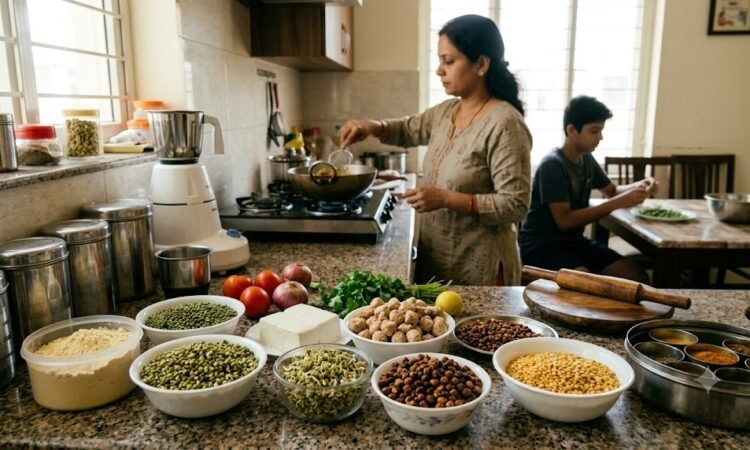
A common myth surrounding with vegetarianism, and especially traditional Indian cuisine, is that it is low in protein and heavy on carbohydrates. While standard home-cooked meals often promotes rice, wheat, and potatoes, the traditional Indian meal is in reality are actually packed with protein-rich, nutrient-rich food ingredients. Let’s explore in this article about High-Protein vegetarian meal plan and how it can be achieved by adopting a simple Indian routine diet.
By smartly combining everyday food items such as legumes, dairy, soy, and seeds, you can easily create a high-protein vegetarian meal plan that supports better muscle recovery, weight management, and sustained body energy without depending on expensive food items or heavy protein supplements.
The Science of Plant-Based Protein Combination to achieve better health:
Vegetarian proteins, with a few exceptions such as soy and quinoa are often considered as incomplete because they lack one or more essential amino acids. However, Indian traditional cuisine naturally solves this amino acid need through other nutrients which supports protein extraction.
- Cereals + Legumes: Combining grains based food such as rice, wheat, millet with pulses made food items such as dals, beans, chickpeas benefits a complete amino acids and essential nutrition. Classics Indian food items such as Dal Chawal or Dal Khichdi shows the practice of consuming a combination of food to achieve the protein needs of our body.
- Dairy Intake: Milk products such as paneer, dahi / curd, and hung curd / Greek yogurt provide high natural protein which is rich in leucine, an essential amino acid very important for muscle synthesis.
- Soy based Food Items: Soya chunks and Soya tofu offers one of the highest protein richness per gram among the plant based food sources, making them important for completing the daily protein targets very efficiently.
The Daily High-Protein vegetarian meal plan to achieve 80 to 90grams of Protein:
A plant-based high-protein Indian diet consists of food items made with combining whole grains, legumes, dairy, and traditional protein and nutrient rich food ingredients to generate the essential amino acid for our body. Important food items such as paneer, Greek yogurt or hung curd, soya chunks, sprouted pulses, and dal’s provide high protein while fitting perfectly easy into daily cooking routines. Pair these with complex carbohydrates and healthy fats to maintain stable body energy levels and support better muscle repair.
To Gain around 80 to 90 grams of protein in a single day diet can be achieved with using simple home-cooked items, focus adding a portion of protein sources across every meal rather than eating protein in a single large serving.
Here is a well structured, simple one-day meal plan using everyday Indian kitchen food items designed to deliver roughly 85 to 90 grams of protein.
- Breakfast: Besan & Paneer Cheela (Approx. 22g Protein)
Start your morning with a savory pancake made from gram flour (besan) stuffed or mixed with fresh paneer.
- Ingredients: 1 cup besan (Gram Flour), 50g grated paneer, green chilies, coriander, spices, and 1 tbsp pumpkin/flax seeds sprinkled on top.
- Why it works: Besan provides complex carbohydrates and fiber with a higher protein content than refined wheat flour, while paneer adds richness and is a complete protein.
- Mid-Morning Snack: Roasted Black Chana (Approx. 7g Protein)
Keep your metabolism active and reduce mid-day hunger with a crunchy, fiber-rich snack.
- Ingredients: 1/2 cup roasted chana (bhuna chana) with skin, paired with green tea or warm lemon water.
- Why it works: Roasted chana is low in calorie, rich in dietary fiber, and provides stable body energy without causing blood sugar spikes.
- Lunch: Soya Chunk Curry, Missi Roti & Curd (Approx. 28g Protein)
A heart healthy, traditional meal adds a maximum protein richness to your meal.
- Ingredients: 40 grams of dry soya chunks, either boiled and cooked in tomato-onion gravy, 1 missi roti made with a 1:1 ratio of besan and whole wheat flour, and 1/2 cup low-fat curd or raita (curd added with vegetables such as cucumber, tomato, onion, Basil etc).
- Why it works: Soya chunks contains roughly 50 grams of protein per 100 grams of its weight. Combines with missi roti and curd, this meal provides the highest protein supply required to our body for a day.
- Evening Snack: Sprouted Moong Chaat (Approx. 9g Protein)
A refreshing, nutrient-rich bite perfect for pre-workout or post-work energy accumulation.
- Ingredients: 1 cup sprouted green gram (moong), chopped cucumbers, tomatoes, pomegranate seeds, lemon juice, and chaat masala.
- Why it works: Sprouting increases the natural nutrients, improves digestibility, and improve the vitamin C content, which helps in micronutrient absorption.
- Dinner: Dal Tadka & Paneer Bhurji with Phulka (Approx. 22g Protein)
A comforting food, easily digestible evening meal that supports overnight body muscle repair and provides required energy for a refreshing morning.
- Ingredients: 1/2 cup cooked yellow or black dal, 75g scrambled paneer (paneer bhurji) cooked with spices and tomatoes, and 1 whole-wheat phulka.
- Why it works: Eating a slow-digesting protein sources such as paneer wich is rich in casein, before going to bed provides a stable release of amino acids throughout the night time.
Practical Tips to Boost Protein with Any Indian Meal
- Using Multi Grain Flour: Replace the regular wheat atta with a mixture of besan, soy flour, or sattu to instantly improve your rotis protein content and taste.
- Use Curd as a Base: Use thick curd or Greek yogurt instead of heavy milk cream or cashew paste for curries and dips (Chutneys).
- Eat more Seeds: Add a tablespoon of roasted flax, chia, or pumpkin seeds to chutneys, raitas, and salads helps to improve its pretein and nutrient richness.
- Prioritize Soya: Include soya chunks or granules in your meal preparaions for at least 2 to 3 times a week for a quick, budget-friendly protein boost.
We hope you are now aware about the natural food sources, by this above detailed article, which covers the high-protein Indian vegetarian meal plan, aligned with nutritional needs and important food items which are required to complete the body’s protein needs through natural vegan food items.

Amit Mehta is a Editor, Nutrition & Lifestyle Habits @Gymbag4u.com
B.Sc. in Dietetics, SNDT University, Pune | Registered Dietitian (RD India)
Amit Mehta joined Gymbag4u.com in 2019, bringing with him a strong foundation in clinical nutrition and public dietary education. As a registered dietitian.