


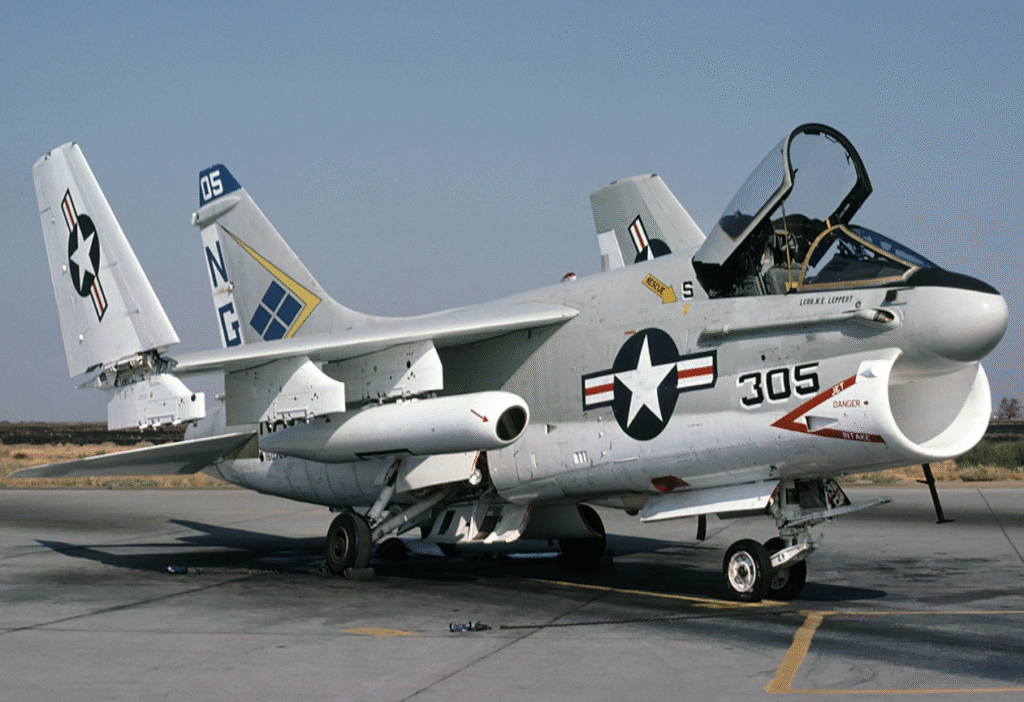
Few planes showcase the development of American air power in the Cold War era quite so well as the Vought A-7 Corsair II. Conceived in the middle of the Vietnam War, this aircraft served for decades, developing a reputation as a precision strike aircraft of intelligent design and reliability. The A-7 was able to find a niche in aircraft history, marrying sophisticated technology with practicality that many of its contemporaries lacked.

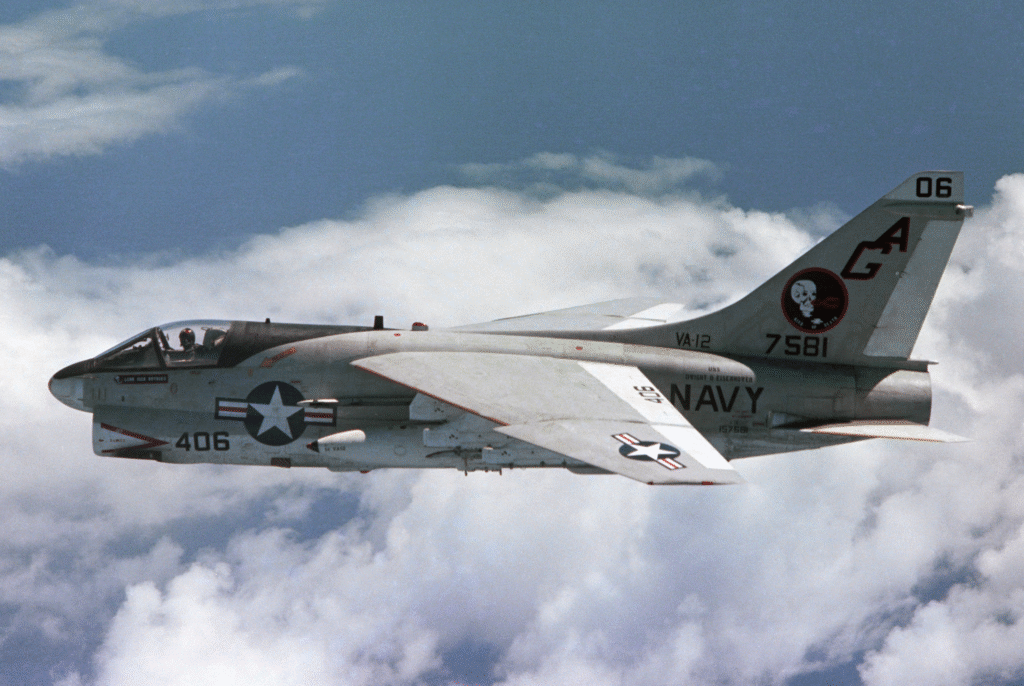
The A-7’s history starts in the early 1960s, when the U.S. Navy required a new attack aircraft to replace the aging A-4 Skyhawk. The task was simple: create a carrier-based attack aircraft that would carry more, fly further, and use more advanced avionics. Ling-Temco-Vought, or LTV, accepted the challenge by basing the design on the F-8 Crusader’s airframe. The outcome was a subsonic, single-seat jet that would find itself a trusted workhorse of the Navy and the Air Force.

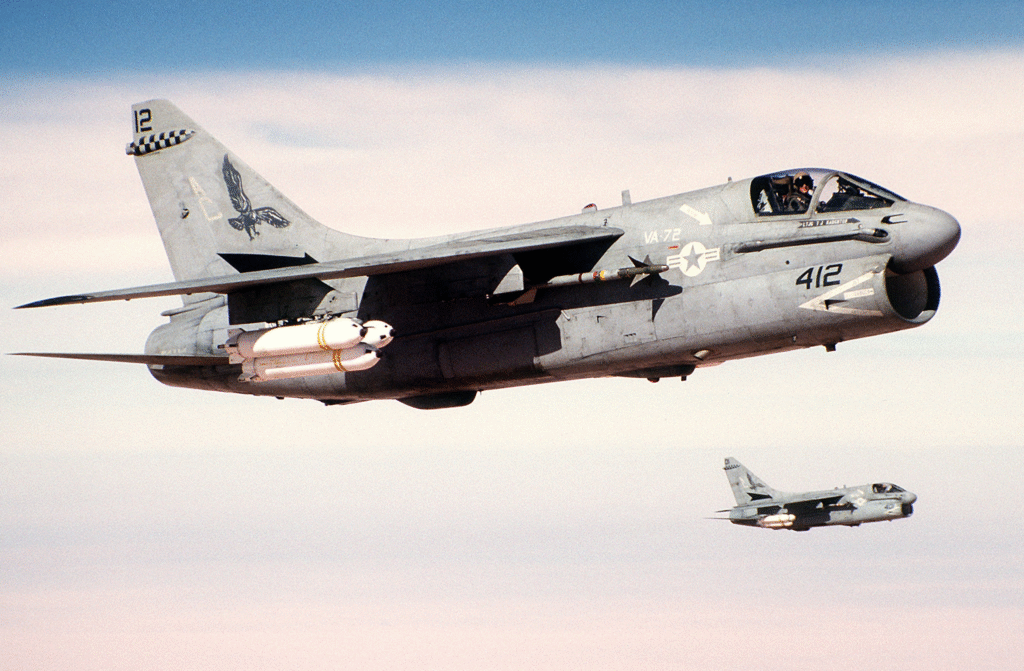
What really distinguished the A-7 was its state-of-the-art avionics. It was one of the first tactical aircraft ever to have a digital navigation system, a heads-up display, and radar integrated into the cockpit. These enabled pilots to have unrivaled situational awareness and target accuracy, so they could attack in any weather, day or night.
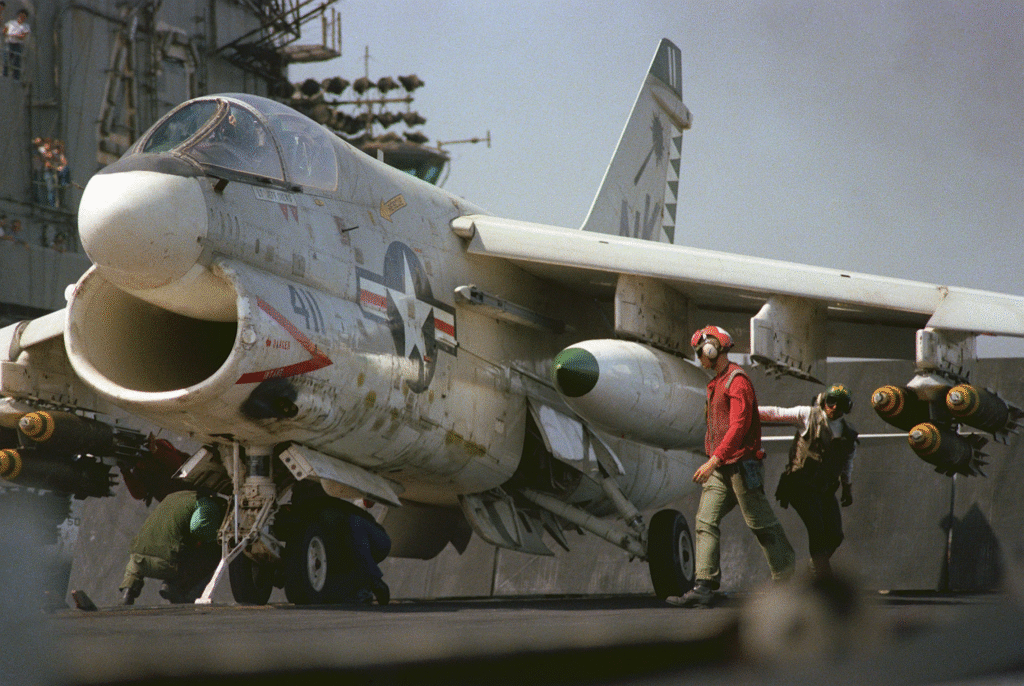
Underneath the cowling, the A-7 had a Pratt & Whitney TF30 engine, which was later replaced in certain versions by an Allison TF41. Although not designed for sheer speed, it could travel close to 690 mph and had a range of more than 2,200 miles in operation, which suited it perfectly for long-range missions with minimal refueling stops.

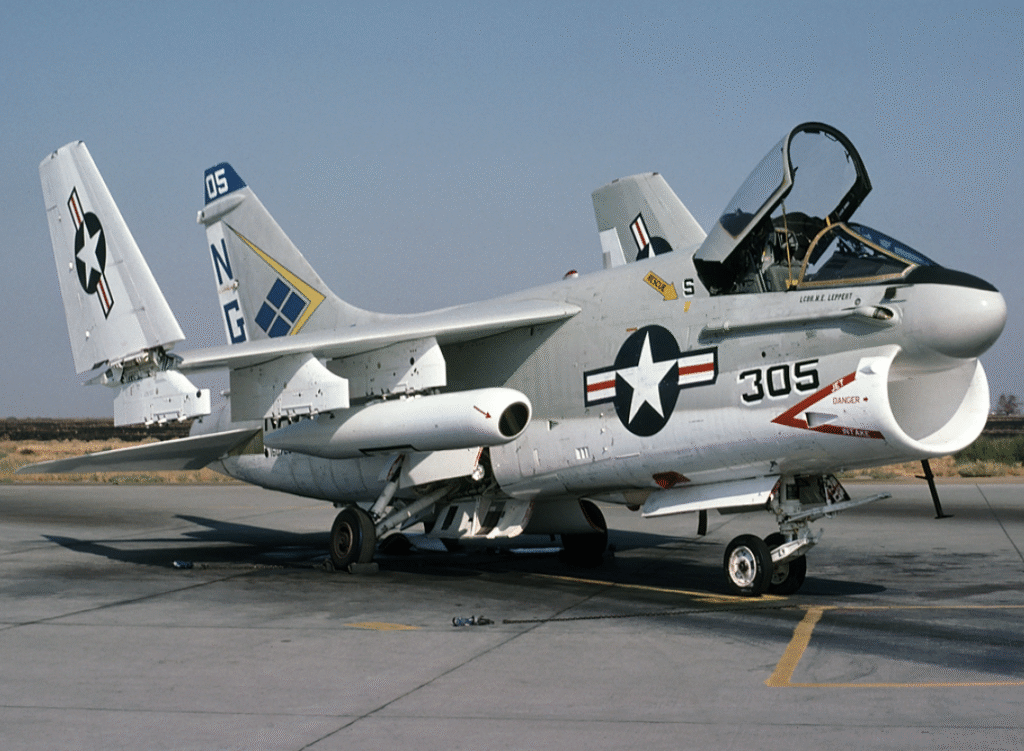
The Corsair II entered battle over Vietnam initially, rapidly gaining a reputation for accurate bombing and resilience to fire. Pilots admired its responsiveness and targeting equipment, while commanders valued its capability of hitting targets accurately even in adverse weather conditions. Its performance earned it an essential role in the U.S. air campaign in Southeast Asia.

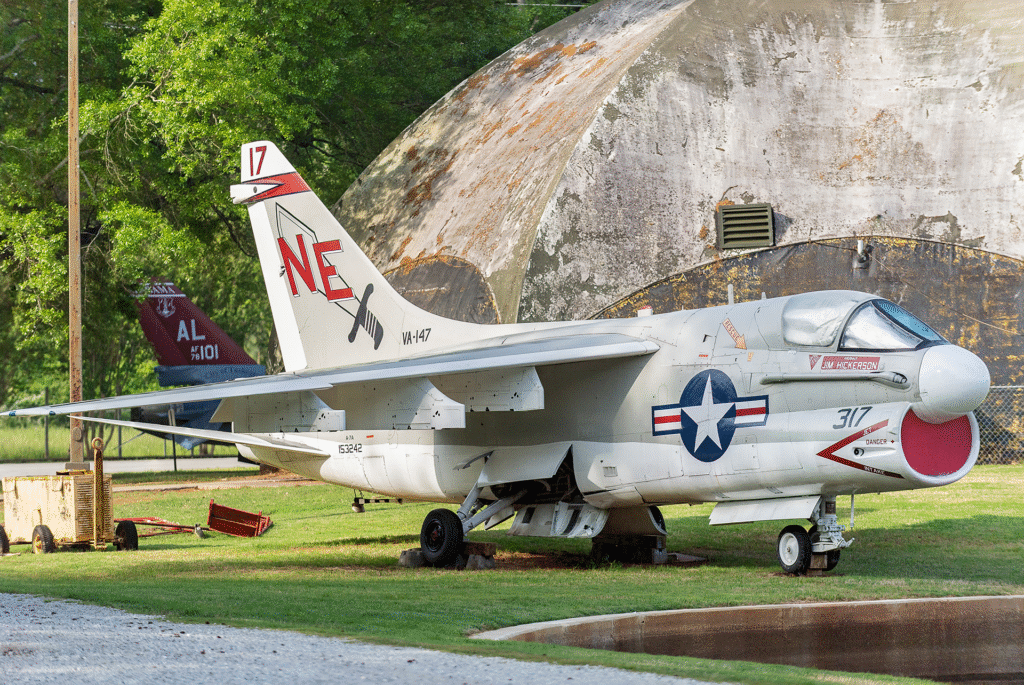
Following Vietnam, the A-7 continued to see action worldwide, engaging in Cambodia, Lebanon, Grenada, Libya, and also in Operation Desert Storm. Two Navy squadrons were still flying the Corsair during the Gulf War, but they played a critical role in the initial stages of freeing Kuwait.

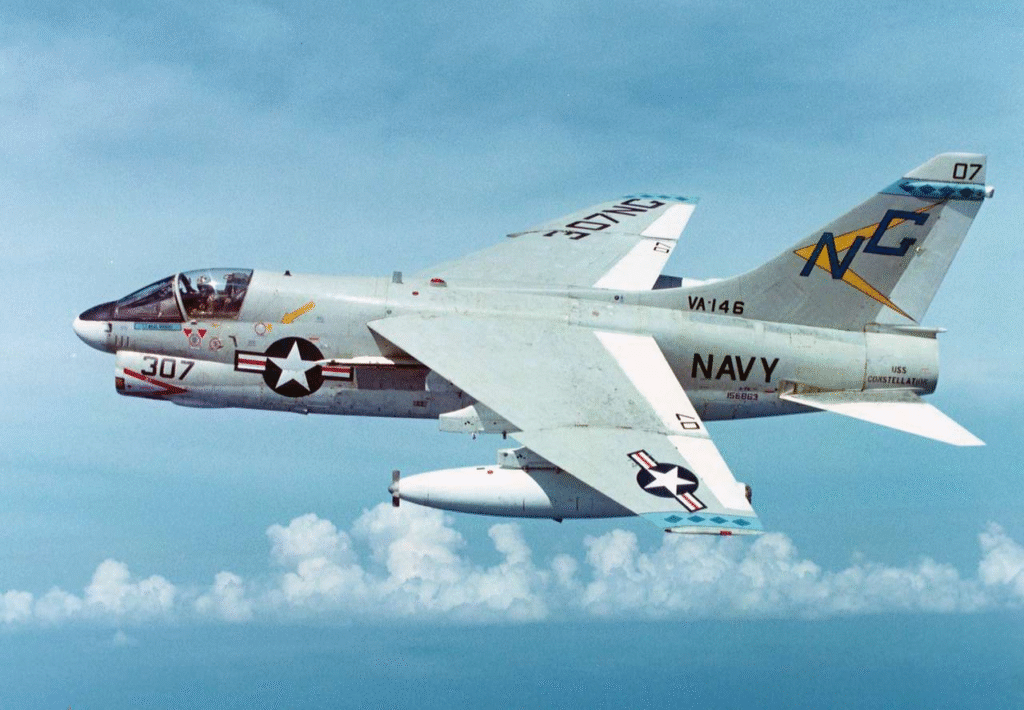
Over 1,500 Corsair IIs were produced in many versions. The Navy’s initial A-7A developed into the A-7B and A-7E, each more powerful and equipped with newer systems. The Air Force saw service with the A-7D and A-7K, the latter of which was customized with more powerful engines and enhanced HUDs to suit its own mission needs.

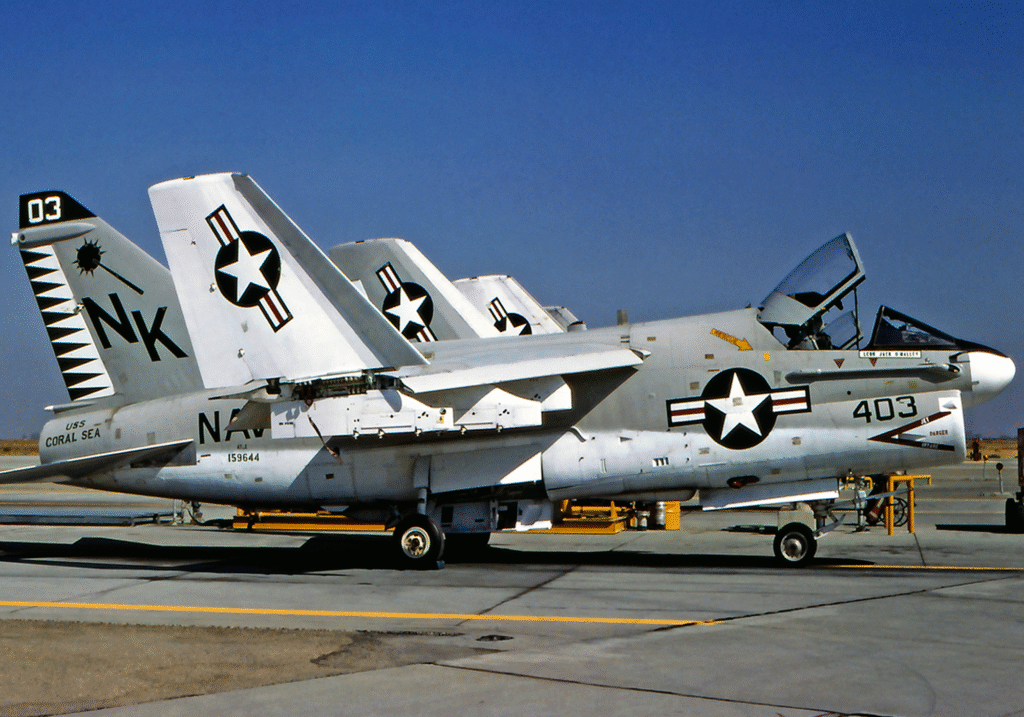
Experimental models such as the YA-7F, which was intended to become supersonic with an F-16 engine, managed to create only two aircraft before being canceled.

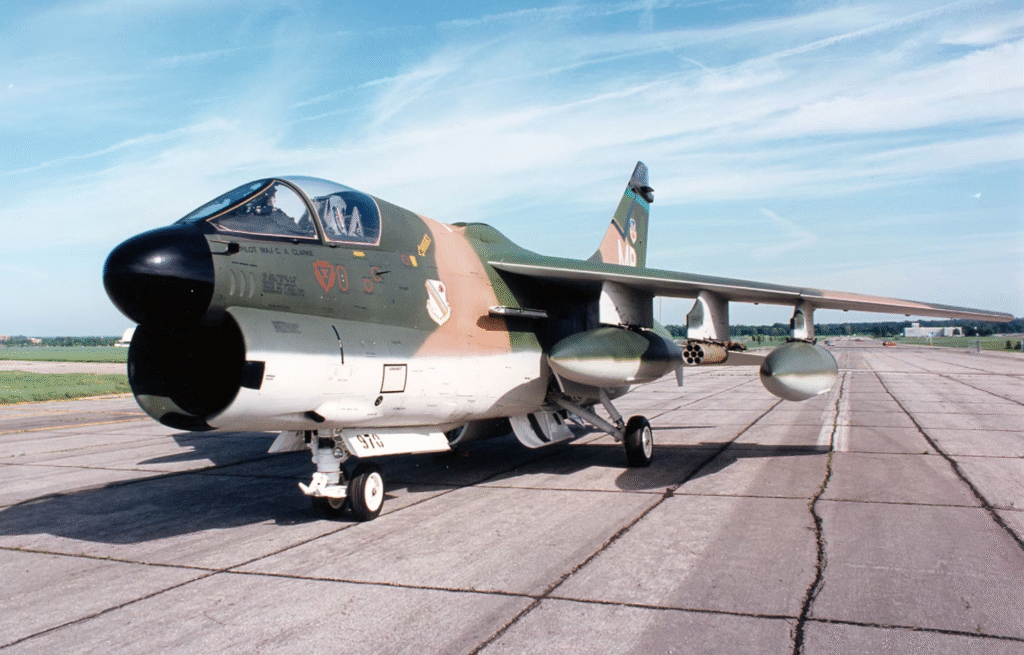
The A-7 also saw international service, flown by Greece and Portugal into the 1990s. Its ability to withstand use and remain easy to repair earned it a reputation as an ally favorite, making it a reliable and versatile plane.

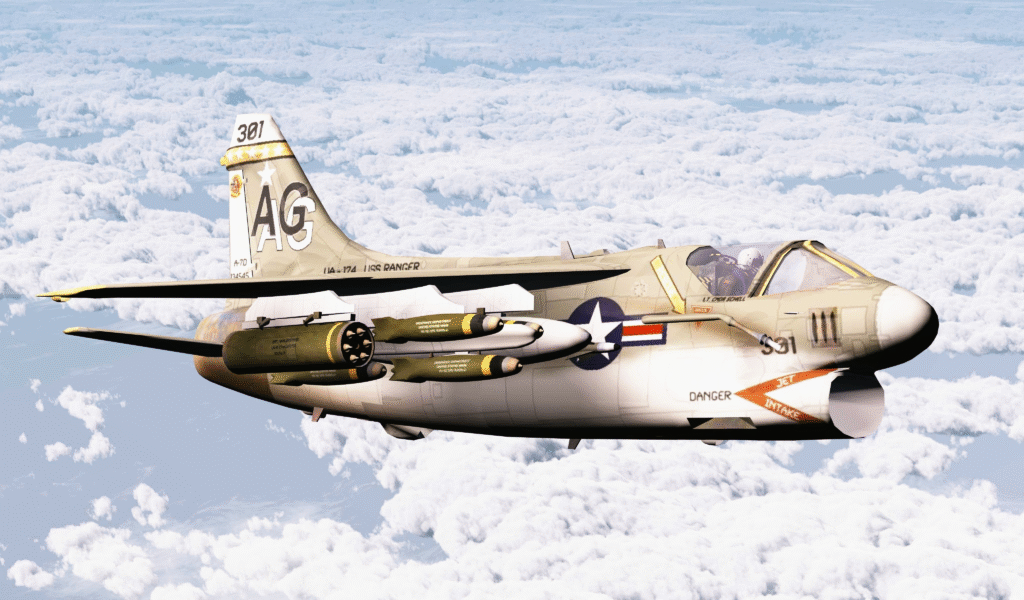
By the early 1990s, multirole fighters such as the F/A-18 and F-16 ended the service of the Corsair II. The Navy decommissioned its final A-7s in 1991, then the Air National Guard in 1993. The A-7’s legacy lives on, however. Museums throughout the United States exhibit restored Corsairs, and groups like the 185th Air Refueling Wing in Sioux City still keep and celebrate these incredible jets.

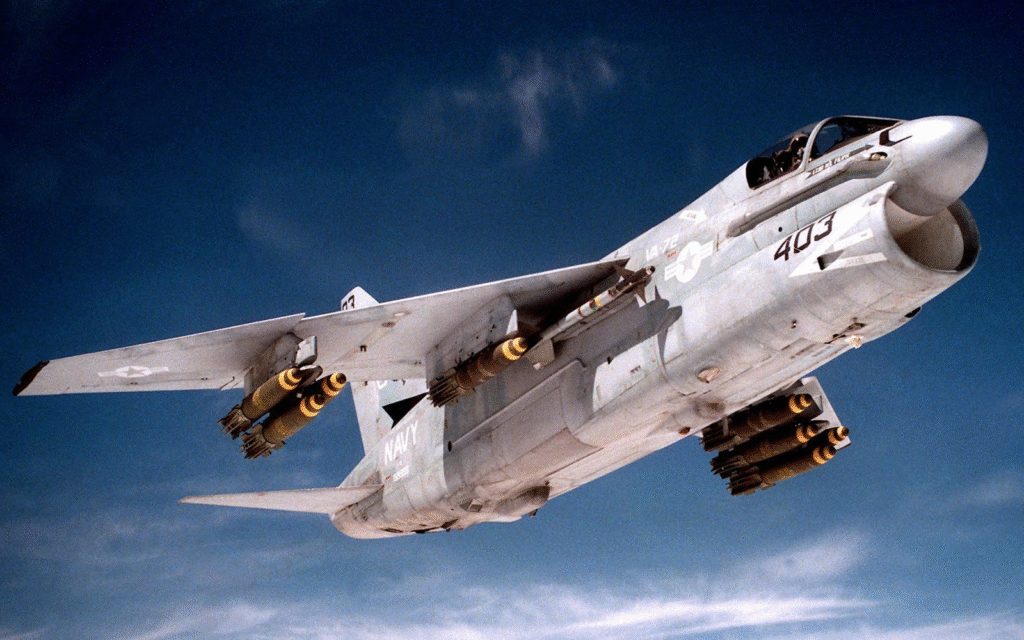
The Vought A-7 Corsair II defined contemporary precision strike, established new standards in avionics, and bridged the gap between early Cold War jets and today’s high-technology multirole fighters. To those who flew it and to those who maintained it in the air, the Corsair II is not a mere airplane—it’s a testament to ingenuity, reliability, and the unfailing pursuit of mission accomplishment regardless of the challenge.