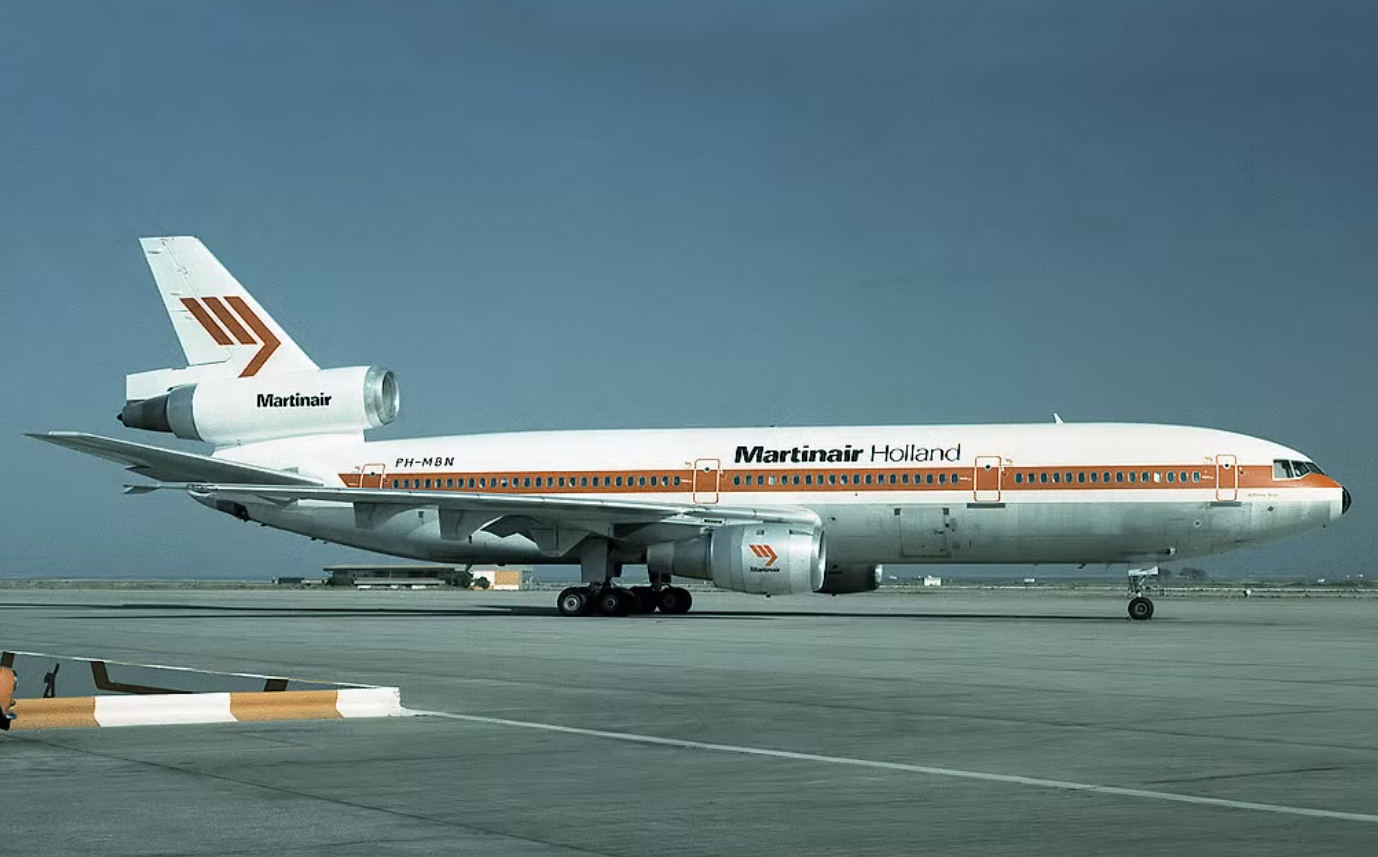

Its maiden flight in 1970 marked more than just another airliner: the McDonnell Douglas DC-10 meant a revolutionary future for commercial aviation. Air carriers wanted a widebody jet that could fly long distances without requiring the enormous infrastructure needed for the Boeing 747. McDonnell Douglas, fresh from its merger with Douglas Aircraft, promised just that.

The original design concept was ambitious—a double-deck aircraft—but practicality soon took the lead. The final DC-10 emerged as a three-engine, widebody plane capable of carrying nearly 400 passengers. It fit snugly between the massive 747 and smaller long-haul jets, giving airlines a balance of range, capacity, and flexibility.

Airlines such as American and United quickly embraced it. The DC-10’s spacious cabin, advanced avionics, and relatively quiet engines made it appealing to both operators and travelers. The tri-jet layout also helped meet the long-distance flight regulations of the time, making it a practical choice for international routes.

Yet, the aircraft’s early promise was soon overshadowed by a series of serious accidents. Cargo door failures emerged as a critical concern. In 1972, American Airlines Flight 96 experienced explosive decompression from a faulty cargo door, but safely landed.

Two years later, Turkish Airlines Flight 981 encountered the same issue—but with disastrous results, disintegrating in mid-air and killing all 346 people on board. These accidents revealed significant design weaknesses, prompting immediate repairs and new safety standards throughout the industry.

The deadliest accident involving a DC-10 occurred on May 25, 1979. American Airlines Flight 191 took off from Chicago O’Hare and lost its left engine shortly after liftoff. Hydraulic lines were severed, and the plane could not be controlled.

All 273 people on board were killed, making it the worst aviation accident in U.S. history. After that, the FAA grounded the entire fleet of DC-10s in the United States for over a month. Though the DC-10s were reinstated, public confidence in their safety was never restored.

While an unsavory introduction to the world of commercial aviation, the DC-10 was revamped in military service. The United States Air Force saw its potential and rebranded it as the KC-10 Extender multi-purpose aerial tanker, refueller, with the ability to transport freight and fuel.

Introduced into service in 1981, the KC-10 was the workhorse of American air power, mid-air and ocean refuelling with high effectiveness.

The KC-10 was instrumental in a series of operations, from the Gulf War to NATO operations in Kosovo, and from the post-9/11 missions to humanitarian relief. For decades, it did its work behind the scenes to ensure the air mission could keep going without a glitch, fueling and supplying wherever fuel and supplies were needed.

The KC-10 is being retired today. Farewell ceremonies at bases like Travis Air Force Base have honored crews, maintainers, and families who supported the aircraft over the years. As General John Lamontagne observed, “The true legacy of the KC-10 is not in the airframe itself but in the people who flew, cared for, and operated that airframe in some of the most demanding environments on the planet.”.

From a rocky start in the commercial sector to decades of dependable military service, the DC-10’s story is ultimately one of endurance and adaptation. Its early struggles reshaped aviation safety standards, while its second act as the KC-10 proved that even a plane with a challenging history could become a trusted workhorse.

Though passenger flights are long over, the impact and legacy of the DC-10 continue to soar through the history of aviation.