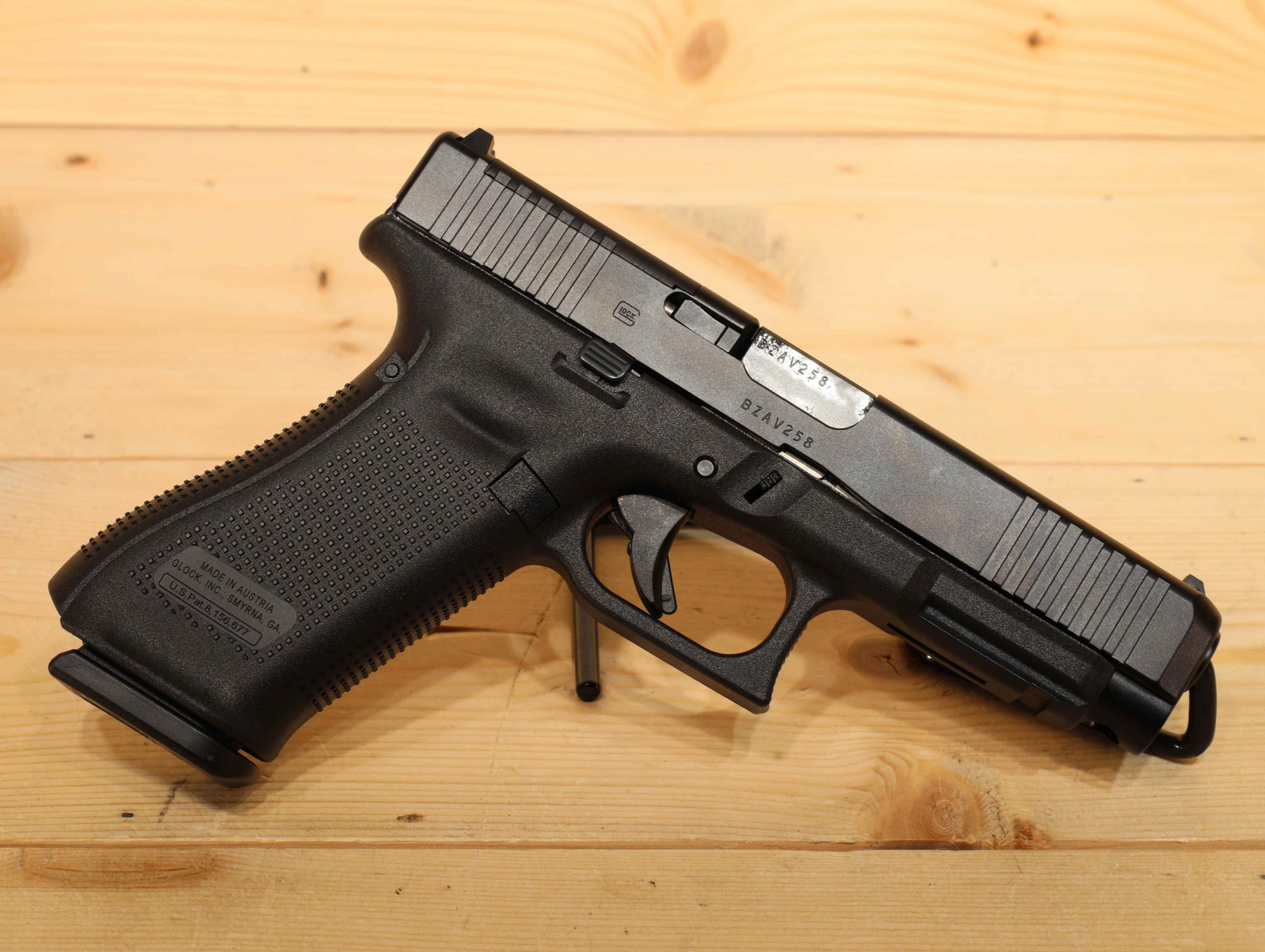

The Glock 47 represents the perfect example of how modern service pistols evolve when lessons learned in the field are applied to the need for smart, responsive designs. Originally designed for U.S. Customs and Border Protection, it was intended to replace the previous HK P2000 and offer agents something capable of more than merely shooting straight. The aim was to cut training, make maintenance easier, and eliminate logistical headaches while giving officers a pistol that could be set up for different missions without sacrificing performance. That approach—standardization to strip away complexity to enhance performance—is fast becoming a guiding philosophy in the military and law enforcement organizations across the globe.

What sets the Glock 47 apart is its modularity. In contrast to its siblings in the line, it was created from the ground up with complete compatibility with other fifth-generation siblings like the G17, G19, and G45 in mind. It uses a full-size frame with a 4.49-inch barrel similar to the G17 and has a shared collapsed dust cover, allowing it to share a G19 barrel and slide without modification.

What that means is major components can be swapped out in seconds, to switch the pistol over to a specific mission or to swap out components that have worn out. In an organization with thousands of users spread across the country, that level of flexibility is not just a nice-to-have—it’s a game-changer.

Functionally, the Glock 47 is true to what has always been advertised by the company: tough simplicity and reliable functionality. The polymer frame reinforced with steel makes the pistol durable but not heavy, while the Glock Marksman Barrel gives it more accuracy. The slide is optics-ready thanks to the Modular Optic System, and thus the shooter can fit his or her favorite red dot sight.

It is ambidextrous in controls, has a magwell for quicker reloads, and adjustable backstraps for different hand sizes. It fires just like the G17 in testing, as far as accuracy and recoil go, but with the plus of being able to be adjusted to different configurations. With its standard 17+1 capacity, it is one of the most popular duty pistols.

Compared to Glock’s other full-size pistols, the G47 fills a special niche. The G17 has long been the gold standard for a plain, reliable duty pistol. The G45 set a crossover model by using a G17 frame and pairing it with a G19 slide, and was praised for its balance.

The G47 follows that idea, offering the full-size footprint while being compatible with both full-size and compact slides. The compressed dust cover is an unobtrusive change, but it’s what allows the kind of interchangeability that sets this pistol apart from its ancestors.

In practice, that adaptability pays enormous dividends. A police department, for instance, could standard-issue the same generic pistol to all their officers and simply swap slides, barrels, or recoil assemblies depending on duty—routine patrol assignments, plainclothes, or a tactical operation.

That means less money and time spent training someone on multiple weapons systems and less hassle in having equipment ready to deploy. The same advantages hold for civilian shooters as well, who may want one pistol that can be dedicated to competition, home defense, or carry without compromising Glock’s reliability.

Another of its highlights in history is that of converting from sole use by the law enforcement department to production for the civilian market. The Glock 47 had been available only to agencies like CBP for a long time, but now it has become available to the general public. Because it will work with current G17 holsters and gear, current Glock owners do not need to have their systems converted in order to start using it. That compatibility has made the transition easier and more attractive for production shooters.

In the end, the Glock 47 is more than just in a lengthy line of successful guns. It’s the future of sidearm design: modular, bullet-resistant, and capable enough to fulfill a wide range of missions. Conceived to be used by one of the country’s largest law enforcement agencies and now embraced by civilian users, it shows how good design thinking can marry technology, functionality, and tactical needs into one platform. It is simultaneously a continuation of Glock tradition and a visible step towards the next generation of service pistols.