
Few weapons have ever revolutionized warfare as much as the atomic bomb. Its history started in 1938, when scientists in Germany found nuclear fission. That one discovery unleashed a worldwide race to harness the destructive power contained within the atom. Among the first to sound an alarm was Hungarian physicist Leo Szilard, who understood that fission could lead to chain reactions strong enough to power a new type of weapon. Albert Einstein appealed to President Franklin D. Roosevelt to act, a call that eventually led to the Manhattan Project.

The Manhattan Project was something the world had never seen before—a gargantuan scientific, military, and industrial endeavor that attracted thousands of individuals who had no clue what they were actually constructing. They operated at dispersed secret facilities in Oak Ridge, Hanford, and Los Alamos, where physicists, engineers, and workers toiled in near-total secrecy. The project followed two lines simultaneously: the creation of highly enriched uranium and the creation of plutonium. Both processes required enormous facilities and new technologies. The pressure was because of the fear that Nazi Germany would succeed first, but in fact, the success of the project was a function of sheer size, secrecy, and unrelenting will.

Getting the bombs built was one thing—getting them to the target was quite another. The U.S. Army Air Forces required a bomber large and sophisticated enough to accommodate the massive weapons. The Boeing B-29 Superfortress was that airplane.

It was revolutionary in its era with pressurized cabins, remote gun turrets, and high-powered engines. But it was far from flawless. Major General Curtis LeMay once joked that the B-29 had “as many bugs as the Smithsonian’s insect collection.” But nothing else was close to what was required, so the B-29 was selected and then extensively altered under the “Silverplate” program.

Those changes converted the B-29 into a specialized weapon carrier. Engineers stripped most of its defensive guns to conserve weight, improved its engines for performance, and changed the bomb bay with a specialized suspension system to carry the huge new weapons. The crew even received a new station assigned to watch over the bomb’s electrical systems. Perhaps the most important addition was a technique to enable the bomber to make a dive and hard turn following release, providing at least some hope for escape from the blast.

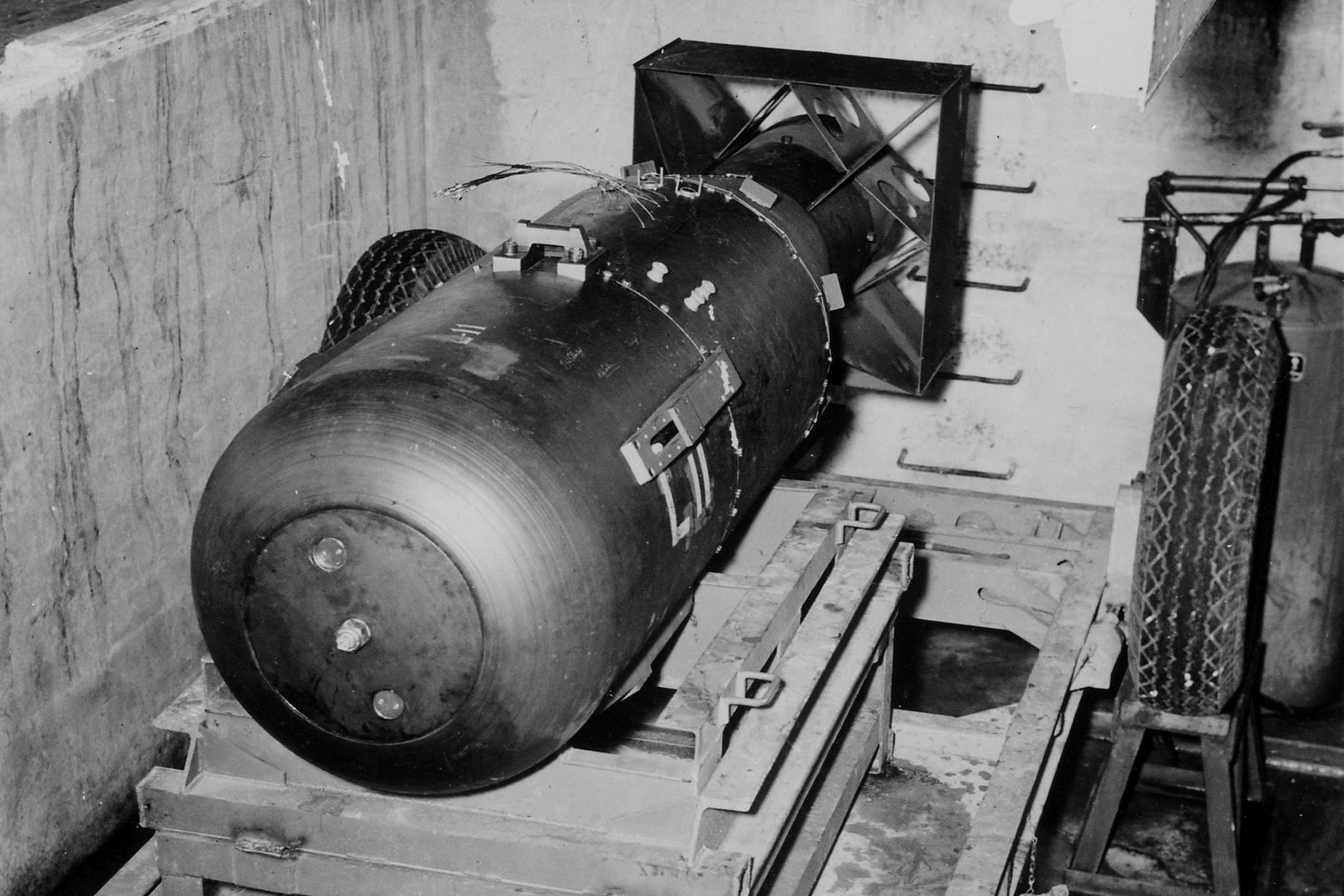
When the bombs were finally deployed, history was forever altered. On August 6, 1945, the Enola Gay released the uranium-based “Little Boy” on Hiroshima. Three days later, another B-29 called Bockscar dropped the plutonium-based “Fat Man” on Nagasaki.

Every mission included not only the bombers themselves but also escort planes for reconnaissance, weather observation, and scientific measurement. The destruction was instant and catastrophic. But more than that, the bombs caused Japan’s resistance to suddenly collapse. Within days, Emperor Hirohito announced the surrender, and by September 2, World War II officially ended.

The story did not end there. Instead, the bomb opened the nuclear age. The subsequent decades witnessed the Cold War’s insatiable arms race, with the United States and the Soviet Union manufacturing thousands of warheads and increasingly more destructive devices. The ultimate icon of that race was the Soviet “Tsar Bomba,” which was exploded in 1961, with a yield of approximately 50 megatons. It was so large that its shockwave orbited the Earth several times. Nothing like it existed before—or after.

Yet with power came danger. The nuclear arsenals of the Cold War were not invulnerable to accident. One such harrowing instance took place in 1961 when a B-52 bomber disintegrated over Goldsboro, North Carolina, releasing two hydrogen bombs. In one situation, all the safety devices failed except one switch, which averted an explosion. It was referred to as a “Broken Arrow” incident, and it revealed how close the line between safety and catastrophe could be when there are nuclear weapons.

Aside from accidents, nuclear weapons compelled an entire overhaul of military strategy. The idea of deterrence came to take center stage: having these weapons was intended to deter their use, as any war threatened mutual annihilation. But this equilibrium was always tenuous, depending on precise command structures, stringent control, and the assumption that leaders would respond sensibly in crises. The ethical and moral arguments about these weapons never disappeared and are some of the most challenging dilemmas for humankind.

Ultimately, the birth of the atomic bomb is a tale of genius and cost. It showcased the peak of scientific progress while revealing the darkest side of human conflict. Over seventy years on, nuclear weapons continue to be the most devastating weapons of war ever devised—testaments to human ingenuity as well as the sobering responsibilities that go with such potential.