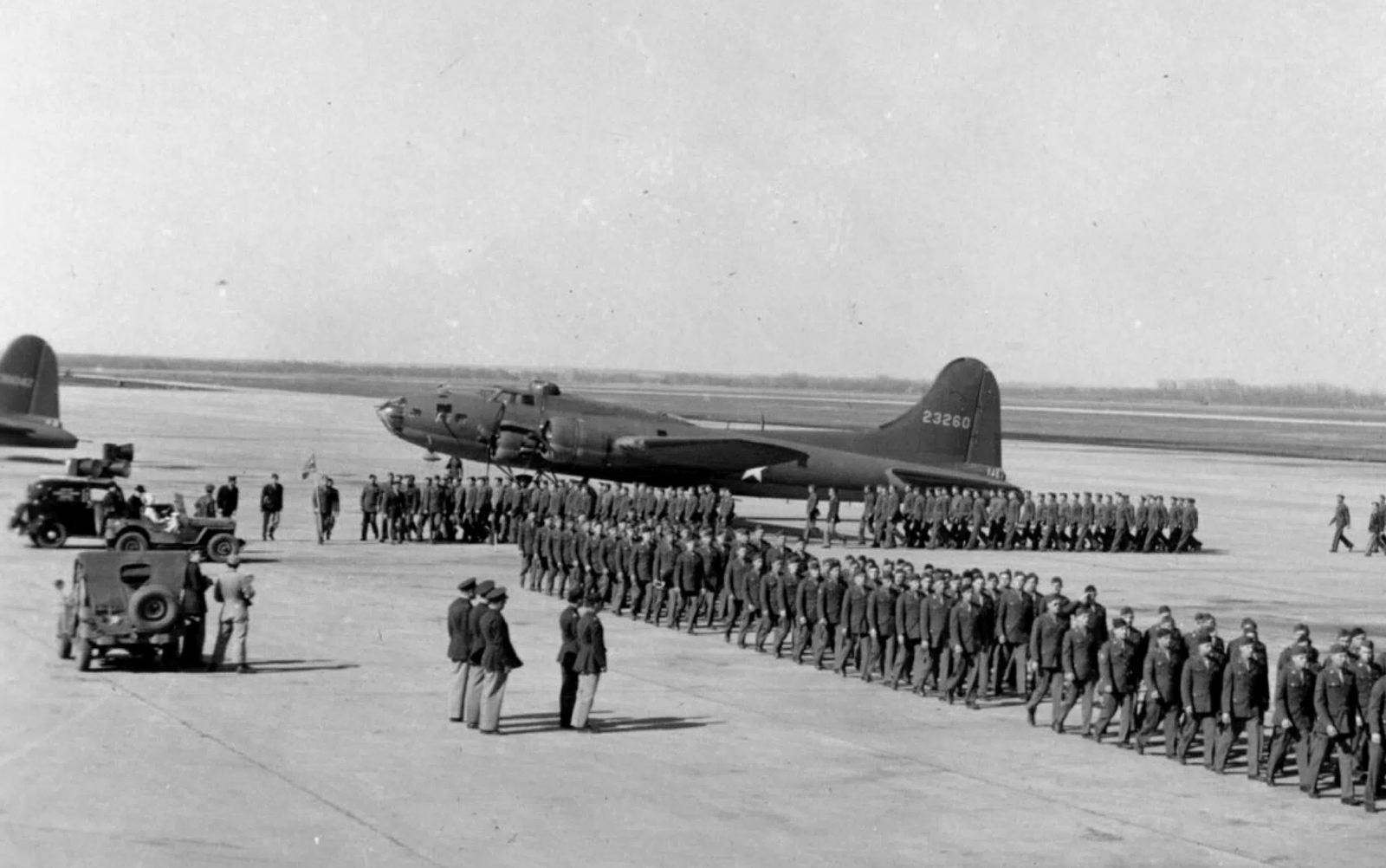

The 100th Bomb Group, or “the Bloody Hundredth” in popular usage, is in a special category in World War II air combat history. They are not only legendary for their audacious daylight bombing missions over Nazi-held Europe, but for the gigantic bravery, resilience, and spirit of the crews who took off from Thorpe Abbotts, England. Their legend wasn’t earned by numbers only—it was crafted in the steel, leadership, and unshaken resolve of the flyers who battled the most perilous skies ever imagined.

The saga of the group started in 1942 at Walla Walla Army Air Base in the state of Washington. Training was not smooth; confusion, miscommunication, and overconfidence at times tended to result in chaotic outcomes. An infamous navigation drill stranded planes everywhere in the western United States, with some pilots touching down miles off target in cities such as Las Vegas, and one unit even limping to Tennessee just to catch a glimpse of a pilot’s wife. Their first commander, Colonel Darr H. Alkire, was honest about the rough road that lay ahead, forecasting their mission to be anything but glamorous. When problems with discipline continued, Colonel Howard M. Turner commanded the men, tightening up the discipline and getting the men ready for deployment in England in 1943.

Deployed in England, the 100th joined the Eighth Air Force daylight precision-bombing campaign. The goal was to hit key industrial targets and stop the Nazi war machine, but the stark reality quickly dawned. With no long-range fighter escorts in the initial phases, the B-17 Flying Fortresses were rich targets for the enemy flak and fighters. The losses mounted fast, and the crews were subjected to perilous odds with every flight.

The squadron was given a grueling baptism on its first mission over Bremen, losing three planes and thirty men. Officers such as Operations Officer John “Bucky” Egan and Captain Gale “Buck” Cleven became morale symbols, retaining the unit’s drive and concentration amidst mounting casualties. Legend and a “jinxed” reputation clung to the 100th, further cementing its legendary status in airmen’s minds.

One of their most famous missions was on August 17, 1943, in the Regensburg Raid. The 100th held the most vulnerable position in the flight formation, ominously referred to as the “Purple Heart Corner.” Nineteen out of twenty-two planes were lost—the largest loss by any squadron on this raid.

Survivors remembered the supernatural vision of comrades falling, but men dealt with it by dealing with it through black humor as reports of audacious stunts and irreverent insubordination in the face of the enemy made their way far and wide.

October 1943 witnessed “Black Week,” a period that would turn out to be the nadir of hardship for U.S. bombers. On October 10, there were thirteen B-17s on the Münster raid, and just one came back—Robert “Rosie” Rosenthal’s Royal Flush. A seasoned attorney and the group’s sole Jewish pilot, Rosenthal experienced severe damage to his aircraft and lived through countless crash times, flying fifty-two missions and emerging as one of the unit’s enduring heroes.

The mental burden on the men was tremendous. The Air Force started rotating airmen to rest cycles, or “flak houses,” after the most tense missions. Commanders such as Colonel Neil “Chick” Harding recognized that morale and psychological toughness were as critical as discipline and training. Humor, friendship, and little distractions from stress were the keys to survival.

Despite the 100th’s reputation as a money-losing organization, it was not necessarily always the top statistically. But because their most catastrophic operations—Regensburg, Münster, and the Schweinfurt raid—were so sensationalized, the “Bloody Hundredth” became legendary. The unit’s tale was also seasoned with dashing characters, from the brash “Bucks” to navigator Harry Crosby, who once famously refused to destroy Beethoven’s birthplace out of respect.

In spite of relentless peril, the 100th had crucial missions in the war—raiding Berlin, supporting the D-Day invasion, and fighting in the Battle of the Bulge. When the war ended, they had completed 306 missions and had lost 757 men. Their legacy is not just in the pages of history, but in veterans’ memories, reunions, and in men’s stories such as Capt. John “Lucky” Luckadoo and Lt. Jim Rasmussen, who made sure the legacy of the Bloody Hundredth would continue to live on for generations.

The courage, sacrifice, and unyielding dedication of these airmen are a lasting record of bravery. Their action serves as a reminder to everyone that with courage, hope, and faith, any man can be a hero, flying into harm’s way with determination, wit, and unyielding purpose.