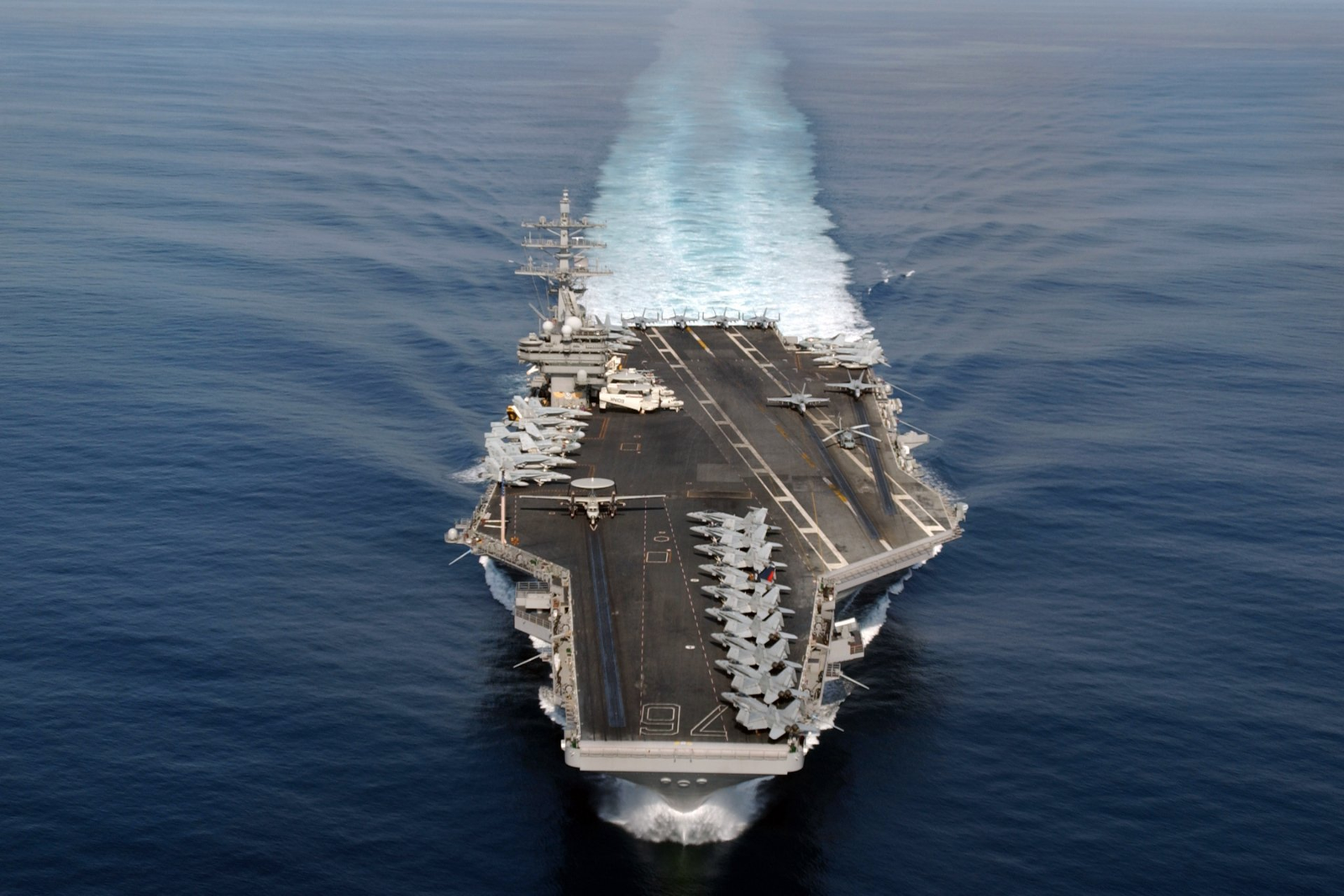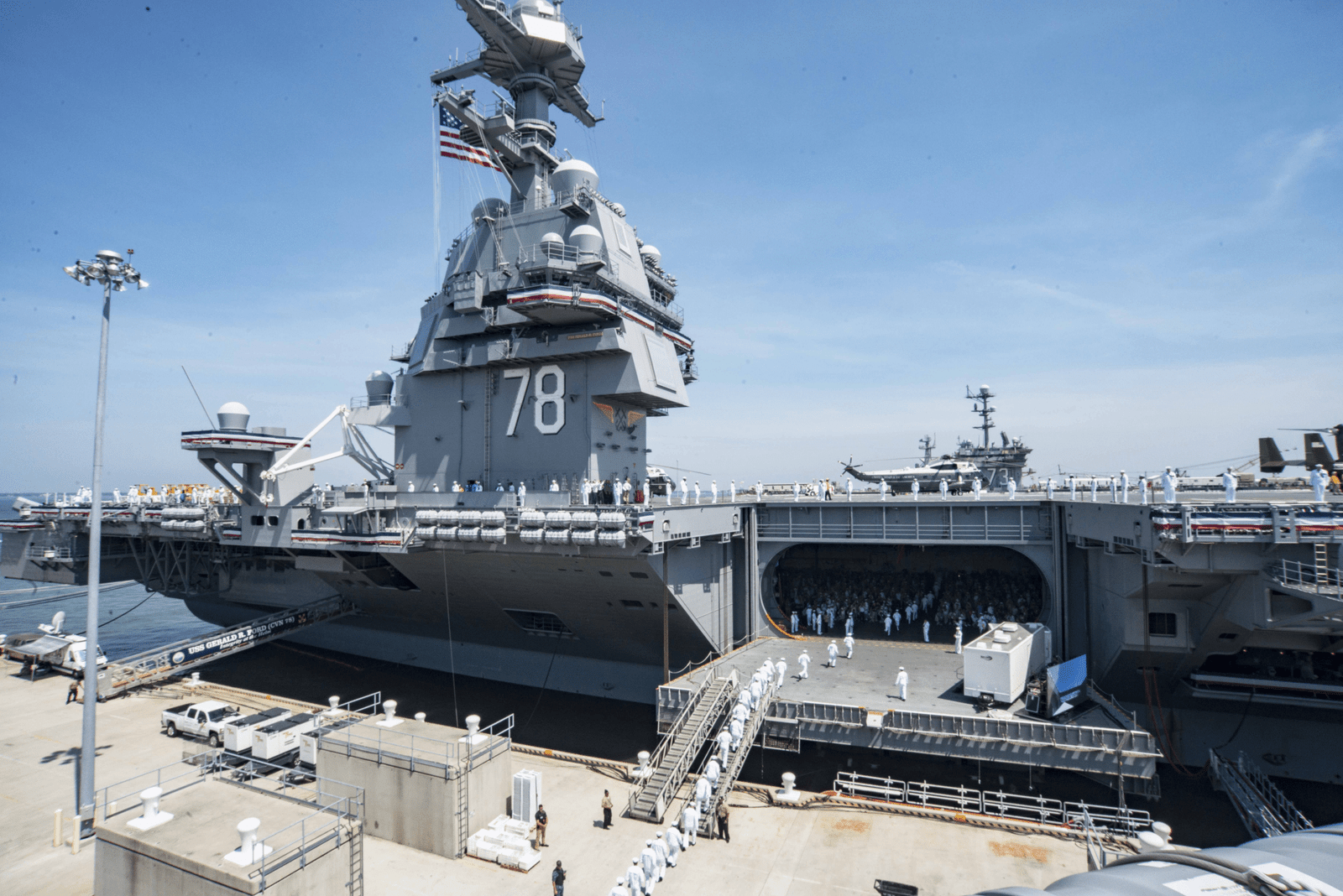

The Gerald R. Ford-class aircraft carriers have revolutionized the manner in which the U.S. projects naval power. As the first new carrier design in over forty years, they mark a generational jump in technology, efficiency, and combat capability—a genuine step forward that sets a new standard for modern warship design.

At its core is a suite of advanced systems. The Electromagnetic Aircraft Launch System (EMALS) replaces traditional steam catapults, providing smoother, more accurate launches for everything from heavy strike fighters to small drones.

Together with the Advanced Arresting Gear (AAG), these systems enable aircraft of different sizes and weights to be launched and recovered with greater speed, allowing for more sorties per day. The new flight deck—its reduced, relocated island and combined refueling stations—eliminates congestion, enhances aircraft flow, and increases safety in high-rate operations.

Below deck is another breakthrough: the advanced weapons elevators (AWEs). Employing electromagnetic propulsion and intelligent sensors, the elevators are about 50% faster than Nimitz-class carriers and twice as wide. By efficiently moving ordnance below deck, the Ford-class frees up precious space on the flight deck, enhancing workflow and safety during combat missions.

The Ford-class has already been tested and found valuable in actual operations. The USS Gerald R. Ford (CVN 78) recently finished its first operational deployment, cooperating with allied navies and supporting over 10,000 aircraft sorties.

It also successfully survived the Navy’s rigorous Full Ship Shock Trials, which included three tremendous 40,000-pound underwater explosions without suffering loss of operational capacity—a demonstration of the ship’s strength and the crew’s tough training.

Even though larger than the carriers they’re replacing, the Ford-class functions with 500 to 900 fewer sailors due to automation and high-tech systems. It lowers both manning and maintenance requirements—estimated at about 30%—and saves about $4 billion per ship over a 50-year life.

All this without compromising performance: the Ford-class can make up to 160 sorties a day, 220 at peak in heavy combat operations, outperforming the operational capacity of its predecessors.

Naturally, such progress hasn’t been easy. EMALS and AAG have had reliability concerns at first, sometimes underperforming during initial trials. Repeated repairs can be tricky because the systems are integrated, which compounds the difficulty in identifying issues while running. Long-time observers of steam catapults were quick to point out early problems.

Cost has been disputed as well. At almost $13 billion per ship—research and development costs not included—some have asked if more smaller ships could be a better investment. But the Ford-class is the linchpin of American sea power, with unmatched capabilities and range.

Finally, the Ford-class is more than a vessel; it’s a testament to flexibility, effectiveness, and supremacy. Its cutting-edge systems, survivability, and capacity for joint operation with allied forces guarantee it will be a prime asset for securing maritime interests for decades to come. As Navy sailors commonly point out, the ship is more than steel and hardware—it’s a demonstration of American ingenuity, innovation, and perseverance.