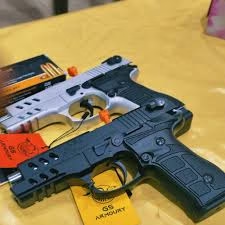

Decades of sidearm design have been driven by a single central quest: discovering the ideal balance of power, reliability, and user-friendliness. Few contrasts illustrate that quest better than the age-old rivalry between the .357 SIG and the .40 S&W. Both cartridges were the products of the same issue—how to provide police officers with greater stopping power following the fallibility of service-issue rounds being exposed during the 1986 Miami shootout.

The tale begins, in earnest, with the FBI’s reaction to that awful tragedy. Seeking more oomph from their duty sidearms, the bureau went with the 10mm Auto, a cartridge with magnum-like potential in semi-automatic packaging.

But the 10mm soon turned out to be too much for the majority of agents. Its snappy recoil and extra-size requirements made it difficult to manage, setting the stage for the .40 S&W. Created as a compact, softer-shooting counterpart to the 10mm, it was able to retain much of the power but made the platform much more practical. Police departments nationwide quickly switched over, wanting something more powerful than the 9mm but not as brutal as the 10mm.

Concurrently, manufacturers were designing sidearms durable enough to withstand the new generation of more powerful rounds. Sig Sauer filled the bill with the P229, a pistol with a stainless steel slide and a heavy-duty frame that would endure.

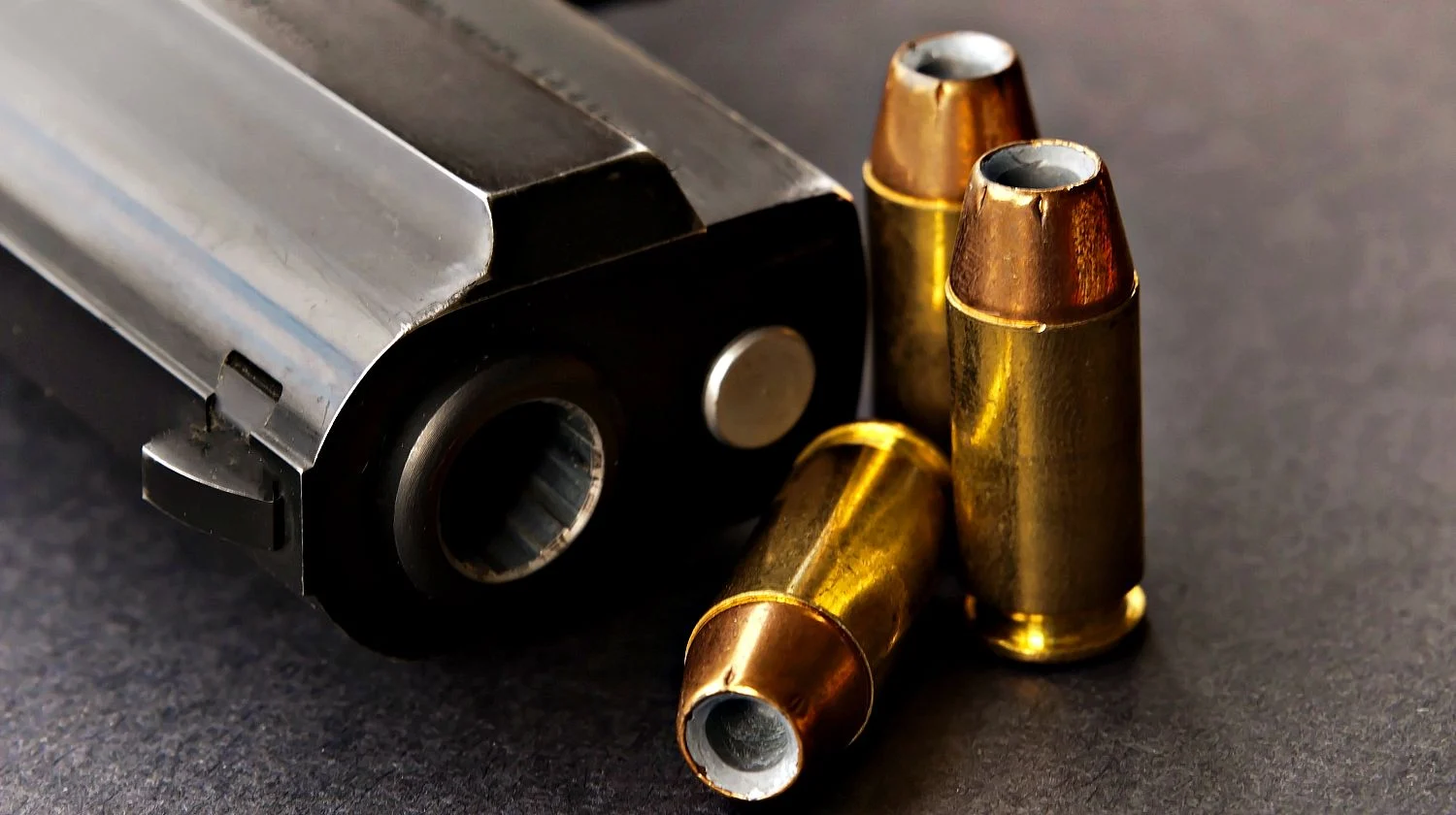
Interestingly, this super-strong design proved to be the ideal complement for a new cartridge: the .357 SIG. A .40 S&W case necked down to shoot a 9mm-diameter bullet, it was created to replicate the speed and terminal performance of the iconic .357 Magnum—albeit this time in semi-automatic form.

From a ballistic point of view, the two cartridges are very different. The .40 S&W relies on heavier bullets—usually 165 or 180 grains—at moderate velocities. From a 4-inch barrel, it produces approximately 500 foot-pounds of energy, with good penetration and well-respected stopping power. It’s commonly preferred by those who think bigger, slower bullets are still the most reliable.

The .357 SIG, meanwhile, is designed to be fast. Standard loads propel 125- to 135-grain bullets at more than 1,200 feet per second, keeping pace with the fabled .357 Magnum. That velocity not only delivers crushing energy but can also produce hydrostatic shock, which some believe gives it an advantage in instant incapacitation.

But ballistics only paint half the picture. The straight-walled case of the .40 S&W is less expensive and more convenient to reload, and its widespread use results in abundant ammunition that is reasonably priced. The bottleneck shape of the .357 SIG, while being great for feed reliability, is more difficult to reload and more expensive to fire. Combine this with its harder recoil and more booming report, and it is apparent that the .357 SIG asks more of both the gun and the shooter. But in exchange, it brings precision and velocity that few other semi-auto rounds can rival.

The Sig Sauer P229 is one of the best examples of these advances. Designed to function with both cartridges, it’s famously tough and smooth. The older “Legacy” versions, with their added weight, are especially acclaimed for managing recoil, even with the hottest loads. Ironically, in 9mm form, the platform feels almost over-engineeredadding up to one of the most enjoyable to shoot out there.

Today, the decision between the .40 S&W and the .357 SIG is more about compatibility rather than superiority. The .40 is a time-tested, affordable option with a long history of service, while the .357 SIG is for those who are willing to spend extra for magnum-like speed in a duty-sized platform. Due to changeable barrels, most handguns, such as the P229, can be switched between the two, allowing gunners the best of both worlds based on their mission or personal preference.

In the grand scheme of things, the history of these cartridges—and the guns developed to accommodate them—is a reflection of the constantly changing needs of law enforcement and defense. If you like the .40 S&W’s heavy-footed hammer, or the .357 SIG’s blistering velocity, both are milestones in the quest for the perfect service pistol.