
The United States Army’s air assault missions have been based on the workhorses of the CH-47 Chinook and UH-60 Black Hawk for over half a century. Those helicopters first took to the air in the 1960s and have been used in almost every big war since then. They left their mark in history, but war has come a long way with airplanes that have to be able to fly faster, go further, and perform more effectively during prolonged combat operations. This is where the Bell V-280 Valor comes into play, the Army’s next long-range air assault tactic. As the lead aircraft under the Future Long-Range Assault Aircraft program, the Valor will revolutionize the airlift of troops and the conduct of missions from the air.

Demand for a new generation of vertical lift aircraft is driven by the new face of contemporary battlefields. Speed, range, and survivability are more important than ever before, and traditional helicopters have started to reveal their limitations. Rotating large numbers of forces over large distances typically entails many stops, great logistics, and extended deployment durations, dragging down operations and vulnerability. The Army noted that to maintain a high operational tempo and close mobility gaps, it required a platform that could move effectively over long distances and reduce its utilization of large support systems.

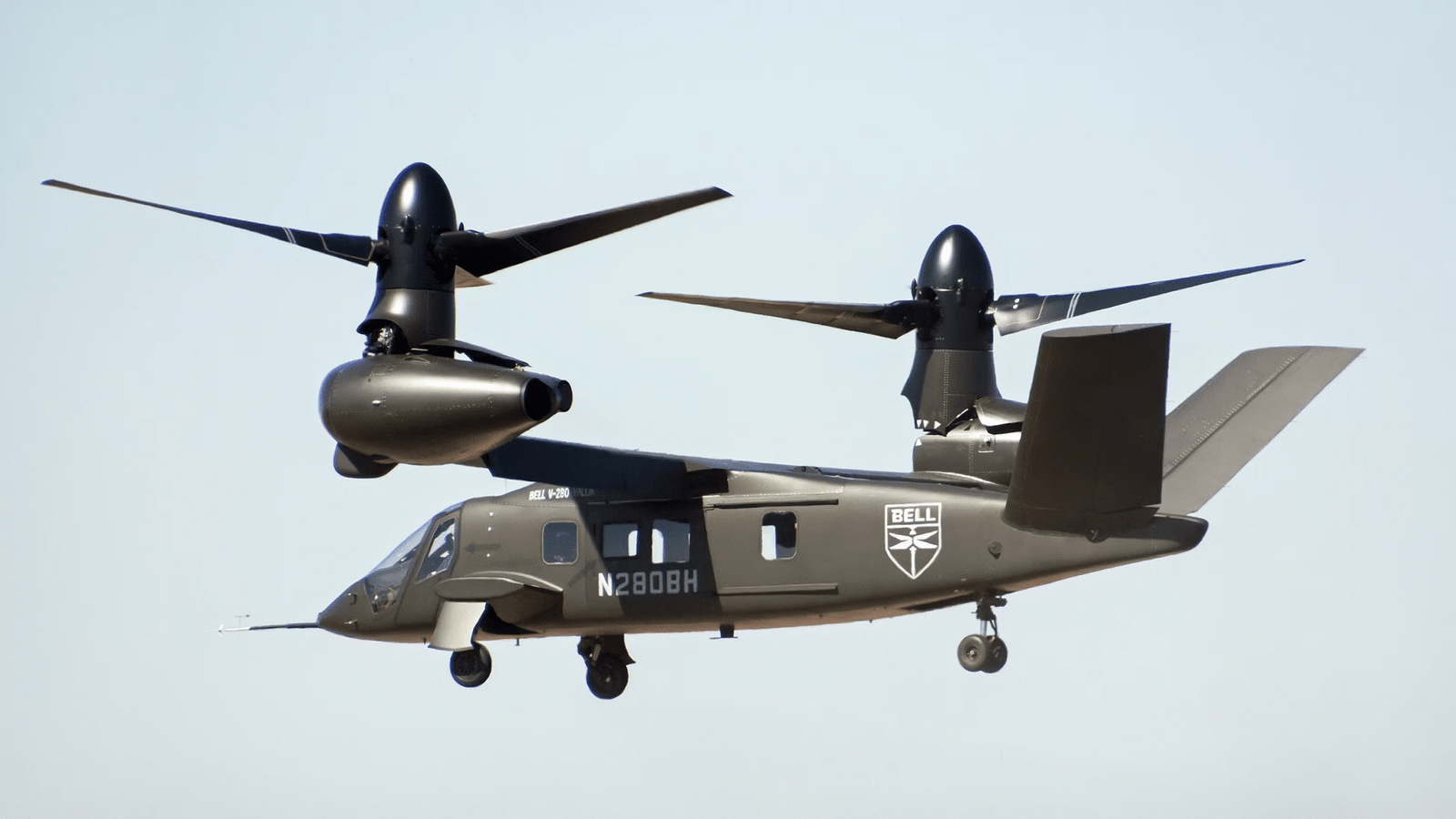
The V-280 has been developed with a futuristic design incorporating the helicopter-like vertical takeoff and landing capability, along with the fixed-wing aircraft-like combat range and fuel economy. The tiltrotor architecture allows the V-280 to cruise at almost 520 kilometers per hour, close to twice the rate of a Black Hawk, and a combat radius of over 925 kilometers.

Unlike other tiltrotors, the V-280 features fixed engine nacelles with only driveshafts and rotors tilting, keeping it lighter, stable, and less maintenance-intensive. Its fly-by-wire flight system, open-architecture avionics, and composite airframe make it highly flexible with the ability to execute existing missions and future operational needs. In December 2022, the Army selected the V-280 from among rival designs, praising its longer range, faster speed, and higher degree of digital design maturity.

The Weapon System Development contract went to Bell Textron, and through mid-2024, the program was still in the engineering and manufacturing development stage. Six will be prototypes, with the first flight in 2026, low-rate production in 2028, and initial fielding in the operating forces in 2030. To accommodate this accelerated timeline, Bell is building a 447,000-square-foot production facility in Fort Worth, Texas, to make components for the airplane.

Aside from being a new plane, the Valor enables air assault to be conducted differently. Army doctrine calls for the entire Brigade Combat Team to be flown 500 miles into the back of the enemy in one night and be combat-ready as soon as it arrives. The recent exercises by the 101st Airborne Division belie the difference.

With today’s helicopters, it has taken three nights to shift a brigade over 575 miles, several staging areas, many refueling stops, and nearly a thousand support troops. With the V-280, simulations show that the same mission will take only one night, fewer refueling stops, fewer logistical people, less obstructing enemy observation, and less complicated.

Troops have played a frontline part in shaping the Valor since day one. Pilots, crew chiefs, mechanics, and infantrymen have laid out seating, harnesses, cabin configurations, and layouts, and provided feedback that has been directly incorporated into developing a finished product of the plane. Such focus on soldier feedback makes the platform as practical in the field as it is technologically advanced.

The V-280 speed and range also provide deployment from secure stand-off positions, and sensors, mission systems, and electronic warfare provide survivability in hostile environments. Combat-resistant, redundant critical flight control systems are flight control systems in which the aircraft can be kept flying even when being fired upon. The Modular Open Systems Approach permits hardware and software upgrades and rapid deployment, keeping the Valor in service and relevant well into the future.

While the V-280 will ultimately become the Army’s air assault workhorse, it will not immediately replace existing helicopters. The Army is planning on flying a hybrid fleet for several years before slowly phasing out the Valor once production ramps up and crews develop experience operating the aircraft.

Lastly, the Bell V-280 Valor is more than a new helicopter — it is a next-generation strategy. With unbeatable speed, greater range, and flexible operation capability, it allows the U.S. Army to move faster, strike farther, and sustain operations longer than ever before, making air assault troops available to meet the needs of near-term and future battlefields.