
The U.S. Army is redefining how it must prepare to fight, departing from a generation of counterinsurgency to large-scale, high-intensity combat. At the forefront of this change is the 101st Airborne Division (Air Assault), an iconic formation with a storied past now redefining what it means to quickly project combat power over long distances and in challenging environments.

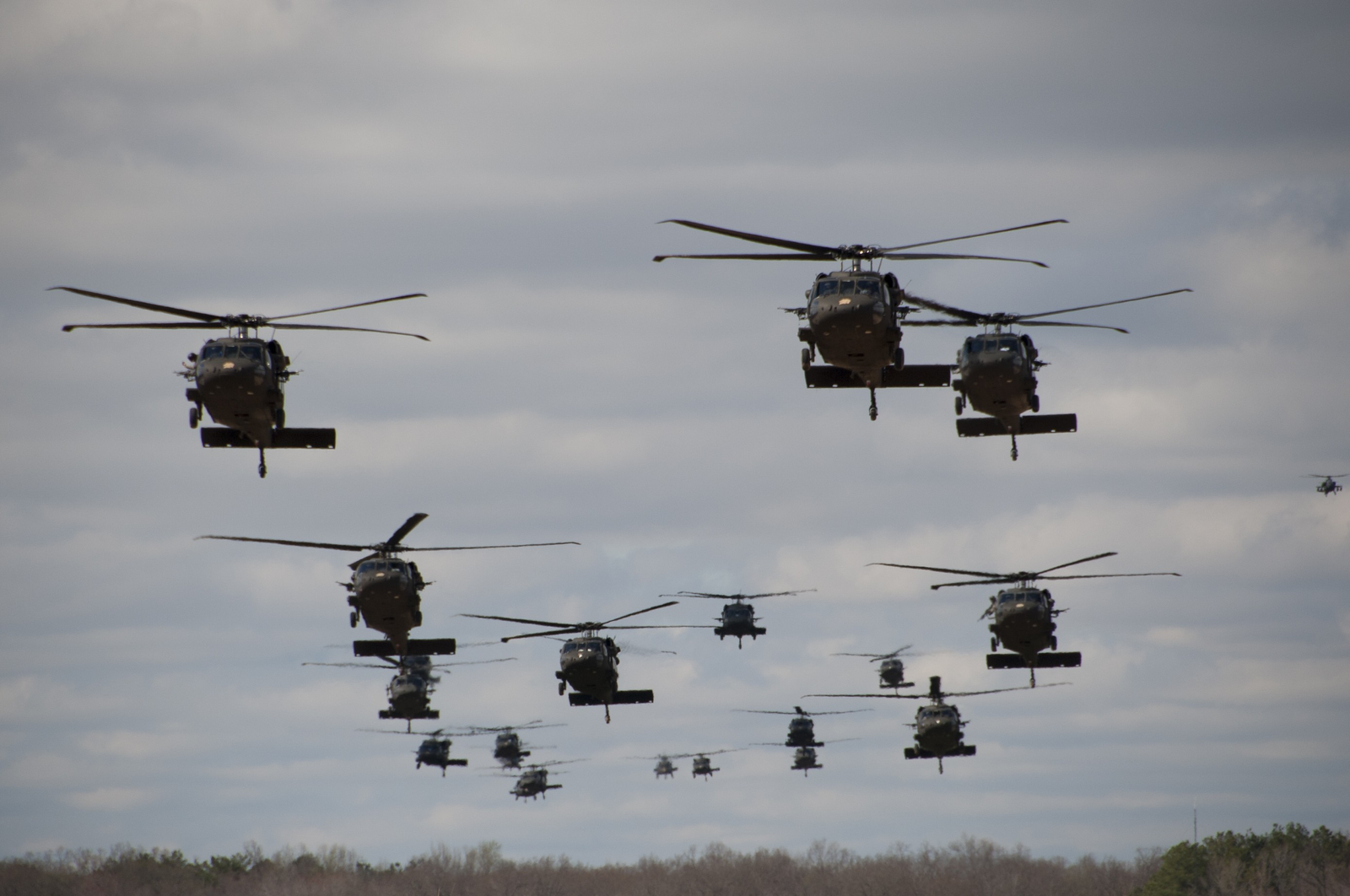
Recent training has highlighted how far the division has pushed air assault operations. Early in 2024, the 101st conducted a record operation with 76 aircraft, such as CH-47 Chinooks, UH-60 Black Hawks, and AH-64 Apaches, to move more than 1,000 soldiers and 100 vehicles 500 nautical miles into the Joint Readiness Training Center in Louisiana.

The nighttime operation was not just about moving people. It was a question of putting in a fully combat-capable brigade that could fight on its own for more than two weeks without being resupplied. As Maj. Gen. Brett Sylvia explained, executing such a large-scale, long-range attack is a skill that separates the 101st from any other military force.

What makes the missions work is coordinating hundreds of moving parts. Aviation, logistics, supplies, and security all must meld together. The 101st’s Combat Aviation Brigade, with more Chinooks than any division, provides unmatched heavy-lift capability, moving troops and cargo quickly. Division planners have mastered the coordination process, using lessons learned at every exercise to speed timelines and refine execution.

Supporting these efforts is the 716th Military Police Battalion, reassigned to the division in 2025. They are at the vanguard of creating air assault-capable military police. Their role is to secure critical sites like landing areas, pickup points, and refueling points—sites critical to keeping the ball moving but also vulnerable to disruption. They possess the mobility and firepower to contest these sites while letting maneuver forces penetrate deeper into the fight.

The battalion is also attacking the problem of detainee operations within high-tempo raids. Processing prisoners of war in mass maneuvers can bind frontline troops, but the 716th’s air-mobile detention units are designed to absorb that task. Working with sling-loaded gear brought in by Chinooks, they can quickly deploy, collecting sites, processing captured personnel, and allowing combat forces to stay focused on their objective.

Behind the scenes, logistics is the backbone of every successful mission. USACE has become crucial in enabling rapid movements of equipment. Instead of relying on rail or road, the 101st is now using inland waterways to move equipment and vehicles from Fort Campbell, Kentucky, to Fort Johnson, Louisiana.

Thousands of tons of equipment can be moved effectively by barges with less strain on soldiers. Division transportation officials add that loading onto barges is typically faster and less complicated than loading onto trains, saving time and energy.

USACE operates more than 12,000 miles of inland waterways that are deepened to facilitate safe passage. Locks and dams along the routes are elevator-like transition mechanisms for vessels that ensure safe passage. Strategic seaports on these waterways, including in Louisiana, have emerged as strategic deployment hubs for military troops, enabling gear and personnel to move rapidly where needed. This infrastructure is a behind-the-scenes but powerful enabler of the Army’s ability to mobilize in large units.

Together, these efforts show the 101st’s transformation is more than tactics—it’s a reshaping of how the Army goes about deploying and sustaining combat readiness. From aviation and special support soldiers to strategic facilities, the division is building a model for large-unit readiness.

The Screaming Eagles aren’t merely extending their legacy of innovation and bold action; they’re mapping the course the Army will fight and win on future battlefields.