
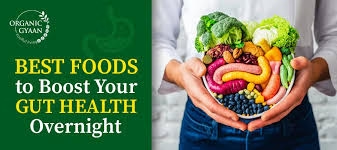
Digestive nutrition is a specialized branch of nutrition that focuses on how the foods we eat directly impacts on the efficiency, health, and microbiome of the gastrointestinal (GI) tract or gut.
While general nutrition looks at how food fuels the whole body energy, on the other hand the digestive nutrition is specialized as a mechanics of the gut. It treats the digestive system not just as a body organ that moves food, but as a complex body ecosystem that decides how better you absorb nutrients, manage your immune system, and even regulate your mood.
The Three Pillars of Digestive Nutrition
- Bioavailability & Absorption
It’s not just about you and what you eat, but it is also about you are what you absorb. Digestive nutrition looks at how to prepare and mix of foods to maximize the nutrient intake.
Example: Cooking tomatoes helps to increase lycopene absorption or adding iron-rich spinach with Vitamin C-rich lemon to helps the body process to absorb the essential food mineral easily.
- Microbiome Management
This is the part of managing the living organism which lives in our body digestive system. It involves balancing the trillions of bacteria in your gut using two main tools:
- Probiotics: Live good bacteria is found in fermented foods such as yogurt, kimchi, sauerkraut etc.
- Prebiotics: The works as an energy boosting fuel for those gut bacteria, usually found in complex fibers food items including garlic, onions, under-ripe bananas etc.
- Gut Barrier Integrity
Often called as a gut health practices, which focuses on maintaining a strong intestinal system to prevent leaky gut, in which undigested food particles or toxins enter in the bloodstream instead of going into body waste. This involves anti-inflammatory foods such as bone broth, omega-3 fatty acids rich foods, and glutamine-rich foods.
Why Is Everyone Talking About It?
The hype in interest to gut health is due to the very important discovery of Gut-Brain Axis. Scientists have found that the gut and the brain are in constant communication via the vagus nerve with each other and it impacts on our overall routine.
Serotonin: About 90% of the body’s serotonin, the feel-good hormone is produced in the gut.
Immunity: Roughly 70-80% of your immune cells reside in the digestive tract.
Key Difference: General nutrition might tell you to eat 2,000 calories with a few macro split. Digestive nutrition will tell you to eat those calories in a way that doesn’t cause bloating, feeds your healthy gut bacteria, and ensures your enzymes are actually breaking those macros down and provides a better nutrition to your body.
Common Focus Areas
- Elimination of Diet Food: Wisely Identifying digestive issue triggers such as gluten or dairy food that cause inflammation, such as the Low-FODMAP diet.
- Enzyme Support: Regularrly eating fruits such as pineapple (bromelain) and papaya (papain) helps in better protein breakdown and helps to achieve more nutrition.
- Hydration & Fiber: Balancing the two things One is Better Hydration and more fiber intake helps to ensure motility of healthy gut bacteria , and keeping things moving through the flush system of our body after digestion with drinking atleast 8-9 glasses of water on daily basis and eating enough fiber rich food such as Fruits and Vegetables.
To promote better digestive nutrition, you should eat the mix of prebiotics food which is a natural food for your gut friendly bacteria, along with probiotics food a which also benefits to gut bacteria, and soothing agents that helps to repair our gut system and keep things moving inside our tummy.
Following are the 10 best foods to add into your daily diet which helps in better digestive nutrition:
- Kefir
It is Often called as a drinkable yogurt, kefir is actually a healthy probiotic. While yogurt usually contains 2–3 types of gut friendly bacteria, kefir can contain up to 30 to 60 different gut friendly bacteria which makes it as a powerhouse food for diversifying and improving your gut microbiome.
- Chia Seeds
These are a motility superstar for gut friendly bacteria. When soaked, they form a mucilaginous (gel-like) coating that helps the food move smoothly through the intestines. They are also packed with soluble fiber, which feeds the good bacteria in your lower gut.
- Ginger
Ginger is a prokinetic, which helps to stimulate the migrating motor complexes, the waves that move food from the stomach to the small intestine. It is best for reducing the bloating and easing heavy feelings after a good meals.
- Bone Broth
It is rich in amino acids such as glutamine and glycine, bone broth helps to seal the gut surface. It acts as a soothing agent for the intestinal wall, making it better for those who are dealing with leaky gut or general gut sensitivity.
- Kimchi or Sauerkraut
These fermented vegetables based food provide a double benefit. they offer a live probiotics and a healthy dose of fiber. The fermentation process also creates organic acids that help to improve the acidity levels in your stomach for better protein breakdown.
- Artichokes (and Asparagus)
These are among the highest sources of inulin, a powerful prebiotic fiber. Inulin is like a superfood for the Bifidobacteria, which are essential for preventing the inflammation in the colon.
- Papaya and Pineapple
Both fruits contain natural digestive enzymes, papain in papaya and bromelain in pineapple. Eating a small amount of these before or after a protein-rich meal daily can help your body to break down tough fibers and proteins more efficiently.
- Fennel Seeds
Fennel seed is an antispasmodic. It helps to relax the smooth muscles of the gastrointestinal tract, which reduces gas, cramping, and bloating during and after digestion process.
- Blueberries
Blueberries are high in polyphenols. Recent research shows that polyphenols act like a prebiotic, helping to reduce bad bacteria from gut and encouraging the growth of good bacteria like Akkermansia, which protects the gut’s mucus layer and improve digestion.
- Oats (Steel-Cut or Rolled)
Oats contain beta-glucan, a type of fiber that slows down the digestion process slightly and ensure maximum nutrient absorption, also helps to regulate blood sugar. They also act as a gentle broom for the digestive tract and cleans the clogging for smooth digestion process.
Better Digestion Rule is to eat slow and drink enough water, eating less food at a time helps our digestive system to digest it properly. Also, If your diet is currently low in fiber, then don’t add all above digestive friendly food at once. As rapidly increasing fiber intake can actually cause temporary bloating. EAT SLOWLY, EAT HEALTHY, EAT HAPPILY and your gut will thank you with better health.