
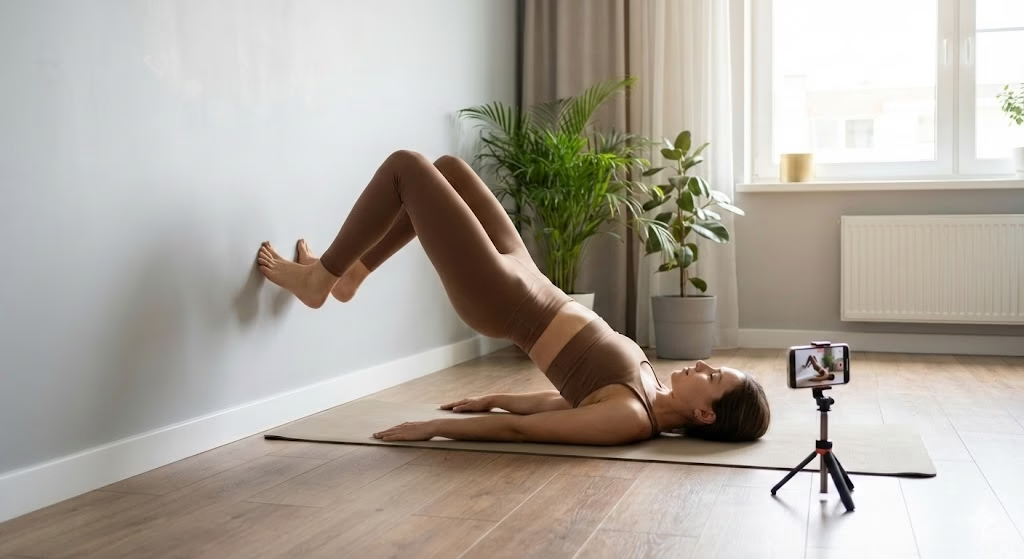
If you’ve ever scrolled through TikTok or Instagram reels recently, then you have likely seen the viral fitness trend that requires zero equipment, zero gym fees, and just a few square feet of space and a strong wall, lets know more about the fitness workout a sensational “Wall Pilates”.
With millions of views and countless transformation reviews, Wall Pilates has shifted from a simple workout to a mainstream powerhouse exercise for in home fitness. But is it just a fleeting social media fad, or is it a legitimate workout method?
This article will help you to understand exactly what Wall Pilates is, the incredible benefits it offers, and the process of getting started safely and effectively from the comfort of your home.
What Exactly Is Wall Pilates?
At its base, Wall Pilates is a variation of traditional mat Pilates. It adheres to the fundamental principles developed by Joseph Pilates, centering, concentration, control, precision, breath, and flow—but introduces a game-changing with the help of a strong stationary wall.
In a traditional Pilates studio, you might use an expensive Reformer machine, pushing off a footbar against spring resistance. In Wall Pilates, the wall becomes that footbar.
By pressing your feet, hands, or back against the wall, you can gain following two distinct advantages:
- Added Resistance: The wall provides an immovable force to push against, which helps in increasing more muscle activation.
- Tactile Workout Support and feedback on pain points: For beginners, the wall offers better stability and helps to ensure proper spinal alignment, making difficult moves more accessible and easy to do.
It is the perfect bridge between beginner mat Pilates and advanced equipment-based Pilates.

Wall Pilates Beginner Workout by Rachel’s Fit Pilates
The 5 Key Benefits of Wall Pilates
Why has this workout captured the attention of the fitness world? Its benefits go beyond convenience.
- Better Core Strength
Like all regular Pilates exercise, the powerhouse of your core muscles, including abs, lower back, glutes, and hips are given the focus during workout. The wall forces you to engage your transverse abdominis muscles to stabilize your body against gravity and the wall’s surface. It’s very effective for flattening the stomach and strengthening the lower back.
- Improved Posture and Alignment “Anti-Tech Neck”
This provides most immediate benefit of workout. By aligning your spine against a flat surface, you get instant betterment of your posture. You can feel if your shoulders are rounding forward or if your lower back is arching unnaturally. Wall Pilates exercises are designed to open the chest and lengthen the spine, combating the effects of sitting at a desk all day.
- Zero-Impact Joint Protection
If you struggling with knee pain from running or lower back pain from heavy lifting, Wall Pilates is a safe haven. It is a low-impact workout. There is no jumping or heavy pounding its mix of simple and calm exercise pattern. The movements are slow, controlled, and purposefully, placing minimal stress on joints and still stretching comfortably.
- Enhanced Flexibility and Balance
The wall workout is a best supportive tool for body stretching exercise. Using the wall for support allows you to safely improve stretches in your hamstrings, hips, and back without any risk of falling over. Over the time, this shows significantly improvements in overall flexibility and balance.
- Unmatched Accessibility
The barrier to entry of this workout is virtually non-existent due to its simpleness and without any equipment nature. You do not need weights, bands, or a gym membership to do Wall Pilates. If you have a wall and twenty minutes workout time, then you can easily get a full-body workout by doing Wall Pilates. This makes consistency, the most important factor in fitness and makes it easier to maintain your exercise momentum.
The Process: How to Do Wall Pilates Correctly
While it looks easy on video, but Wall Pilates requires focus to be effective. The process is not about how many reps you do faster, it’s about how slowly and correctly you perform each and every body movement.
Step 1: The Setup
Space: Find a clear section of wall. You need enough room to lie flat on the floor perpendicular to it on your back.
Surface: Ideally, use a yoga mat or a carpeted floor for cushioning your spine and back. Doing this on a hard floor can be uncomfortable sometimes.
Clothing: Wear something form-fitting so you can see your body alignment. You can also wear socks with better grips, which are helpful to prevent slipping against the wall.
Step 2: The Principles
Before you move, you must engage.
The Breath: Inhale through your nose to prepare, exhale through pursed lips as you exert effort, it is the hardest part of the move.
The Core Engage: Imagine pulling your belly button in toward your spine and slightly up under your ribcage. Keep this engaged throughout every body movement during workout.
Control: Never use momentum. If you cannot do a slow move, then you shouldn’t do it at all correctly.
3 Beginner Wall Pilates Moves to Try Today
Ready to feel the burn? Try these three foundational movements.
- The Wall Bridge (Glutes and Core)
This mimics the reformer bridge.
Setup: Lie on your back with your buttocks close to the wall. Place your feet flat against the wall, hip-width apart, knees bent at 90 degrees.
The Move: Inhale. As you exhale, press through your heels into the wall, peel your spine off the floor one vertebra at a time, lifting your hips until your body forms a straight line from shoulders to knees.
Hold: Squeeze your glutes at the top for a count of two.
Return: Slowly roll your spine back down to the mat. Repeat it for 10 to 12 times.
- The Wall Hundred / Deep Abs
A supported version of the classic Pilates warm-up.
Setup: Lie on your back. Keep your hips close enough to the wall so that you can extend your legs straight up the wall so your body forms an L shape, keep your legs resting against the wall.
The Move: Curl your head, neck, and shoulders off the mat using your upper abs. Lift your arms by your sides, parallel to the floor.
The Action: Begin vigorously pumping your arms up and down (about a 6-inch range of motion). Inhale for 5 pumps; exhale for 5 pumps.
Goal: Complete 10 cycles of breath (100 pumps).
- Wall Push-Ups / Upper Body and Posture
Great for building strength without needing being on the floor.
Setup: Stand facing the wall, slightly farther than arm’s length away. Place palms flat on the wall, shoulder-width apart and at shoulder height.
The Move: Engage your core so your body is a rigid plank from head to heels. Inhale as you slowly bend your elbows, lowering your chest toward the wall. Keep elbows tucked near your ribs, not flaring out.
Return: Exhale to push back to the starting position without locking your elbows. Repeat it for 10 to 15 times.
Wall Pilates is more than just a trending workout, as it is an intelligent, more accessible and a time-tested fitness method. Whether you are a complete beginner looking for a safe place to start, or an experienced athlete looking to improve your core body stability and posture, the wall is waiting for you to start a Wall Pilates from today.