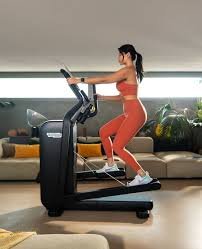
As the global wellness trends is rapidly shifting now a days, from pure weight loss to a more sustainable, active ageing and betterment of body functional capacity. One cardio machine is today in a major demand and gym workout usage is the elliptical workout machine for doing Low-impact elliptical workouts.
As Elliptical is considerd as a must follow workout during Gym sessions, the elliptical has found a new fitness trends in 2026, as the primary tool for low-impact, sustainable ageing. By following the longevity training and joint health cardio, the elliptical offers cardiovascular benefits, muscular engagement, and essential orthopedic protection.
Here is why low-impact elliptical workouts are becoming the secret weapon for better body movements.
Understanding the Joint Health Crisis:
For years, high-impact activities such as running were considered best for cardiovascular health. However, as the global population stays active longer, the long-term wear-and-tear of important body joints such as knees, hips, and ankles becomes the primary health concern.
Constant, repetitive actions may results in body joints cartilage breakdown. This may leads to people popularly searching for low-impact exercises for bad knees, treadmill vs. elliptical for joint pain and
a cardio that won’t harm your body joints.
low-impact exercises for bad knees:
- The Elliptical Trainer (Optimized for Knees)
The elliptical is the best low-impact cardio because it keeps the feet in a closed chain (fixed to the pedals).
The Pro Tip: Keep your heels down. Lifting your heels off the pedals shifts the load to your kneecaps (patella). Keeping them flat with engaging the glutes and hamstrings, which support the knee joint.
Avoid High Incline: Keep the elevation low (below 10%) to prevent the excessive force application on the knee joint.
- Deep-Water Running (Aquatic Cardio)
By using a buoyancy belt in the deep end of a pool, you can copy a running motion with 0% negative impact.
Why it works: The water provides 360-degree body movement, which helps in strengthening and stabilizing the body muscles around the knee without any gravity-based pressure.
- Recumbent Cycling
Unlike an upright bike, a recumbent bike supports your lower back and places your legs in a horizontal position.
Why it works: This position helps to reduce the weight-bearing load on the knee joints and still allows for a full range of cycling motion (ROM) to circulate synovial fluid, which lubricates the joint.
- Low-Impact Rowing
Rowing is a 2026 favorite functional workout.
The Pro Tip: Ensure that you are not over-compressing at the front of the stroke. Stopping your knees just before they reach with higher bending to prevents unnecessary stress on the meniscus.
- Concentric-Only Training (The Sled Push/Pull)
In 2026, Sled Training is an important workout for seniors and adults with any bone or joint injuries.
Why it works: Pushing a weighted sled is a single concentrated movement. There is no eccentric (lowering) phase, which is where the most knee inflammation occurs. It builds massive strength in the quads and protect the knee joints.
- Isometric Holds (Wall Sits)
Instead of deep squats, go with isometrics workout.
The Exercise: Lean against a wall with your knees at a 45° to 90° angle and hold your body for few minutes.
Why it works: It strengthens the tendons and muscles around the knee without the friction caused by moving the joint back and forth.
Comparison of Knee Impact Levels with workout:
Exercise: Elliptical, Impact Level: Near Zero, Benefit: Full-body cardio & glute activation
Exercise: Swimming, Impact Level: Zero, Benefit: Total joint decompression
Exercise: Sled Pushing, Impact Level: Very Low, Benefit: Quad strength & joint stability
Exercise: Power Walking, Impact Level: Moderate, Benefit: Bone density (but may nag bad knees)
Workout body Load Monitoring methods:
If you use a wearable such as Apple Watch or Whoop (2026 edition), watch on the Joint Load or Impact Score metrics. These tools now use AI to inform you about the effects of your workouts routine, and identify which activity is causing more body vibration and stress on your specific body parts such as knees.
Treadmill vs. Elliptical for joint pain:
Choosing between a treadmill and an elliptical depends mainly on your specific fitness goals and physical needs. While both offer excellent cardiovascular benefits, they differ significantly in its body and joints impact levels and muscle engagement.
Comparison: Treadmill vs. Elliptical
Key Differences & Benefits
Trademill: NordicTrack X16 Treadmill – NordicTrack 4.6 (103)
Impact Level: High (Weight-bearing)
Primary Benefit: Better Bone density & Best for functional running
Muscle Focus: Lower body & core
Calorie Burn: Higher (especially when running)
Joint Stress: Its simulate running and sprinting which offcourse have Higher shock to knees and ankles
Eleptical:Elíptica AIRGLIDE Le – NordicTrack 4.3
Impact Level: Very Low (Non-impact)
Primary Benefit: Joint protection & Halthy ageing
Muscle Focus: Full body (with moving handles)
Calorie Burn: Moderate to High depend upon intensity
Joint Stress: Flowless body movement without major stress with low-stress motion workout
Key differences & Benefits of Low-impact elliptical workouts
- Impact and Joint Health: The NordicTrack AirGlide 7i Elliptical uses a closed-chain movement, meaning your feet never leave the pedals. This eliminates the jarring foot-strike force, making it the better choice for joint health and early workout recovery.
- Bone Density: Because the NordicTrack Commercial Series Treadmill is a weight-bearing exercise, it helps in better strengthen bones and prevent osteoporosis. While it has more impact, top models have feature of cushioned decks to reduce the workout shocks.
- Full-Body Engagement: The elliptical often features of moving handlebars, which sllows you to also engage your arms, chest, and back simultaneously. On a treadmill, your upper body remains steady unless you are intentionally moving your arms.
- Versatility: Treadmills allow for variable inclines and speeds, making them ideal for training for outdoor races or hiking. Ellipticals offer adjustable strides and resistance, focusing more on a fluid, rhythmic workout.
If you want to prioritize better joint health and if are recovering from any such injury, then the elliptical workout machine is the safest and more sustainable option. If your goal is to maximum calorie burn, building better bone density, or practicing for an intensive running event, then a well cushioned treadmill can be the best choice.
If you have a sufficient space in your home, then you can go with compact folding models of both these machines simultaniously for your routine workout.
Cardio that won’t harm your body joints:
When choosing between a treadmill and an elliptical for joint pain, the main factor is its actual impact force during workout. While both provide a high-quality cardiovascular workout, they interact with your body skeleton system in very different ways.
The Best Cardio for Joint Health
For a workout that truly minimizes harm to your joints, the elliptical is the clear winner. Because your feet never leave the pedals, it reduces the ground reaction force that causes stress at the knees and hips.
The NordicTrack AirGlide 7i Elliptical is an excellent choice for better joint benefits because it features an adjustable stride and automatic incline control. These settings allow you to change the path of your body movement, ensuring you aren’t stuck in a repetitive motion that might cause stress and depreciation of your joints.
If you prefer a treadmill, the NordicTrack Commercial Series Treadmill comes with better cushioning technology, to soften the workout impact in compared to running on asphalt, but it still requires a weight-bearing steps that may be uncomfortable for those with active joint inflammation.
For anyone dealing with chronic joint pain, The elliptical offers a better full-body workout using the handles to evenly distribute your weight, effectively and protects your lower-body joints with providing high caloric burn workouts.
Low-impact elliptical workouts also helps to fill the gap of routine workout with its specifically designed process flow, that provides a flowless, circular motion that matching with the benefits of running and walking but eliminates the possible workout injuries.
The Mechanics of the Elliptical: Why it Works for Longevity
The core of the elliptical’s benefit lies in its workout actions and process.
- Zero Impact Force: The elliptical workout helps to maintains a closed-chain movement, by providing workout to your feet with peddling. This ensures that the continuous forces associated with the heel strike, the force that travels up the skeleton which is lacking in running.
- True Full-Body Engagement: Actually cycling is also low impact but primarily lower-body focused workout, but the elliptical is a dual-action machine. Using the moving handles engages the upper body including biceps, triceps, back, and chest, while the pedals target the glutes, quads, and hamstrings. This metabolic efficiency is a key activity of functional fitness for daily routine.
- Body Stabilization: The motion requires your body abs and lower back to stabilize your torso throughout the entire movement, improving posture and reducing lower back stress, another critical requirement for active aging.
A Sample 20-Minute Active Aging Low-Impact Elliptical Workout:
You don’t need a high-intensity intervals (HIIT) to gain longevity benefits. 2026 wellness trends, such as meditative cardio and Zone Zero training and Low-impact elliptical workouts, with focusing on low and stable heart rates, aligned perfectly with the elliptical.
This 20-minute routine exercise focuses on consistency, breathing, and consistent circulation.
- Warm-up (5 mins): Warm-up with Slower, focused, and better controlled circular motion.
- Steady State (10 mins): Set the resistance to level 3 to 5 (out of 10). Maintain a steady RPM (revolutions per minute) that keeps your heart rate in a comfortable zone (Zone 1-2). this Mindful movement, helps as a cardio for circulation.
- Reverse Movement (2 mins): Pedal in reverse to engage the quadriceps and improve coordination. This is often missed in general routines.
- Cool-down (3 mins): Light resistance, slow RPM. Focus on deep belly breathing.
The Smart Revolution of 2026 of using Low-impact elliptical workouts for Better Joint Health:
The defining trend of 2026 is of personalization, and elliptical machines usage are also integrating with AI systems to optimize your workout experience:
- Bio-Adaptive Workouts: Top models of elliptical machine such as the NordicTrack AirGlide or SOLE E35 (2026) uses a built-in sensors to monitor your form and heart rate variability (HRV). The machine can suggest lowering resistance or altering the body movement length if it detects muscle fatigue, directly reducing the risk of muscle stress and injury.
- Intelligent Leap and steps: AI features now automatically adjust the elliptical’s leaps and steps length based on your health goals programmed in elliptical machine. For joint health, the AI will prioritize flatter steps lengths and lower resistance settings during warm-ups and cool-downs.
- Data Integration: These machines sync with Apple Health and Google Fit aps ,that allows you to track your cardio with your overall workout recovery and movement goals, supporting a balanced approach to your routine fitness activities.
Low-impact elliptical workouts with using Elliptical machine provides a Sustainable Foundation, that shifts toward healthier ageing. It’s a necessary evolution of how we can make our workout with a more sustainable fitness routine with best cardio options that protect your basic body foundations. Low-impact elliptical workouts provide that base with prioritizing a better and safer body workout motions, total-body engagement, and zero injury impact, therefore, the elliptical machine secures its place as an essential tool for better joint health and a long-term healthy ageing.

Senior Editor, Functional Fitness & Everyday Strength
Qualified B.S. in Exercise Physiology, University of Colorado Boulder | Certified Personal Trainer (ACE)
Jake has been a founding editor at Gymbag since 2018. With over 12 years of coaching experience and a degree in physiology, he specializes in fitness that fits into real life.