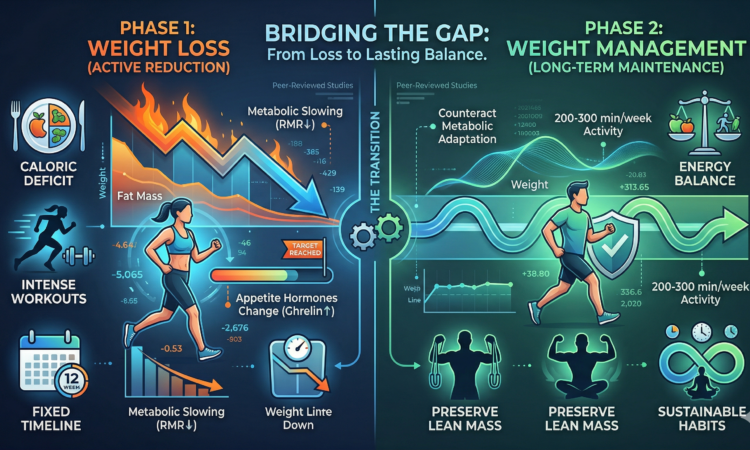
In todays faster developing ear of health and fitness over the globe, the discussions around our body transformation is gaining popularity on social media platforms. We have today moved from basic malnourishing of your body with intense fasting to achieve slim body in todays modern tech and data driven fitness world. Today, the focus is on sustainable life. However, a major point of confusion remains for those who are just starting their journey as a beginners, whom there is a need today to firstly understand the difference between weight management vs weight loss programs?.
While the both weight loss and healthy weight management are the fitness related terms which are connected with each other. They represent two fundamentally different philosophies, timelines, and psychological approaches towards health. By understanding which one you need is important for breaking the cycle of yo-yo dieting and finally achieving better healthy results with effective weight management.
Defining the Two Pillars of Health:
To choose the right path which will lands in healthy body weight achievement, we first need to define the parameters on how each of them to be approached.
- Weight Loss Programs: The Sprint
Weight loss programs are typically made and modified according to the person specific requirements. They are designed with specific timeline and health goals, which includes reducing the weight and toning the body shape. These programs often involve specific caloric diet and a structured exercise routine.
- Primary Goal: Reductive losing fat, water weight, or mass.
- Timeline: Short-to-medium term (8 to 12 weeks).
- Focus: Metrics such as BMI, kilograms lost, and body fat percentage.
- Weight Management Programs: The Marathon
Weight management is a lifestyle-based approach. It focuses on maintaining a healthy weight once it is achieved or preventing more weight gain in the first place. It is the health’s maintenance phase that most people skip, which is why 80% of people who lose weight, their weight initially starts gaining it back when they try to avoid the healthy routine.
- Primary Goal: Homeostasis including better body stability and balance.
- Timeline: Indefinite or for Life-long period.
- Focus: Metabolic health, hormonal balance, muscle preservation, and adopting and strictly following healthy behavioral habits.
The Metabolic Thermostat:
The reason weight management vs. weight loss both comes with higher difference with understanding the each others diverse Points of Actions. Your body has a natural metabolic thermostat, that tries to keep your weight within a certain range that is required for a body to perform its routine processes.
When you engage in a high-intensity weight loss program, your body often responses the caloric deficit as a threat. In response, it slows down your metabolism and increases hunger hormones like ghrelin.
An ideal weight management program is designed to reset this thermostat. By focusing on high-protein intake, strength training to build muscle, which burns more calories and helps in better stress management, and it also eventually helps your body to recognize lower weight as a safe level.
Key Differences of Weight Management vs. Weight Loss Programs:
- Feature: Calorie based Approach, Weight Loss Programs: Controlled Deficit, Weight Management: Maintenance Calories / Intuitive Eating
- Feature: Exercise Type, Weight Loss Programs: High-intensity / High-calorie burn, Weight Management: Functional strength & Daily movement
- Feature: Psychology, Weight Loss Programs: Goal-oriented, Weight Management: Self healthy change Identity oriented
- Feature: Monitoring, Weight Loss Programs: Daily/Weekly Weigh-ins, Weight Management: Biometric trends such as HRV, Sleep, Energy.
- Feature: Flexibility, Weight Loss Programs: Structured, Weight Management: High / Adaptive
Shift of Weight Management in todays new age:
Today, we have access to tools that make the transition from weight loss to weight management easier than ever with the help of more data driven approach.
- The Rise of GLP-1 Lifestyle Adoption:
Today we can see that weight-loss medications has shifted its focus towards more conscious and live result based medication. Doctors are also now emphasize on healthy weight management programs that include resistance training, to prevent the loss of muscle mass, which is as a common side effect of rapid weight loss programs.
- Natural Biometric Maintenance
We no longer rely just on the weighing scale to see results of a better Weight management, as users can use below parameters to conclude the results:
Continuous Glucose Monitors (CGMs): To see how specific foods habits affect your blood sugar and body energy levels.
Smart Health tracking Rings: To track how your weight-related habits affect your sleep and energy recovery.
AI Based Body Nutrition Trackers: Which helps to know about how to adjust your daily caloric needs based on your actual daily activity levels in real time, and not on a pre-decided formula.
How to Transition from Loss to Management:
If you have successfully lost weight and are worried of gaining it back, you must shift your mindset from restriction to nourishment.
- Reverse Dieting: Slowly increase your calories (by 50 to 100 grams per week) to improve your metabolism without triggering fat storage.
- Focus on Protein: Protein has the highest thermic effect of food which keeps your tumy full, making it the very important aspect of successful weight management.
- Non-Exercise Activity Thermogenesis (NEAT): In weight management, your 10,000 steps are more important than your 30 minutes of HIIT session. Consistent daily movement keeps the metabolism active.
- Strength Training: Muscle is your metabolic engine. The more muscle you have, the easier it is to manage your weight without starving yourself.
Which One Do You Need Right Now?
- Choose a Weight Loss Program if: You have a high body fat percentage that is impacting on your clinical health trackers such as blood pressure, blood sugar etc. and you need a structured plan to achieve health.
- Choose a Weight Management Program if: You have already reached to your desired body weight goal, you have to maintain your weight steadily and keep yourself healthy, and in case if you are already at a healthy body weight level, but you feel your body as a skinny or fat and want to improve your body appearance and more body energy levels.
Today, success in achieving health, is not defined by how much you can lose in 30 days. It’s defined by how much you can sustain for 30 years. Weight loss gets you to the starting line, but weight management is what allows you to finish the race.
By understanding the difference between weight loss and weight management, you can easily manage your body in better way instead of troubling it to achieve a healthy and toned body. Whether you are sprinting toward a goal or settling into a long-term rhythm, remember, the best program helps you to feel strong, energized, and capable of living your life to the fullest.
weight management vs weight loss, sustainable weight loss 2026, metabolic health, reverse dieting, muscle preservation, biometric fitness, long-term weight maintenance, healthspan vs lifespan, hit a specific weight target, focused on maintaining the progress you have already made.

Senior Editor, Functional Fitness & Everyday Strength
Qualified B.S. in Exercise Physiology, University of Colorado Boulder | Certified Personal Trainer (ACE)
Jake has been a founding editor at Gymbag since 2018. With over 12 years of coaching experience and a degree in physiology, he specializes in fitness that fits into real life.