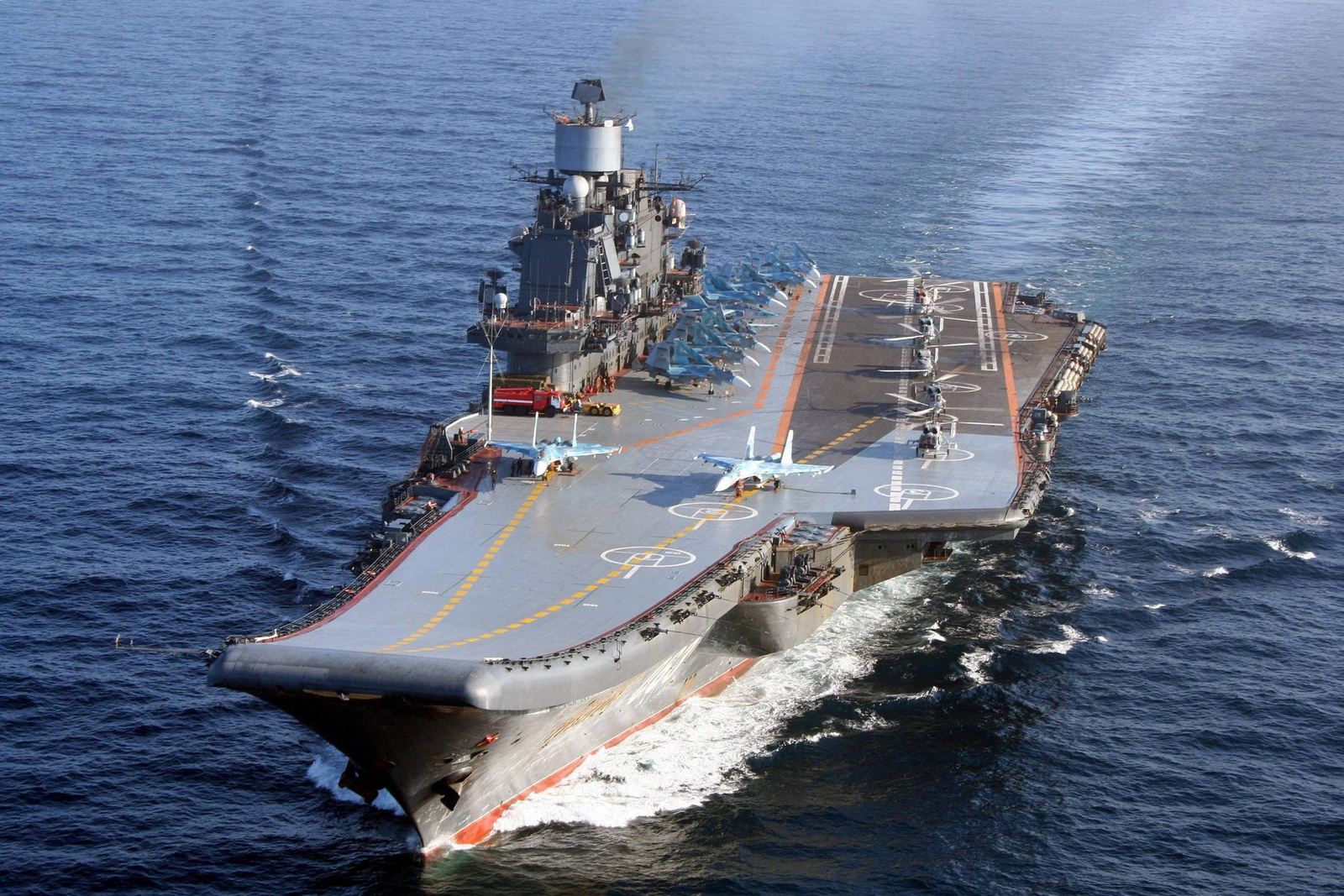

At one time envisioned as the crown jewel of the Russian navy, Admiral Kuznetsov was designed to project Soviet—and eventually Russian—power across the seas of the world. Work on the carrier started in 1985, and by the early 1990s, the carrier was ready to enter service.

Rather than being a symbol of power and prestige, most of its existence has been characterized by years laid up in port, plagued by mechanical failures, conflagrations, and skyrocketing repair bills that never appear to end.

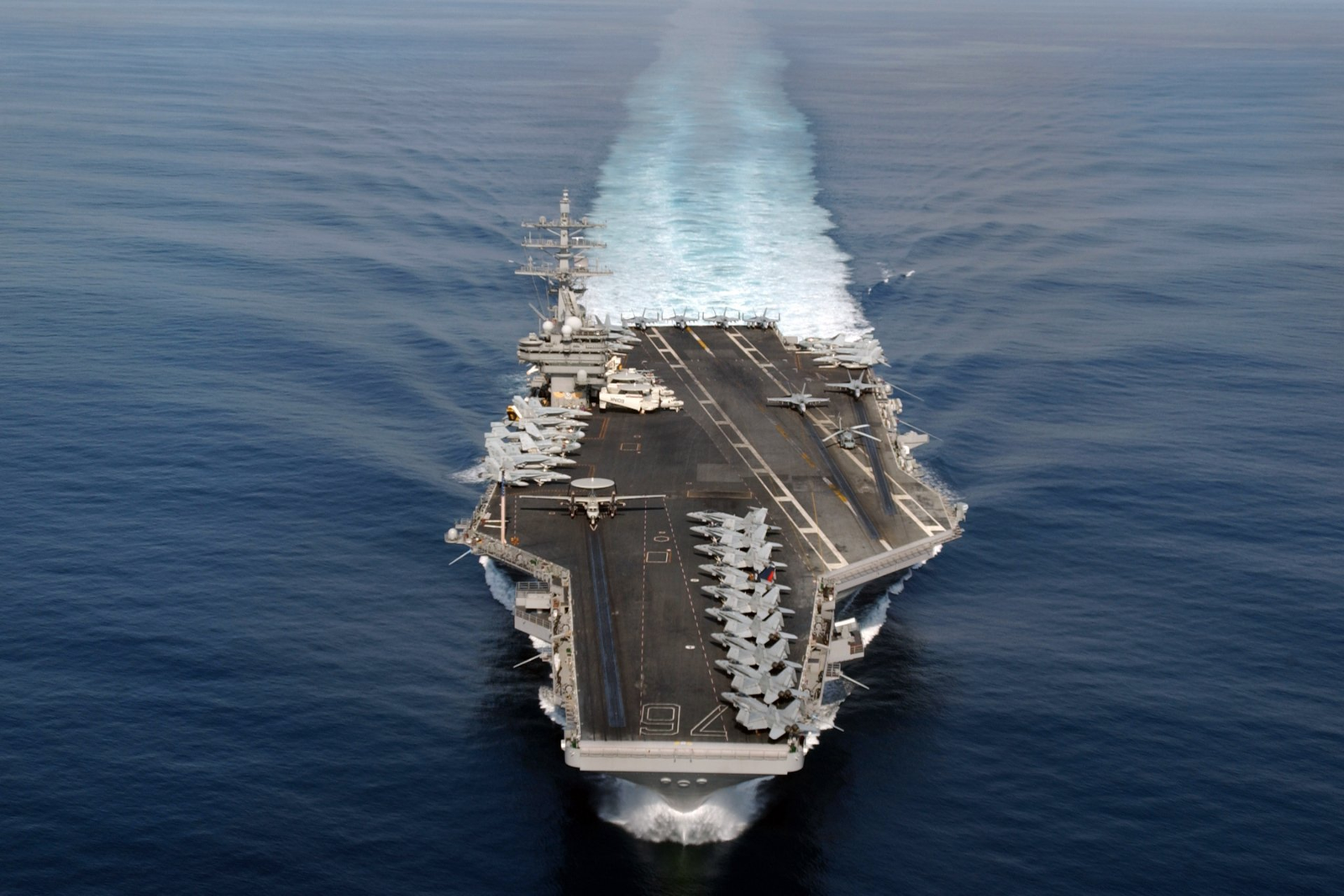
Since the beginning, Kuznetsov has struggled with major design issues. Unlike the American Navy’s nuclear-powered aircraft carriers, it uses mazut, a dense tar-like fuel that is wasteful, tough on the engines, and gives off thick black smoke that creates a perpetual wake behind the vessel. Acute mechanical problems, from electrical system malfunctions to power loss, have relegated tugboats to become a frequent escort for its in-and-out-of-port maneuvers.

Its operational record is more akin to a catalog of mishaps than to a list of triumphs. In its 2016 deployment off Syria, Kuznetsov lost several aircraft, not to hostile action but to defective arrestor cables and vintage launch hardware.

Throw in structural corrosion and spotty construction, and doubts surfaced over whether the ship could weather a significant mishap. At times, observers were said to be tracking Kuznetsov less as a competing threat and more as a loose menace.

In 2017, the carrier went into dry dock in Murmansk for long-overdue modernization, aimed at adding years to its life and solving its most urgent issues. The project has been dogged by tragedy. In 2018, the floating dock itself sank without warning, dropping a crane on the deck and inflicting major damage.

Since then, fires have broken out multiple times, some fatal, causing further delays. Repair schedules have slipped repeatedly, and there are reports that work may have stopped altogether as military officials debate whether the ship is worth saving.

Keeping Kuznetsov operational has become as much about strategy as engineering. The war in Ukraine has sucked up resources, diverted priorities to land operations, and prevented the necessary parts from being obtained through sanctions.

Even pilots have been redeployed to the front lines to fight, and there are questions being raised about whether aircraft carriers have a role in a world of missiles and drones. Former Pacific Fleet commander Admiral Sergei Avakyants has termed carriers as “relics” and has spoken out in favor of a transition to unmanned platforms.

Official projections continue to include carriers for the Northern and Pacific Fleets, but new construction is not ongoing, and Kuznetsov’s return to full operational status now appears more doubtful than ever. Its history of turmoil has come to represent the wider issues confronting Russian naval modernization: dilapidated infrastructure, underfunding, and dwindling industrial base, all exacerbated by war and sanctions.

As other world powers press on with carrier expansion and modernization, Russia’s sole carrier stands poised to be retired to the scrap heap. If so, Admiral Kuznetsov will be a reminder—a great vision thwarted by technical shortcomings, budget constraints, and the shifting realities of contemporary naval warfare.