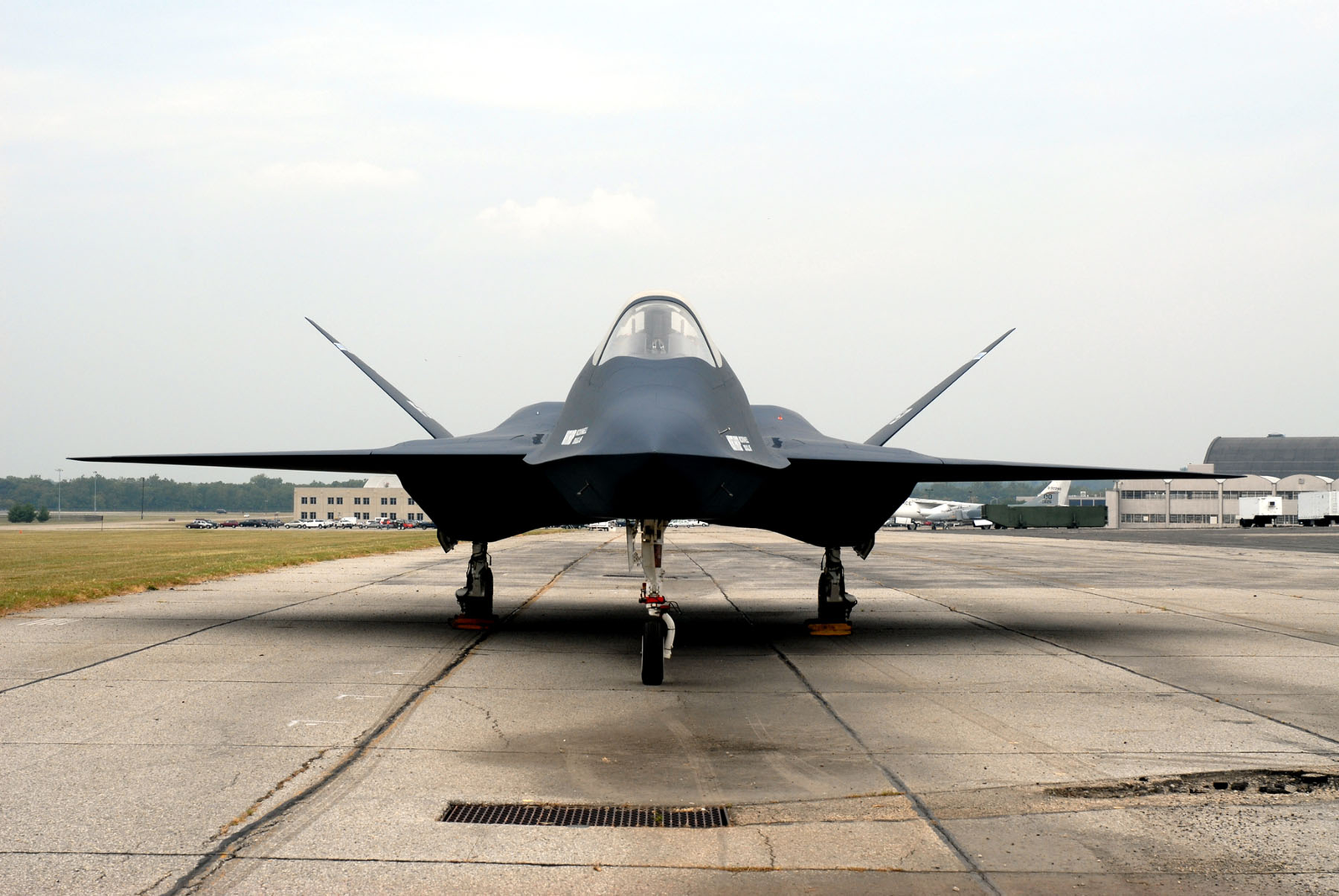

The tale of the Northrop YF-23 “Black Widow II” is one of the greatest “what could have been” moments in the history of aviation. With its sleek lines, high-speed profile, and stealthy appearance, the jet seemed like something decades beyond its time. Many in the world of aerospace thought it had all the ingredients necessary to be America’s next frontline warfighter.

But when the U.S. Air Force concluded the Advanced Tactical Fighter competition in the early 1990s, it was Lockheed’s YF-22 that secured the contract and became the iconic F-22 Raptor. So why did the YF-23, with all its potential, end up stuck in museums rather than dominating the skies?

Part of the largest reason was long-term flexibility. The YF-23 was faster and stealthier, but the Air Force needed a fighter that could adapt to future missions and technology. The F-22, while not as visually striking, provided a better balance of stealth, avionics, and a modular design to accommodate upgrades through the decades. To decision-makers, the F-22 appeared to be the fighter that could evolve with the times, while the YF-23 was considered to be more specialist and more difficult to evolve.

Politics came into play as well, as it tends to with giant defense contracts. Lockheed aligned with big players such as Boeing and General Dynamics, jobs and investment to spread across a number of states. That provided the YF-22 program with greater political support in Washington.

Northrop, meanwhile, was continuing to suffer the consequences of its over-budget B-2 Spirit bomber, and this damaged its reputation. Ultimately, the Air Force felt more sure that Lockheed’s team would provide both the airplane and the confidence necessary to get the program through.

Yet another factor that tipped the balance was pilot confidence. Though the YF-23 appeared revolutionary, the F-22 was deemed safer and more prudent to introduce into operational status. It experienced fewer technological glitches during testing and was otherwise perceived as simpler to develop into a combat vehicle.

Pilots were also fond of the flight characteristics of the F-22, which they termed as more responsive and predictable, and this fostered confidence in its performance. When selecting a fighter designed to reign supreme for decades, reliability and faith were as important as brute ability.

Agility was probably the most crucial consideration. The Air Force continued to prize short-range dogfighting capability, and the F-22 did not disappoint due to the thrust-vectoring nozzles. This aspect provided it with outstanding maneuverability to execute sudden turns, steep climbs, and maneuvers that no other competitor fighter at the time could.

Although the YF-23 performed wonderfully in stealth and speed, it did not have thrust vectoring and could not match the agility of the Raptor in a knife-fight situation. For most senior officers who had flown combat missions of their own, this disparity was paramount.

Even Northrop test pilot Paul Metz, who flew both aircraft, acknowledged afterwards that Northrop had constructed an outstanding plane but failed to advertise it as efficiently. Lockheed, however, made each demonstration flight a show—testing the jet to its limits in front of those with the ability to determine its fate. It wasn’t merely a competition of technology; it was also a matter of marketing a concept, and Lockheed marketed theirs with greater force.

Today, the YF-23 exists only as a relic of aviation history, cherished in museums and argued over indefinitely by aviation enthusiasts. Its daring design and untapped promise continue to fuel arguments about whether or not the Air Force made the correct decision, or if an alternate destiny was abandoned. The Black Widow never had the opportunity to be tested in battle, but it is one of the most intriguing “what-ifs” in the history of fighter planes.