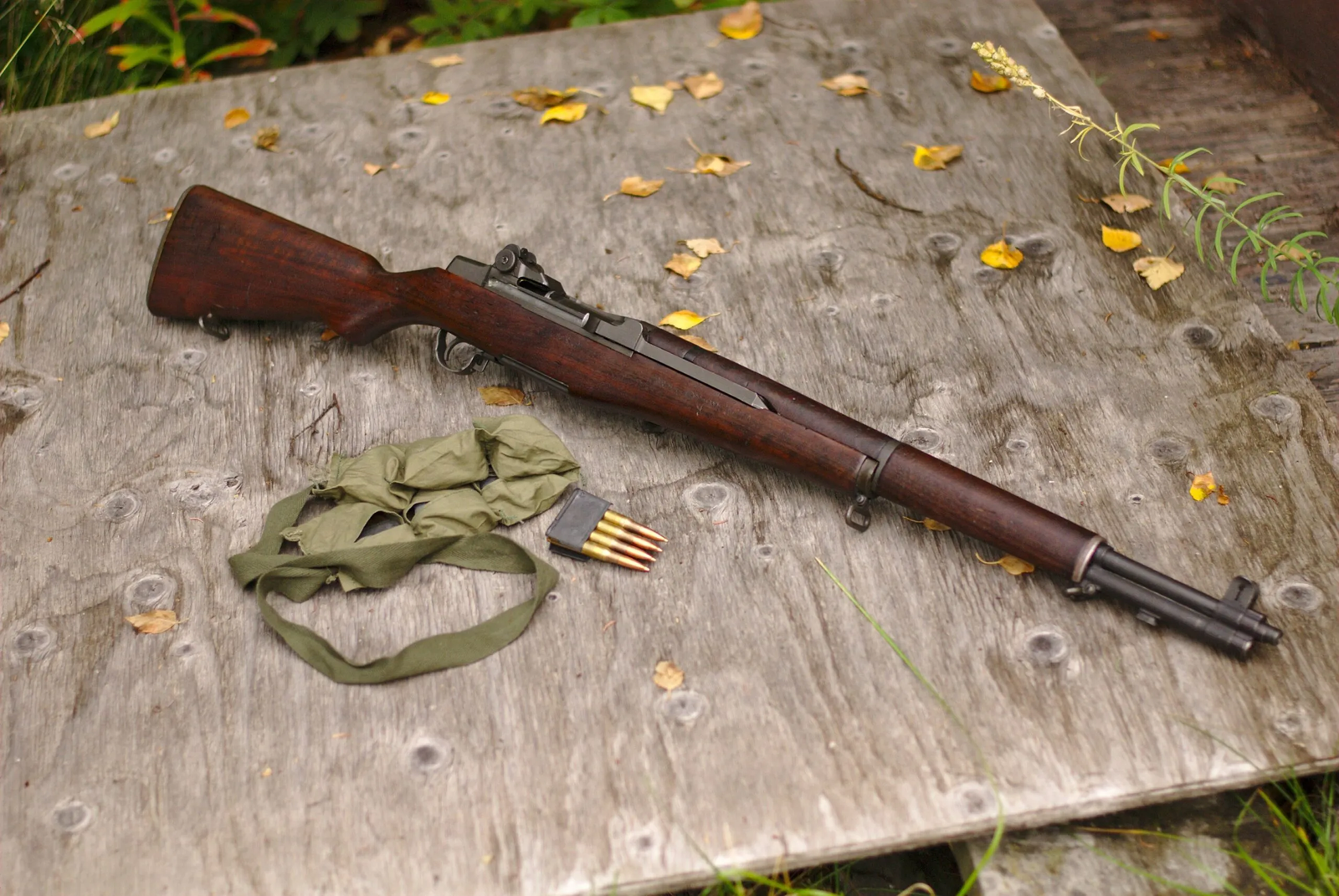

Few U.S. firearms have been as contentious—and had as enduring an impact—as the M1 Carbine. Developed in the pre-World War II period, it was intended to address a need the U.S. Army could least afford to ignore: not every soldier required the mass and kick of a full-length battle rifle. The M1 Garand was new, but to officers, radiomen, gunners, and medics, it was heavy.

Something lighter had to be used, something of middle ground rifle-pistol caliber, and Winchester had already provided them with the answer by 1941. The Army officially standardized the M1 Carbine in October of that year, just a few short weeks before America entered the war.

What distinguished the M1 Carbine was not brute muscle, but functionality. A little more than five pounds, it was light enough to be worn daily but not so light that it lacked a 15-round detachable box magazine and semi-automatic rate of fire. Firing the .30 Carbine cartridge, its effective range of about 300 yards was no mistake—it was intended for close-quarters combat and self-protection, not for sniper duels at long range.

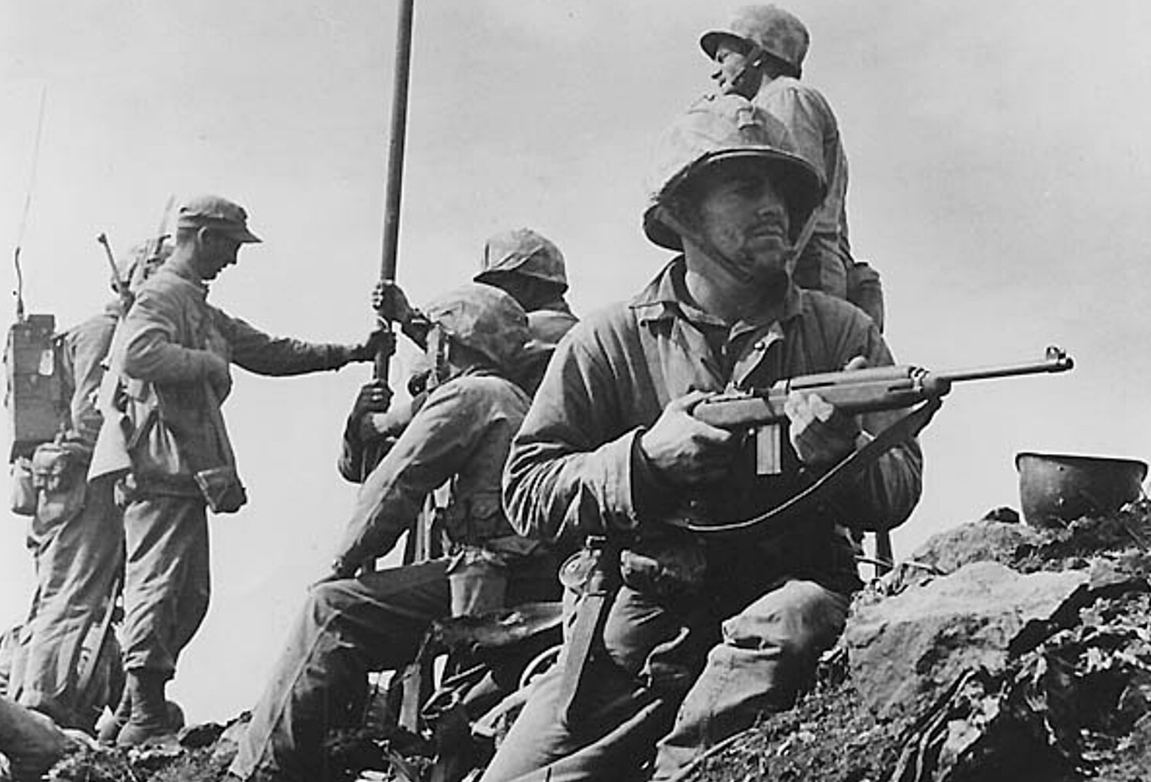
Its compactness and firepower pairing made it a favorite of the troops. On French hedgerows or on Pacific underbrush, its light weight and quick handling were priceless. It was occasionally let down, however, by anticipation. Troops that anticipated it to equal the Garand in stopping power were disappointed, particularly against the enemy wearing bulk clothing or at longer ranges. The Army itself acknowledged the real error of using the carbine as a replacement for a rifle rather than as an improved model of a sidearm.

Demand on the battlefield spurred unrelenting innovation. The M2 Carbine in the latter half of 1944 featured selective-fire capacity to fire both full-auto and semi-auto. It provided paratroopers and special troops with another edge in close combat, where the rate of fire was paramount. The M3 Carbine took innovation even further by scrounging a rigged-up early infrared sight to fit on the gun, rendering it one of the very first bona fide night-fighting rifles ever sent into action.

The Korean War subjected the carbine to conditions that were entirely foreign to it, and its shortcomings were further underscored. When fired at subzero temperatures, the carbine frequently couldn’t fire without difficulty, taking two or three shots before cycling could be obtained in the normal manner. The .30 carbine cartridge was complained about by soldiers and Marines as being too weak to drive off determined enemy attacks, particularly during the bitter fighting at the Chosin Reservoir. Its critics were boorish, asserting that the carbine was too fragile and too unstable in adverse weather. In spite of its lightness, it continued in service with rear-area troops and allies, who preferred its simplicity to raw muscle.

When America was fully committed to Vietnam, the M1 Carbine was no longer an American front-line weapon, supplanted by the M16. But it was widely distributed among South Vietnamese troops, police, and even among guerrilla insurgents who captured it or inherited it.

Its compact size and mild recoil made it particularly suited for skinny men, and veterans remembered that while it was handy and dependable in close work, it was to be shunned at more than a hundred meters. Nonetheless, through all of this, it continued on in the fields of Southeast Asia warfare, demonstrating its versatility and resilience once more.

In large measure, the M1 Carbine was a harbinger of the modern-day assault rifle. It had lightweight, expansive magazines and full-auto capability, but its anemic cartridge prevented it from being the ultimate answer. The American military’s long search for a “just right” combination in small arms would remain unsolved until they saw the M16. But the M1 Carbine played a role that was called for then, and over six million were made before manufacture eased. Now, its place in history cannot be denied.

The carbine-equipped United States provided generations of troops and allies, and its design opened the door to concepts in subsequent personal defense firearms. It was by no means perfect, but it provided troops otherwise saddled with a pistol with a functional, practical way to live.

The M1 Carbine may not have possessed the stop-and-drop feature of the Garand or the longevity of the M16, but it carved its niche in history by demonstrating that when it comes to combat, there are situations where the best gun isn’t necessarily the biggest or largest—it’s the gun that gets the job done.