
It was the 1980s when the old service rifles in Italy started to groan and creak. The police and military needed a new, advanced weapon that is in NATO standard—something that would protect the country for decades. That need brought the Beretta 70/90 series to life, a versatile system that would become the backbone of Italian infantry firepower.

The origin of the AR70/90 dates all the way back to the 1960s. Between 1963 and 1968, Beretta cooperated with Switzerland’s SIG in the development of the future rifle, especially when Italy was unable to obtain a license to produce the M16 for export.

The partnership ended, but Beretta persisted, taking the lessons learned from its past AR70/223 endeavor and improving on its flaws. What it produced was a gas-operated, rotating bolt rifle with a piston above the barrel—tough, reliable, and simple to use.

Versatility proved to be the gun’s greatest strength. Stock AR70/90 was suitable for regular infantry, but the SC70/90 carbine with folding stock proved a success with special troops.

Mechanized crew tended to carry the shorter SCS70/90, and the AS70/90 light machine gun variant added additional firepower to the squad.

While variants were different, they shared the same basic design and many interchangeables. The selector switch offered single shots, three-round bursts, or full automatic fire, with some limiting some modes to provide better control.

In its time, the AR70/90 led the pack. It accepted NATO-standard magazines, and troops could swap them for M16 or L85 magazines without issue. The carry handle was fitted with a lighted night-sight insert, but was also removable to be used as a scope mounting point.

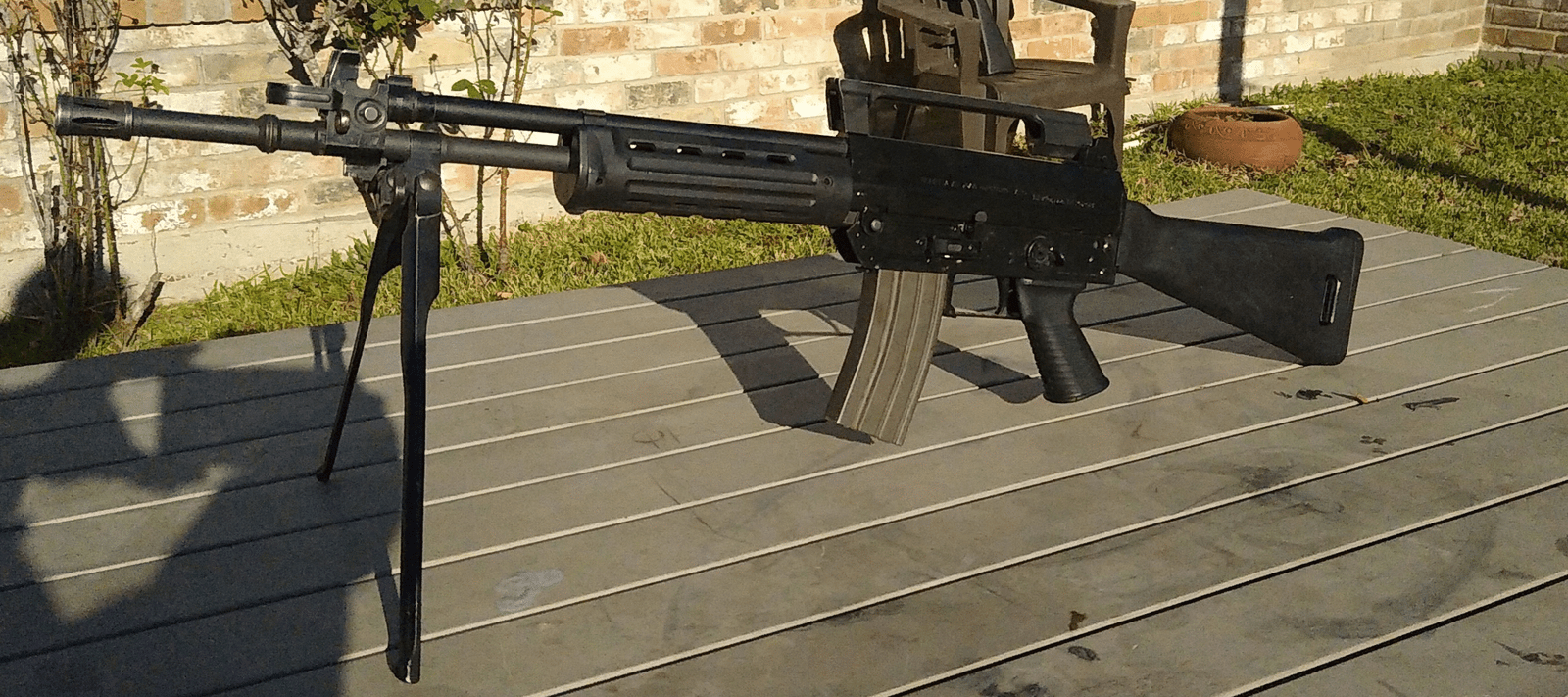
The light machine gun model also featured a heavier barrel and bipod, as well as mountability on vehicles or tripods. The models were all capable of using the rifle grenade directly out of the muzzle, offering one more utility.

Among civilians, the AR70/.223 became a collector’s item. Fewer than a dozen were imported into the U.S. in the 1980s, so they are rare and extremely desirable. They were not merely valued as collectibles for their rarity, but for their craftsmanship and their place in a notable chapter of Beretta history.

Officially entering service in 1990, the AR70/90 was a hardy and flexible workhorse. Yet, as the needs of the military shifted in the 2000s, Italy’s Soldato Futuro program looked to newer technology, paving the way for Beretta’s ARX-160 to take its place as the default service rifle.

However, the legacy of the AR70/90 lives on. It is proof that a mix of proven engineering with creative innovation exists. For collectors, it is history; for military historians, it is evidence that Italy could make some of the best small arms in the world that are functional, efficient, and long-lasting.