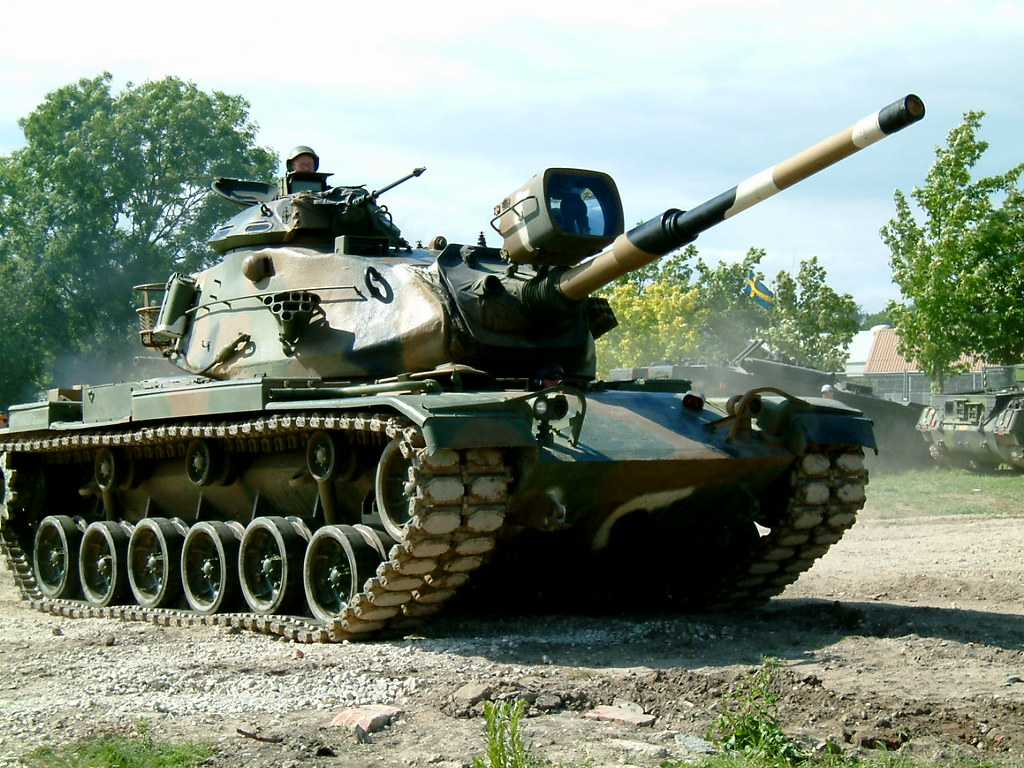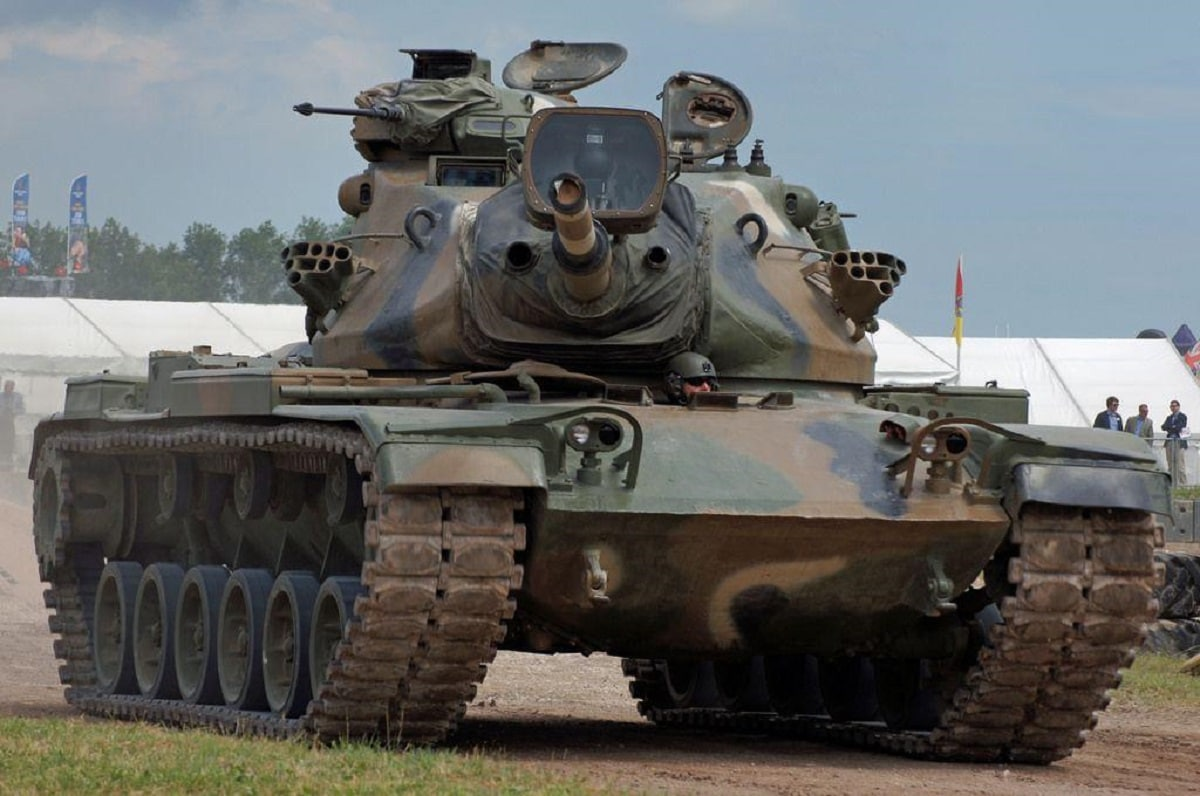

The M60 tank is commonly recalled as one of the Cold War era’s most emblematic symbols of armored warfare, filling the gap between post-World War II Pattons and the contemporary M1 Abrams. More than 15,000 were produced, and their service life spanned more than four decades. The tale of the M60 is one of gradual improvement, tenacity, and worldwide distribution, demonstrating itself throughout decades of changing military requirements.

Its origins date back to the M48 Patton, a tank informed by experiences during the Korean War and the growing tension of the early Cold War era. In 1960, introduced to resist increasingly formidable Soviet threats, the M60 was a definite improvement over earlier models, providing U.S. troops and allies with enhanced firepower, enhanced protection, and a more capable platform for future armored warfare.

The heart of the M60 was the 105mm M68 rifled gun, an American adaptation of the legendary British L7, which gained a reputation for reliability and accuracy throughout the NATO armies in short order. Although much of the M48’s hull and engine remained in place, the M60 introduced a more angular turret and heavier armor, a strong foundation upon which years of incremental improvements and updates would rest.

The M60A1 incorporated a longer turret for enhanced performance, while the M60A2 tested a bigger 152mm gun-launcher combination, although this proved problematic in practice. The M60A3, which appeared in the late 1970s, got the balance just right.

Rather than modifying armament or armor, this model concentrated on upgrading fire control systems and night-fighting capability, providing crews with a substantial advantage in a range of combat situations.

Fitted with a laser rangefinder, ballistic computer, and thermal imaging sights, the M60A3 was capable of recognizing and firing at targets in darkness or low visibility. Other features, such as launchers for smoke grenades, nuclear, biological, and chemical protection for the crew, and an automatic fire suppression system, increased survivability. Although it didn’t see action in Vietnam, the M60 had its value proven in other wars worldwide.

Israeli troops showed the effectiveness of the tank in the 1973 Yom Kippur War, where it enjoyed considerable success against Soviet-made T-62 tanks, and it again saw service in the 1983 Lebanon War with explosive reactive armor installed to counter missiles.

In the 1991 Gulf War, the upgraded M60A1 fitted with reactive armor and enhanced night vision capabilities assisted U.S. Marines in crashing through Iraqi lines and pushing into Kuwait City, demonstrating that even during the time of the M1 Abrams, the M60 still had something to offer.

The M60 also became a workhorse for allied nations. Egypt, Turkey, Saudi Arabia, Taiwan, and Israel had variant versions, while Iran, which received M60A1s in the 1960s, has modernized its tanks significantly over the decades with improved fire control, stabilization systems, night vision, laser warning systems, and reactive armor, having them remain effective well beyond their initial service life.

Even in retirement, the M60’s impact continued. Its design experience and lessons, as well as its combat history, influenced the development of the M1 Abrams, especially in targeting systems, electronics, and battlefield integration in general. The Abrams improved on the M60’s work, adding advanced thermal imaging, composite armor, and a level of battlefield sophistication that represented a new standard for armored combat.
Today, the M60 remains in service in some countries, a tribute to its timeless design and versatility. It is still the epitome of a well-balanced tank—dependable, safe, and potent—a Cold War veteran whose influence can still be felt on battlefields and in armored theory everywhere.