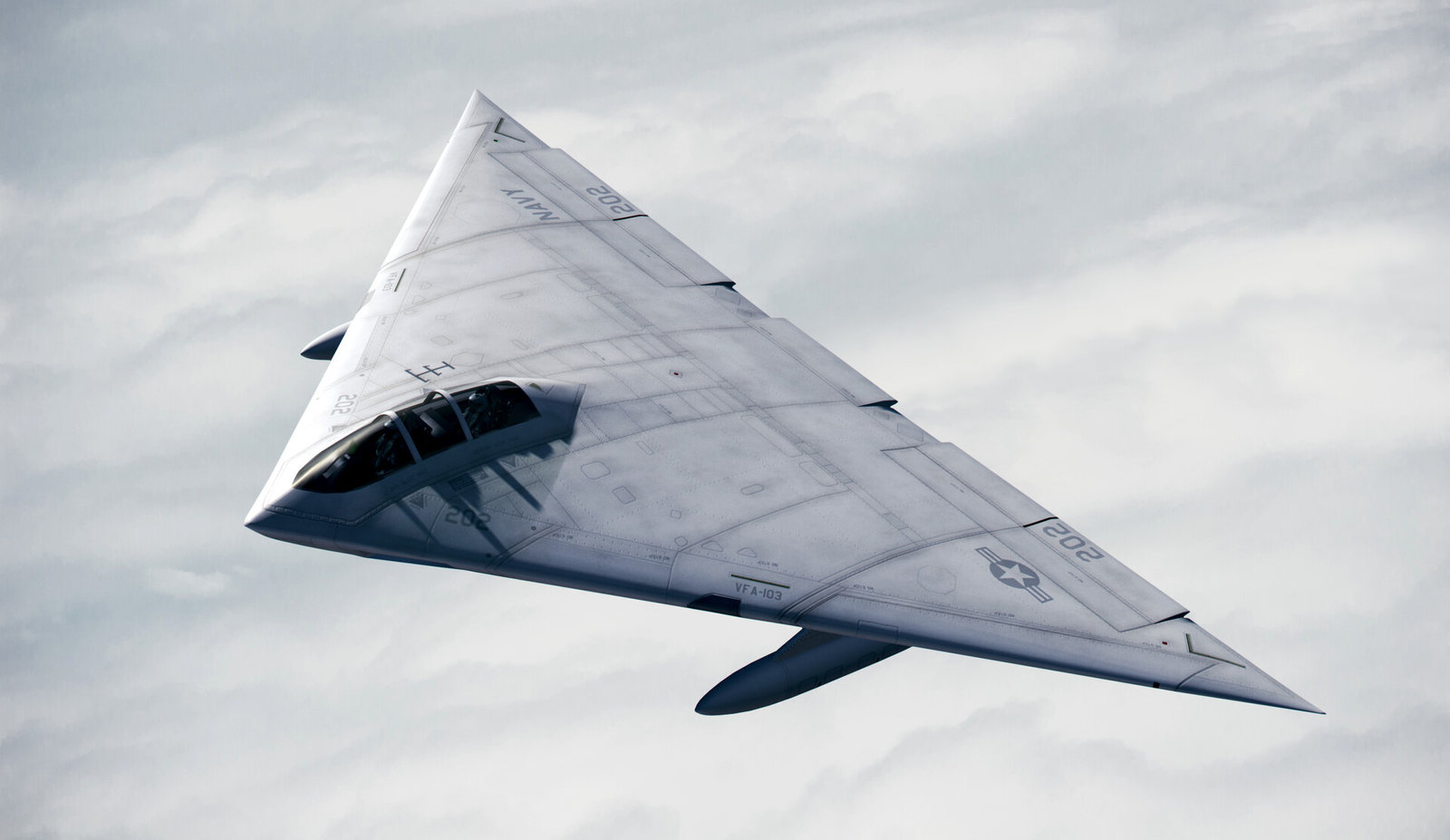

The A-12 Avenger II story is one of dreams, creative thinking, and disappointment. It is a Cold War-era cautionary tale, a program that would revolutionize naval aviation but eventually failed on its own ambitions. It was imagined to be the U.S. Navy’s answer to the stealth revolution; the A-12 was to be a carrier-based bomber capable of flying unseen through enemy defenses and delivering precision strikes against deep targets. What emerged instead was one of the most storied flops in the annals of military aviation, leaving behind lessons, apologies, and boundless speculation on might-have-beens.

The idea was born in the 1980s, as the dependable Navy A-6 Intruder began to reach the end of its days. The A-6 had been in service since Vietnam, but technology in radar and air defenses was rendering it increasingly vulnerable. What the Navy needed was a new aircraft that could survive hostile skies, use precision-guided munitions, and still tolerate the tough demands of carrier life. From this need, the Advanced Tactical Aircraft (ATA) program was born—a bold idea to introduce stealth bombing capability to the carrier flight deck. The resulting aircraft was itself revolutionary.

A joint project of McDonnell Douglas and General Dynamics, the A-12 Avenger II was a thin, tailless flying wing that was triangular in shape and so dubbed by the nickname “the flying Dorito.” Its radar-absorbing design was intended to make it invisible, and its composite hull and radar-absorbent paint were supposed to propel stealth technology to unprecedented levels.

To keep its low radar cross-section, all of the weaponry—from precision bombs to anti-radiation missiles and even air-to-air missiles—would be stored in a secret bay. But merging stealth with carrier operations was a nightmare.

The aircraft had to survive catapult shots, hard arrested landings, and the tight quarters of a flight deck—all without compromising stealth integrity. On paper, its more than 900-nautical-mile strike radius would have overshadowed that of the A-6, giving the Navy a deep-strike capability it had never had. Ambitions were high for more than 600 for the Navy, nearly 240 for the Marines, and even an Air Force variant, bringing the total to more than 1,200 aircraft. Reality, though, had other plans.

The plane was always overweight, degrading its performance and carrier safety requirements. New composite materials and advanced coatings bogged down the pace and raised costs higher and higher. What began as a $4.8 billion development program mushroomed quickly to over $5 billion, with projections running at over $11 billion by the early 1990s. At over $165 million per aircraft, the A-12 was fast becoming the costliest tactical plane ever conceived. It was also beset by neglect.

The Avenger II was a “black program,” one that was secret and hidden from large congressional and Pentagon scrutiny. Secrecy allowed trouble to creep in. Investigations after the fact diagnosed excessive overconfidence, poor communication, and management by the Navy and contractors. Even before the program’s true problems became apparent, the political and strategic climate had shifted. The Cold War ended almost overnight.

The Berlin Wall fell in 1989, and the Soviet Union had collapsed by 1991. The threat of survival that had made the A-12 viable was gone. The U.S. already had the F-117 Nighthawk in production, and the B-2 Spirit and F-22 Raptor in the pipeline. Producing a second stealth platform, especially one so costly and plagued by issues, was impossible to defend. Defense Secretary Dick Cheney shut off the spigot on January 7, 1991, ending the program in what remains the largest contract termination in Pentagon history.

What followed was a legal quagmire. The government sought to reclaim $1.35 billion, alleging that the contractors had defaulted on their obligations. The contractors responded that shifting requirements and a lack of cooperation had condemned the project. The court battle had dragged on for more than two decades, eventually concluding in 2014 in the contractors’ favor.

A-12’s failure forced the Pentagon to rethink the way it managed high-risk acquisition programs. Promises of too much untested technology, rushed schedules, and low estimates of complexity became the very pitfalls that future projects were warned about. More disciplined, milestone-based development models followed in its wake.

And still, the Avenger II vision was not forgotten. Its innovative concepts set the stage for future naval stealth programs. Lessons learned from A-12 were incorporated into the X-47B unmanned testbed and the MQ-25 Stingray tanker, both of which carry forward the vision of stealth carrier operations. Though the Avenger II itself never flew, its legacy continues to shape naval aviation—proof that defeat can leave a heritage.