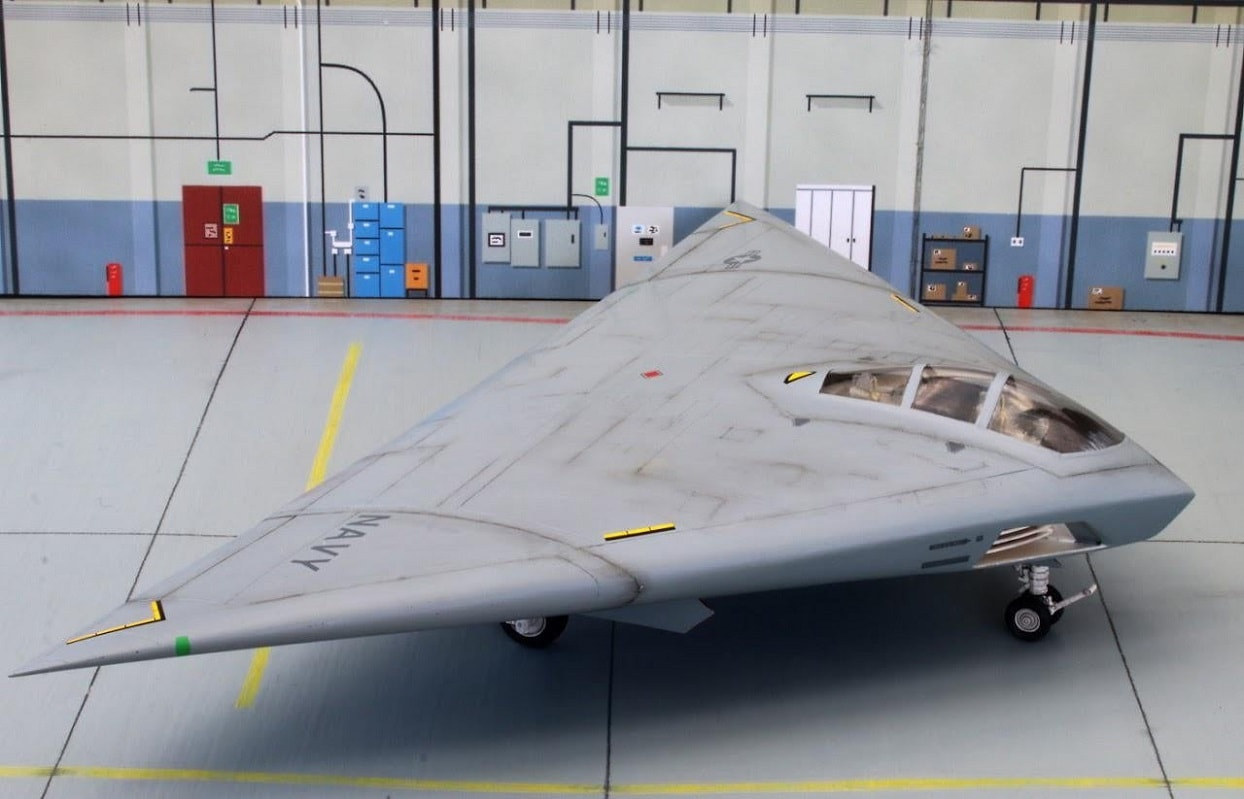

The A-12 Avenger II was to be the Navy’s bold step into the future—a stealthy carrier-based bomber that could penetrate enemy defenses and attack deep into enemy territory. By the late 1980s, the Navy’s old workhorse, the A-6 Intruder, was aging, and the expanding threats of the Cold War made it necessary to have an aircraft that could resist radar-guided missiles and integrated air defense systems.

To address this requirement, the Advanced Tactical Aircraft (ATA) program was initiated, with the mandate to develop a next-generation stealth attack aircraft for use from aircraft carriers.

The Air Force had already stolen the spotlight with the F-117 Nighthawk, and the Navy needed its stealth wonder. In 1988, McDonnell Douglas and General Dynamics secured the contract, giving birth to the A-12 Avenger II—at least on paper.

Its appearance was dramatic: a wedge-shaped wing known colloquially as the “Flying Dorito,” internal weapon bays to keep it low on the radar screen, advanced materials, and radar-absorbing paint. It was designed to carry two crew members plus sophisticated flight systems, ground-mapping radar, and high-tech combat electronics. Its projected range was over 900 nautical miles, easily farther than any carrier-based aircraft to date.

Converting that visionary idea into a successful plane, however, was much more difficult than envisioned. Trying to balance stealth needs with the unforgiving demands of carrier landings and takeoffs posed a major engineering problem.

The weight of the aircraft increased way beyond early estimates, compromising the carrier’s operational safety. Experimental materials and unproven production techniques contributed to delays and technical frustrations, further slowing the effort.

Secrecy exacerbated problems. As a classified “black” program, the A-12 avoided normal scrutiny. Congress and the Pentagon were not entirely informed of the magnitude of its issues. Contractors did not want to lower confidence, so they minimized delays, and Navy officials were reluctant to shut down the program.

Costs quickly escalated. Early development estimates of $4.8 billion almost doubled to $11 billion, with each aircraft to cost over $165 million. By 1991, the A-12 was 18 months behind schedule, billions above budget, and still hadn’t taken off.

In January 1991, Secretary of Defense Dick Cheney canceled the program, the biggest Pentagon contract cancellation ever. Only a complete mock-up of the A-12 was ever built. The repercussions hung around for decades. Court fights between the government and contractors dragged on until 2014, finally ending the expensive fiasco.

In the absence of the A-12, the Navy depended on the F/A-18 Hornet and subsequently the Super Hornet to take up the slack. Someday, the stealth F-35C rolled onto carriers, but it was not the specialized bomber the A-12 had been intended to be.

The A-12 Avenger II is a cautionary example in U.S. military aviation today. It reveals the danger of overreaching technology, bad program management, and too much secrecy. Although the “Flying Dorito” never took flight, its history reformed the way the Pentagon approaches big weapons programs, securing stricter control and more prudent expectations before investing billions in new planes.