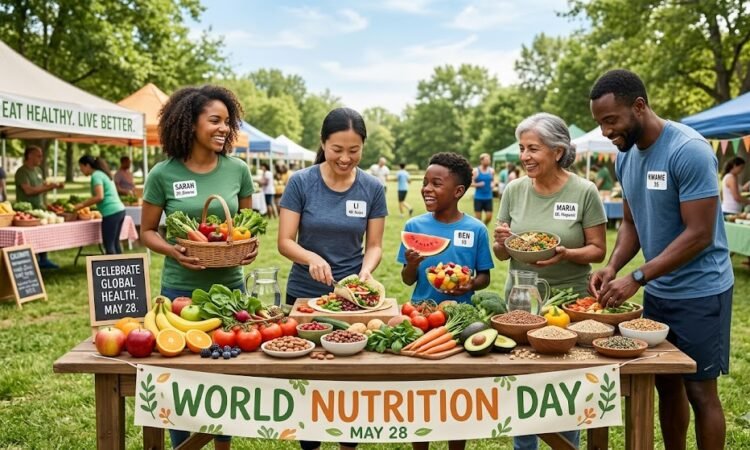
Every year on May 28, global communities, health organizations, and individuals mark the World Nutrition Day. It is a global alarming event on increased population and declining food nutrition of the world and need of new age nutrition research.
With todays changing global nutrition scenario, it is very important to watch on trends and available information on wellness necessities, and adjust your lifestyle accordingly to keep yourself healthy. This self awareness and prompt action will not only prevent you form the threat of new age critical lifestyle diseases but keep yourself on track with your life goals.
Today time is dominated by highly processed easiest getting and tasty foods habits and sedentary lifestyles are rising the rate of chronic illnesses among people around the world, and shifting environmental changes, have made necessity of huge changes in what we putting in our plates as a food. This World Nutrition Day, may 28 most of the public and expert conversation focuses on an immediate to address critical reality, followed by the urgent need for the “Essential Change Adoption”.
But what does it actually mean to adopt the required nutritional changes, and why is doing it right away is important for our survival and longevity? Let’s explore on, why your current dietary habits might need a reboot and how small, structural changes adoption can transform your health.
The Global Nutrition Crisis: Understanding what is on stake
We are currently navigating through a historic global paradox which is often referred to as the triple burden of malnutrition which also includes undernutrition, micronutrient deficiencies with hunger crisis, and overweight or obesity.
According to data tracked through the United Nations, a Decade of Action on Nutrition, roughly 3 billion people globally cannot consistently afford a healthy, nutrient-rich diet. Recently, the global rise in ultra-processed food consumption has also fueled an epidemic of non-communicable diseases (NCDs) such as Type 2 diabetes, cardiovascular disease, and hypertension.
Chronic, diet-driven diseases are among the major causes of preventable deaths worldwide. The root cause is frequently not a lack of calories, but the lack of essential nutrition.
What is Essential Change Adoption in Nutrition?
Essential Change Adoption means shifting away from short-term, nutrition restrictive dieting and moving toward a permanent, structurally well balanced, and sustainable diet practices. It is the conscious integration of nutrient-rich, real foods in our daily life while reducing the unhealthy and harmful modern eating practices.
For most modern households, this change are based on three core pillars:
- From Calorie-Rich to Nutrient-Rich:
Modern food is incredibly easy to provide 2,000 calories a day, but it lacks basic vitamins and minerals. Adopting essential change means prioritizing foods rich in micronutrients, healthy fats, and healthy proteins than just being high in calorie count.
- Prioritizing Gut Health & adoptable:
Eating nutrient-rich food is only half the way to achieve wellness, as your body actually also has to easily digest and absorb the nutrition from the food which you eat in your routine diet. Adopting traditional food preparation methods such as soaking pulses, sprouting grains, and eating natural fermented foods, can increases how it eases your body processes and uses nutrients and heals the healthy gut bacteria balance.
- Choosing Seasonal and Local Food Sources:
True nutritional adoption is connected with the environmental sustainability in which you live. Foods grown locally and harvested in various seasons don’t just taste better, but it also maintain their actual vitamin because they are unprocessed, not kept in cold storage or goods transit.
Explore The Hidden Dangers of Ultra-Processed Foods (UPFs):
To understand why essential change adoption is so urgently needed, we also have to look closely at what dominates the modern consumer market. As, today ultra-Processed Foods (UPFs) are available majorly due to industrial revolution and people habits of easy and tasty food without any efforts. These are not sometimes just altered commercial foods, but they are industrially formulated foods, which may containing oils, fats, sugars, starch, and protein, combined with synthetic stabilizers, emulsifiers, and flavor enhancers which are not at all healthy on a higher consumption for a longer run.
The Dopamine Trap of Hyper-Palatability:
UPFs (Ultra Processed Foods) are made with using a combination of salt, sugar, and fat designed to override our brain’s natural hunger satisfaction or satiety signals. This is known in the food industry as the joyful point. When we consume these foods, our brains release a surge of dopamine, creating an artificial loop that encourages overeating of the food unknowingly. Over the time, this desensitizes our natural hunger hormones, such as leptin and ghrelin, which is making self diet regulation nearly impossible with automatic adopting of habitual food cues of these food items. Which is not healthy at all.
Industrial Additives and Gut Dysbiosis:
Apart from just considering the food calorie count, the synthetic additives in UPFs (Ultra processed Foods) damages our inner body ecosystem. Common food emulsifiers, used to give processed foods a smooth texture and long shelf life, act like a cleansing element in our digestive tract. They damages the protective mucous layer of the gut area, which leads to a condition known as increased intestinal permeability, or leaky gut. This allows undigested food particles and bacterial toxins to leak into the bloodstream, triggering a condition of chronic, low-grade systemic inflammation, which is the foundation root of almost every modern degenerative disease.
The Core Pillars of Sustainable Nutritional Evolution:
True change is not about not just eating carefully, but it is about filling your plate with foods that actively heal, protect, and energize your body’s cellular structure.
Reclaiming Cellular Hydration:
Before analyzing food, we must analyze fluid intake. A vast majority of the population lives in a state of chronic, mild dehydration, often confusing feeling of thirst signals for a hunger. Furthermore, the consumption of sugar added beverages, commercial fruit juices, and diet sodas are made of chemical that can impact on your liver and kidneys. Transitioning to pure, structured water, herbal infusions, and electrolyte-rich natural beverages such as coconut water is the easiest and immediate change one can adopt.
Macronutrient Balancing for Metabolic Flexibility:
Metabolic flexibility is our body’s ability to easily switch between burning carbohydrates and burning fats for fuel. Modern diets are high in refined carbohydrates, which keeps the body locked in a state of glucose dependence, which leads to insulin spikes, energy crashes, and excess fat storage. By balancing your routine diet with high-quality proteins, healthy fats, and complex, fiber-rich carbohydrates, we can easily stabilize our blood glucose levels at healthy level. This prevents the insulin resistance and allows body to burn its excess stored fat which reserves for healthy sustainable energy.
Action Plan: 4 Essential Dietary Swaps to Adopt Today
Making big lifestyle changes can feel difficult at initial phase. The most effective way to ensure permanent adoption is to focus on micro-habits. Here is a step-by-step breakdown of structural food upgrades you can make by starting from this week:
Step 1: Shuffle Your Base Food Grains:
Begin replacing highly polished white rice and refined flour (all purpose flour or Maida etc.) with whole, healthy grains. Eat millets sich as Ragi (finger millet), Jowar (sorghum), or Bajra (pearl millet) which can easily boosts fiber, magnesium, and plant-based iron supply to your body.
Step 2: Optimize Your Pulses and Lentils:
Don’t just cook lentils by taking straight out of the bag. Soak them overnight or sprout them for more nutrition with its internal upgrades. This simple step breaks down phytic acid (an anti-nutrient whcih blocks mineral absorption), making elements such as zinc and iron more accessible to your digestive system.
Step 3: Adopt the Half-Plate Rule:
At every lunch and dinner, visually check your plate. And, ensures that at least 50% of it is filled with fresh colorful and seasonal vegetables. Different colors represent different phytonutrients and antioxidants which ensures better essential nutrition supply.
Step 4: Audit Your Kitchen Fats / Oils Usage:
Phase out highly refined, chemical added seed oils. Switch to cold-pressed, unrefined cooking oils (such as mustard, coconut, or olive oil) and lower the amounts of pure, traditional clarified butter (Ghee) to provide the healthy fatty acids your brain and hormones which they needs most.
The Compounding ROI of Nutritional Change:
When you choose to adopt these essential changes, you are not just preventing the future critical disease threat, but you are also upgrading your daily quality of life onwards.
- Nutritional Change: Ditching Ultra-Processed Sugars, Immediate Physical Response: Stabilized blood sugar, elimination of midday energy crashes, Long-Term Health Asset: Lowered risk of insulin resistance and Type 2 diabetes.
- Nutritional Change: Increasing Soluble Fiber Intake, Immediate Physical Response: Improved digestion, smooth gut motility, and better satiety, Long-Term Health Asset: Reduced systemic inflammation and healthier cholesterol levels.
- Nutritional Change: Optimizing Healthy Fats, Immediate Physical Response: Sharp mental clarity, stable mood, and balanced hormone production, Long-Term Health Asset: Long-term cellular integrity and cardiovascular protection.
- Nutritional Change: Prioritizing Quality Protein, Immediate Physical Response: Enhanced muscle recovery, reduced cravings, and higher thermic effect, Long-Term Health Asset: Maintenance of skeletal muscle mass and metabolic rate with the ageing.
Overcoming the Psychological Barriers to Change Adoption:
Why is it that important apart form knowing what is healthy, we often struggle to maintain good habits? The challenge is not just a lack of knowledge, but it is a lack of adopting structural and strict behavioral strategy toward our own health.
The All-or-Nothing Mindset:
Many people approach nutrition with a perfectionist attitude. They declare an overnight health transformation, by changing the glossaries from their kitchens and adopting an unsustainable, restrictive diet. When life gets busy and they misses enough nutrition, then they view it as a total failure and abandon the effort entirely towards own wellness. Essential change adoption is the concept of continuous improvement, making choices that are better, and it should not necessarily perfect. Missing a single meal does not ruin your health, which is as true just as eating a single salad does not cure a disease.
Re-engineering Your Micro-Environment:
Willpower is a finite resource that reduces throughout the day. If you rely on willpower to resist unhealthy foods while keeping your kitchen stocked with chips and cookies, then you will eventually resulting in of eating them. True diet adoption requires altering your environment so that the healthiest choice is always the easiest choice. Keep a bowl of fresh fruit on the counter, pre-chop the vegetables on Sundays, and store processed snacks in hard-to-reach places or do not buy them at all.
Make World Nutrition Day May 28 as the Turning Point in your wellness:
World Nutrition Day May 28 is not just an annual reminder, but it suggests the essential change of healthy adoption as a daily practice. True health isn’t built on a perfect week of hardcore dieting, but it is built on the quiet, mixed choices you make at the grocery store and the dinner table over months and years.
By educating yourself on the realities of the modern food industry, understanding your body’s biochemistry, and introducing small, but steady and sustainable adjustments, will help you to break free from the cycle of chronic fatigue and disease. On this May 28, choose one or two simple, structural changes to bring in your habits and kitchen. As this health awareness attempt will help your body, your mind, and your future wellness.

Senior Editor, Holistic Wellness & Preventive Health
M.Sc. in Public Health Nutrition, Delhi University
Pooja Mehta joined Gymbag in 2018 with a background in public health and community-based wellness education. With over a decade of experience in nutrition strategy and preventive care, she specializes in practical, culturally-aware health tips that empower people to make long-term changes.