Meat is we human’s main food since we were into our primitive age, and since many decades, meat has been considered as a best source of protein, essential amino acids, Vitamin B12, iron, and zinc. It is an important food included in diet of millions of people around the world, from the popular charcoal-grilled steaks of the Americas to the protein rich fish, meat and chicken dishes of Asia.
However, todays modern nutrition science evolves with a clearer understanding of the gut micro organisms, metabolic health, and long-term disease symptoms. But, yet, the question is still unanswered which are Is meat healthy? and What happens to your body when you eat too much meat?.
While your body is capable of processing multiple foods items, as we evolved from primative stage to todays modern humans age, consistently higher eating of meat, and particularly of red meat and processed food may triggers an event of physiological shifts. Whether you are a fitness enthusiast managing your fitness on daily basis or a begineer who wants to imoprove their health for a longer run, by understanding the impact of higher meat consumption on your health is very important.
- The Immediate Digestive Response:
The digestive process begins the moment when you take your first bite of your food, but meat shown an unique challenge and difficulties sometimes for the human digestive system, this includes eating un-cooked meat or lack of daily workout or and due to sedentary lifestyle.
The Fiber Deficit:
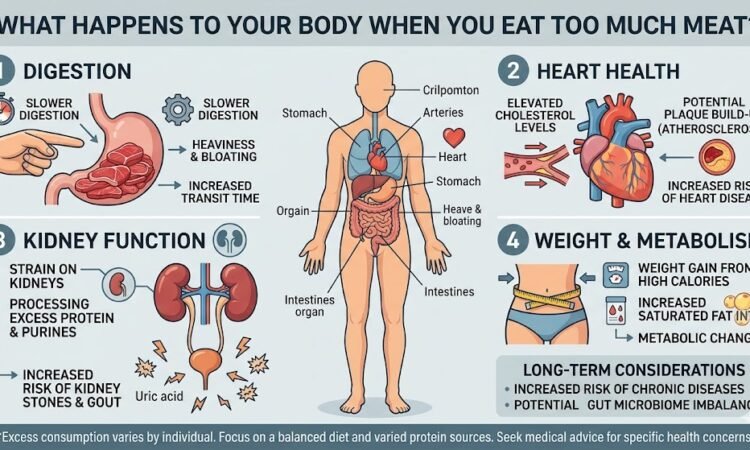
The most immediate consequence of a meat-centric diet is the lack of dietary fiber. Meat contains zero fiber, and when your meals are rich in just protein and fats without the balancing of fibrous vegetables, legumes, or whole grains, then your digestion slows significantly. This can lead to constipation, bloating, and a general feeling of overloaded stomach symptoms post-meal.
The Heavy Gut Feeling:
Because meat is rich in proteins, including beef or lamb, as well as it is also rich in complex proteins and fats, whish results this food to remains in your stomach for a longer period than refined carbohydrates. This extended digestion time is why you might feel heavy on stomach after a steak dinner. While protein is highly satiating, an imbalance can lead to gastrointestinal discomfort and will trouble your energy levels for the rest of the day.
- Metabolic Load and the Kidney Connection:
A common concern among high-protein diets is the effect on kidney health. The kidneys are your body’s primary filtration system, which are responsible for removing the nitrogenous waste products generated in your body when it breaks down protein (amino acids).
The Hydration Requirement:
When you increase your meat intake, it results in increasing the load on your kidneys to remove urea. This process requires drinking plenty of water. If you do not increase your required fluid intake to match with a high-protein diet, then you may be at risk of mild, chronic dehydration. Over the many years, this additional stress can be problematic for those with pre-existing kidney issues, and even if the kidneys are robust it may trouble to a healthy individual also.
- After the Meat Eating, Why Your body Heat Up?:
Have you ever felt a sudden increase of heat or started sweating just after eating a high portion of meat? This is a natural body phenomenon which is known as diet-Induced thermogenesis (DIT).
Protein has the highest thermic effect of all macronutrients. To break down and absorb protein, your body produces more energy, to burn more calories than the regular fats or carbohydrates. This internal metabolic furnace creates heat as a byproduct during the digestion process. While it is a natural part of human metabolism, but it is a clear signal that your body is working to match the food intake which you does on everyday basis.
- The Cardiovascular Implications:
When discussing the long-term risks of high meat consumption, our heart health may be at risk. The concerns here are of two sided as the type of meat, quantity and the preparation method.
The Cholesterol Equation:
Red meats, such as beef, pork, and lamb are, often high in saturated fats. Excess consumption of saturated fat is linked to increased LDL (low-density lipoprotein) cholesterol, which is often referred to as a bad cholesterol. Such Chronic increase of LDL can results into the buildup of arterial plaque (atherosclerosis), which restricts blood flow and increases the risk of heart disease and stroke.
The TMAO Factor:
Emerging research has pointed to a compound which is called as TMAO (trimethylamine N-oxide). When we consume specific nutrients found in red meat, such as L-carnitine and choline, our gut bacteria convert them into a substance that is later oxidized by the liver into TMAO.
High levels of TMAO in the bloodstream have been closely associated increased with risk of cardiovascular problems. This suggests that the way your gut microbacterias interacts with meat, should be careful and always suggest of haivng a limiting the portion per meal.
- Processed Meats and the Cancer disease connection:
The World Health Organization (WHO) has classified that processed meat as Group 1 carcinogens, which means there are sufficient evidence that consumption of meat can leads to cancer, particularly colorectal cancer.
The Problem with Additives:
Processed meats such as bacon, sausage, ham, pepperoni, and deli meats are often processed, smoked, or salted. This process involves the addition of nitrates and nitrites. Within the acidic environment of the stomach, these compounds can form N-nitroso compounds, which are known for causing DNA damage your bowel system.
Cooking Methods: The Hidden Dangers:
Above the meat itself, how you cook it also matters. Grilling, frying, or broiling meat at very high temperatures can causes the formation of heterocyclic amines (HCAs) and polycyclic aromatic hydrocarbons (PAHs). These chemicals are formed when amino acids, sugars, and creatine in meat react with the high heat. Studies have linked that regular exposure to these compounds may increases the risk of few types of cancers.
- Strategies for a Balanced Approach:
You do not have to stop the meat consumption at alll to live a healthy, and high energy life. The goal should be to optimization and moderation of meat and small portion consumption in your daily diet. Here is how you can enjoy meat while protecting your body.
The Plate Method for Protein:
Fill Half of Your Plate with Plants based Food: Focus on eating cruciferous vegetables such asbroccoli, cauliflower, kale, which will provide the fibers which are necessary to clean your digestive tract and manage cholesterol.
Choose Leaner Sources: Prioritize poultry, fish, and lean meat.
The 80/20 Rule: Try to make 80% of your protein intake from diverse sources, including legumes such as lentils, chickpeas, seeds like hemp, chia, nuts, and soy products such as soy chunk, tempeh, tofu etc. Use meat as the remaining 20% to complete your daily nutritional needs.
Upgrade Your Food Prepration:
- Switch to Gentler Cooking: Use poaching, steaming, or stewing instead of char-grilling can be health option to cook meat.
- Marinate Before Cooking: Research indicates that marinating meat with herbs such as rosemary, thyme, or oregano etc. can significantly reduce the formation of harmful HCAs during high-heat cooking.
- Limit Processed Meats: Aim to reserve processed meats for rare, special occasions rather than daily staples.
Listening to Your Body:
Eating too much meat can put unnecessary stress on your kidneys, alter your gut microbiome, and increase the risks which are associated with intake of heart-damaging saturated fats. However, by diversifying your protein sources and paying attention to preparation, you can mitigate these risks effectively.
Your health is a long-term project. By shifting toward just plant-based diet approach, you must provide your body a complete meal with the fiber, phytonutrients, and antioxidants which needs to fight with the inflammation and metabolic stress that often comes with a heavy meat based diet.
Note: This article is for educational purposes only and does not constitute any medical advice. If you are concerned about your diet, digestive health, or cardiovascular markers, please schedule a meeting with consultation with a qualified healthcare professional or a registered dietitian for a better personalized health and nutritional guidance.

Editor of Segment – Men’s Health & Active Lifestyle
B.A. in Sports Science, University of Michigan | Certified Wellness Specialist (NWI)
David Brooks joined Gymbag4u.com in 2019, bringing a strong focus on men’s health, motivation, and active aging. With a background in sports science and years of coaching men in fitness, lifestyle change, and injury recovery, David’s content speaks directly to readers navigating modern work-life stress.