In today’s fast changing and more socially connected world, feeling constantly stressed is a major health issue around the globe. But while your mind is racing to keep up with school deadlines, career changes, or everyday personal responsibilities, your body is quietly paying the price day by day with your hectic routine. Lets explore about how to lower cortisol levels with natural ways.
If you are struggling with sticky belly fat, and waking up wired at 3 AM, or experiencing unpredictable energy crashes, you don’t just have a time management problem, you likely have a cortisol related problem.
Cortisol is frequently released body’s stress hormone, and while it serves as an important biological purpose, chronic increase can create trouble to your metabolic, mental, and physical health. The good news? is that you can regain control with natural routine.
This article will help you to breaks down exactly how cortisol functions, signs that your cortisol levels are critically out of control, and actionable, science supported ways to lower your cortisol levels naturally and at fast ways.
What is Cortisol and the Fight or Flight Response?
Cortisol is a very important steroid hormone which is produced by your two adrenal glands, which are located just above your kidneys. It is regulated by the hypothalamus pituitary adrenal (HPA) bonds.
Under normal, DNA Routine conditions, cortisol works as a built in alarm system. Imagine an early human encountering a critical situation. The brain identifies danger and initiates an actionable impact:
Perceived Stress
||
Hypothalamus Signals Pituitary
||
Adrenals Release Cortisol & Adrenaline
||
Heart Rate Rises / Glucose Floods Bloodstream / Digestion Halts
The temporary increase of cortisol does something very specific, it starts dumping glucose straight in your blood veins so your muscles have immediate energy to either fight or flight action.
The Modern Wayout:
Out natural body design assumes the issue as acute and temporary. Once the danger passes, your parasympathetic nervous system, the rest and digest process, which takes over, and cortisol drops back down to its lower level.
In modern life, however, your brain cannot differentiate between a physical stress and a mentally stressful work e-mail, school exam anxiety, or financial worry. Because these mental stress triggers never truly go away, your HPA stays firing. Your body remains stuck in a low-grade, chronic critical situation with increasing your every major body organs in high cortisol day by day.
Warning Signs of Chronically High Cortisol Levels
When your body is flooded with stress hormones for few months or years, it displays different physical and psychological symptoms. Look out for these primary signs given below:
- Wired but Tired Insomnia: You feel completely exhausted all evening, but the second your head hits the pillow at night, your mind starts racing and you are stay awake most of the night.
- Higher Weight Gain (The Cortisol Belly): Cortisol mobilizes fat from other areas of the body and deposits it deep inside the abdomen (visceral fat) because abdominal fat cells have a higher concentration of cortisol.
- Intense Sugar and Carb Cravings: Because cortisol replicate a condition of physical exhaustion, it tricks your brain into thinking you desperately need rapid-acting glucose, which further leads to intense cravings for simple carbohydrates, processed snacks, and or sweets.
- Lack of Brain focus and Mental Decline: Long Time stress physically reduce the prefrontal cortex and hippocampus, the areas of your brain responsible for memory, focus, and emotional intelligence regulation.
- Frequent Illness: High cortisol actively suppresses your body immune system’s inflammatory responses, making you highly vulnerable to common colds and seasonal disease viruses.
5 Rapid, Natural Ways to Faster Lowering Cortisol Levels
If you are feeling stuck in a higher stress, then you need immediate physical interventions to force your nervous system out from the critical exhausted stage into resting and nourishment.
Ho with these five fast-acting strategies to cope up with Cortisol level issues:
- Execute the Physiological Sigh (Instant Calm)
You don’t need a 60-minute meditation session to reset your brain. Stanford neuroscientists have proven that the quickest way to lower your heart rate and lower regulate autonomous arousal by a breathing pattern called the Physiological Sigh.
How to do it: Take two quick, continuous inhales through your nose (one deep inhale, followed immediately by a sharp top-off inhale to fully inflate the lungs), then follow it with a slow, extended, sighing exhale through your mouth. Repeat this just 3 to 5 times to instantly trigger your parasympathetic nervous system.
- Take a Strategic 15-Minute Nature Walk
Physical movement clears stress hormones from your blood, but where you walk matters. Studies show that walking in green spaces or parks, a practice known as forest bathing, helps in drastically dropping cortisol level more in compared to walking the same distance in high-traffic city sidewalk.
- Using Cortisol reducing Adaptogens
Adaptogenic herbs are unique plants that can help our human body adapt to internal and external stress makers by regulating HPA axis sensitivity.
- Ashwagandha (KSM-66): Best clinical trials consistently proven that a high-potency ashwagandha supplementation can help to amazingly reduce circulating serum cortisol levels by up to 20% to 30% over a 60-day period regular consumption.
- Rhodiola Rosea: Excellent for acute situational stress, rhodiola helps to prevent burnout and keeps your mental clarity intact during intense work or study periods.
- L-Theanine: An amino acid found abundantly in green tea that crosses the blood-brain barrier to stimulate alpha brain waves, creating a sense of calm focus without causing tyredness.
- Optimize Your Magnesium Intake
When you are chronically stressed, your body rapidly excretes magnesium from your urine. Magnesium is nature’s ultimate relaxation mineral, it binds to GABA receptors in the brain to stabalise central nervous system hyper-activity. Focus on adding magnesium-rich foods like leafy greens, pumpkin seeds, and dark chocolate into your diet, or talk to your doctor about a high-absorption supplement such as Magnesium Glycinate before bed.
- Drastically Limit Liquid Stimulants After 12 PM
Caffeine is a fantastic tool for morning focus, but it is a direct pharmacological stimulator of the adrenal glands. Drinking a strong cup of coffee or an energy drink pushes your lower level cortisol on upside for few hours. If you already have elevated stress, afternoon caffeine turns a minor anxiety into a multi-hour biochemical panic situation. Establish a strict cutoff time for caffeine at noon to protect your evening sleep time.
The Anti-Stress Dietary Framework
Your gut health and blood sugar levels are directly surprisingly linked to your stress levels. Volatile blood sugar crashes look like physical emergencies to your brain, forcing the adrenals to dump more cortisol to stabilize glucose levels.
To keep your hormones level steady, make your routine food plates using this particular anti-stress foods:
- Food Group: Healthy Fats, Metabolic Target: Brain Health & Cellular Integrity, Best Choice Examples: Avocados, wild-caught salmon, walnuts, extra virgin olive oil
- Food Group: Complex Fibers, Metabolic Target: Stabilizes Blood Sugar Spikes, Best Choice Examples: Steel-cut oats, quinoa, lentils, chia seeds
- Food Group: Vitamin C Powerhouses, Metabolic Target: Adrenal Gland Recovery, Best Choice Examples: Bell peppers, strawberries, citrus fruits, broccoli
Your Stress Recovery Checklist:
To implement these tips into an effortless daily routine, check off these foundational behaviors:
- Morning: View natural sunlight within 30 minutes of waking to ground your healthy morning cortisol peak.
- Midday: Switch from afternoon coffee to loose-leaf green tea or caffeine-free herbal alternatives.
- Evening: Turn off bright overhead lights and screens 60 minutes before bed to allow your sleep hormone (melatonin) to rise naturally as cortisol drops.
- Daily: Dedicate just 5 minutes to deep, slow diaphragmatic breathing when transition periods occur (e.g., ending a work shift or getting home from school).
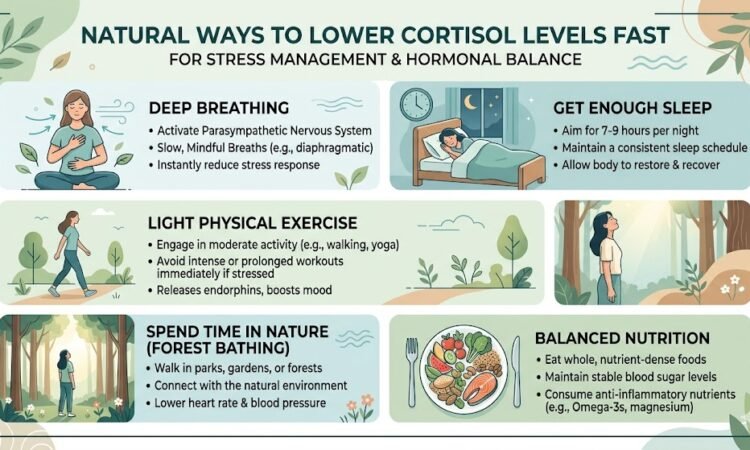
Sustained stress management is not an overnight task, but by respecting your body’s biological rhythms and applying these physical anchors, you can systematically lower your cortisol levels, reduce stubborn body fat, and restore vibrant daily energy with achieving wellness by just doing 4 imporaatnt things which includes Get Deep refreshing Brathing, Get Enough Sleep, Do daily light physical exercise, Spend more time in nature and do balanced diet to keep your hormonal levels in balance to achieve better health.

Editor
Professional Naturopathy, Holistic Wellness & Preventive Health Specialist
Doctor of Naturopathic Medicine, Bastyr University | Certified in Lifestyle Medicine (ACLM)
Dr. Blake takes a whole-body approach to health, blending medical knowledge with daily wellness practices. She’s worked in integrative clinics and now advises digital health platforms on sustainable self-care routines. on Gymbag, she provides guidance on sleep, energy management, immune health, and how to balance wellness with real-world demands.