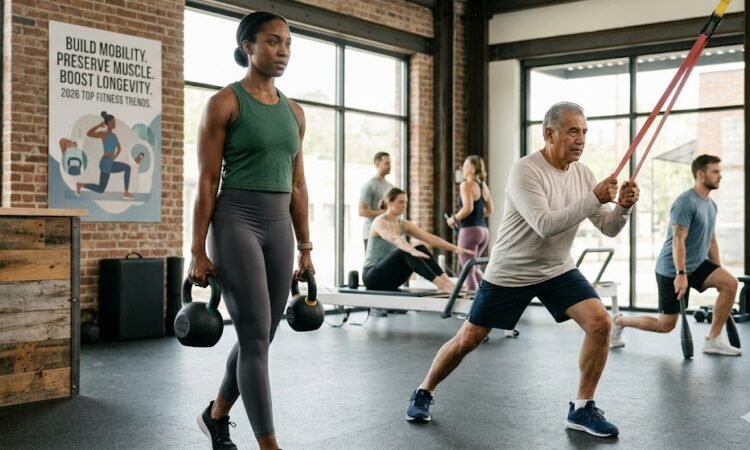
For many decades, the world fitness industry was driven by two main measures which are getting as small results as possible or getting as massive big health change as possible. The traditional gym routine was highly restricted. It consisted of sitting on fixed, regular weight machines, working for long hours on a treadmill for cardio, and sometimes doing a quick jumping or hamstring stretch to complete your routine workout session. And exactly this article below will help you to understand in this article that what is the role of few quick changes in your workout routine can help in Improving Mobility and Functional Strength with more productive level.
Today, a huge cultural and scientific shift is going on across the United States. Aesthetics are taking a backseat to wellness, better body movements, metabolic strength, and sustainable daily energy routine.
According to recent data from the American College of Sports Medicine (ACSM) Worldwide Fitness Trends, Functional Fitness Training, alongside Bodyweight Training and Core body Strength, have firmly established themselves in the global top 10 trends. Driven by an aging population prioritizing health for a longer period and younger generations seeking injury prevention, people are no longer asking, How much can I bench press? Instead, they are asking, How well does my body move, and how long will it last?
This article will breaks down the science of mobility and functional strength, analyzes the trends driving this movement, and provides a data-backed blueprint to improve your physical strength, mobility and wellness for a longer period of time.
Mobility vs. Flexibility: Understanding the Difference:
To build a truly well functional body, you must first clear up the misinformation from your mind, that mobility and flexibility are not the same thing. Using these ineffective by bad routine may increased injury risks.
- Flexibility: This is a muscle’s ability to proper do various body movement or motion. For example, if you sit on the floor, relax your body, and pull your torso toward your legs to stretch your hamstrings, you are testing flexibility. You are relying on gravity or an external force to lengthen the tissue.
- Mobility: This is a joint’s active ability to move through its full, purposeful motions with absolute control, neural coordination, and strength of your body. If you stand on one leg, lift your opposite knee toward your chest, and actively extend your leg out straight using only your hip flexibility and quads, you are testing your body mobility.
The Biological Reality of both Flexibility and Mobility: Flexibility without strength can leads to joint instability, subluxations, and chronic pain. Mobility, on the other hand, builds a protective shield around your musculoskeletal body frame. It ensures that your central nervous system can stabilize and produce force at your body’s maximum physical thresholds.
Why Functional Strength is the Ultimate wellness Tool:
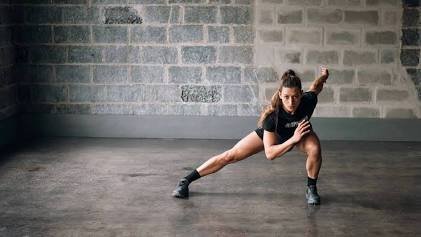
Functional strength training replicates the real-life, multiple body movements. It treats the human body as an interconnected kinetic chain rather than a collection of isolated muscles. Every movement pattern falls into one of five foundational categories which are squatting, lunging, pushing, pulling, and carrying.
Integrating this routine into your weekly workout sessions can provide a strong, data-driven health benefits that traditional bodybuilding splits cannot provide.
- Reversing the Sedentary Lifestyle and long hours of Desk-Job Impacts:
The average American adult spends over six to eight hours of a day sitting. This prolonged situation of hip pressure and spinal rounding can causes severe muscle imbalances, it also shortens and tightens the hip muscles, deactivates and atrophies the glutes (gluteal amnesia), and creates a stiff, rounded thoracic spine (upper back).
Functional strength movements, particularly weight carrying or rucking workouts (such as suitcase carries) and multiplanar lunges, actively reverse these body structural issues. They force the deep core stabilizers, posterior chain, and shoulder girdle to fire simultaneously, correcting posture from the inside out.
- Muscle Preservation and Active Aging:
The ACSM trends report highlights an unprecedented inrease in Fitness Programs for Older Adults, heavily driven by over 70 million baby boomers in the U.S. who refuse to accept physical wellness importance.
As the body ages, it naturally faces sarcopenia (age-related muscle loss) and a decline in fast-twitch muscle fibers. Functional strength training, focusing on progressive overload and balance, is the single most effective clinical aid to combat this decline. It preserves required body mass, maintains bone mineral density, and sharpens spanal mobility, which drastically reduces everyday fall risks.
- Preserving Critical Lean Mass During Weight Loss:
With the high rise of GLP-1 weight loss medications (such as Ozempic and Wegovy) across the United States, metabolic health discussions are changing. Medical professionals and exercise researchers today promoting majorly about structured resistance training which is a mandatory medical companion to these drugs.
Rapid, unmonitored weight loss may cause up to 40% of the weight lost which comes from an Important, lean muscle mass. Functional strength training provides a powerful hypertrophic signal to the nervous system, which ensures the body burns stored adipose tissue (fat) while protecting the muscle tissue that keeps your metabolism healthy.
The Top Mobility and Functional Fitness Trends:
The evolution of sports science has generated several highly targeted training methods that are redefining modern gym practices:
Biomechanically Optimized Lifting:
Intensive heavy lifting is today being wisely replaced by the joint-friendly workout sessions. Fitness enthusiasts are realizing that moving heavy loads doesn’t matter if your joints take all the structural damage. This has led to a surge in using specialized handles, angled cables, and convergent machines that allow for a natural joint trajectories, protecting the shoulders, lower back, and knees while maximizing muscle fibers.
The Pilates Reforming trend:
Mindful, high-tension physical conditioning is being replaced with more suitable pilates workout in many health enthusists routines. Pilates Reformer training is trending among people who want to move up from the ttraditional workout patterns. It is highly recommended by health expertrs due to its ability to target the main core muscules, such as the transverse abdominis), improve pelvic alignment, and build the fluid strength that prevents chronic lower back injuries.
Doing variety of Resistance & Suspension Training:
Heavy barbell squats not just the only path today to achieve a strong lower body. High-tension resistance loop bands and portable suspension systems (such as TRX) are heavily utilized for their ability to provide better resistance curves. Because the resistance increases as the band stretches, it forces the body to stabilize itself continuously, activating smaller stabilizing muscles in the hips, glutes, and shoulders that traditional iron weigh lifting practices misses.
Your Comprehensive Functional Body Process:
Converting to your workout moto into a mobility-first, functional routine does not require you to go with just heavy lifting or high-intensity workouts. Instead, it optimizes how you to betterly doing these high-intensisty workouts. You can go with the following structured sequence to construct a strong, high-performing, pain-free body:
- Implement body Movement Start: Daily, Every 2 Hours.
Do not rely on a single 60-minute gym session to reduce the health impacts of the 8 hours of sedentary desk work. Every two hours, set a timer to complete a 2-minute intentional body movement practice. This can include deep bodyweight squats, shoulder pass-throughs using a resistance band, or standing thoracic twists to keep the nervous system awake and joints lubricated.
- Shift to Interlinked Mobility Workout: During Your Warm-Up & Workouts.
Ditch the old-school stretching sessions which are ideally done at the end of your workout when your muscles are already exhausted. Instead, do an active mobility workout just after your routine intense workout sessions, just for few minutes will be beneficial. For example, immediately after completing a set of heavy lunges or squats, perform a 30 second active couch stretch to open up the hip muscles while the tissue is warm and receptive with earlier workout sessions.
- Prioritize Multiple planned Body Movements: 3 to 4 Times Per Week.
Replace fixed, single machine lifts with free-weight or mixed cable movements that force your body to move sideways and rotationally, not just forward and backward. Adopt a lateral lunges, rotational wood-chops, and single-leg Romanian deadlifts to build balanced, symmetrical stability across all three planes of motion.
- Do weight workout or weight carrying activity: End of Every Strength Session.
Finish your intense weight workouts with 5 to 10 minutes. Grab a pair of heavy dumbbells or kettlebells and perform a slow, controlled farmer’s walk workout sesssion for few minutes. Doing this simple movement daily will help to correct your spinal posture, strengthens the pelvic floor, builds elite grip strength, and integrates full-body functional stability with a more safer weight workout.
The New Era of Sustainable Health for a longer Time:
The moto of the exercise physiologists, physical therapists, and elite trainers is clear, that “fitness is no longer about punishing your body to achieve a temporary, aesthetic look”. It is about building a highly capable physical ecosystem that feels incredible, moves efficiently, and easily stands up to the structural demands of daily life. By prioritizing the active mobility and functional strength, you are not just working out for gainng strength today, but you are converting your body in a sustainable, independent, and more healthy for a longer time.
Senior Editor, Functional Fitness & Everyday Strength
Qualified B.S. in Exercise Physiology, University of Colorado Boulder | Certified Personal Trainer (ACE)
Jake has been a founding editor at Gymbag since 2018. With over 12 years of coaching experience and a degree in physiology, he specializes in fitness that fits into real life.