


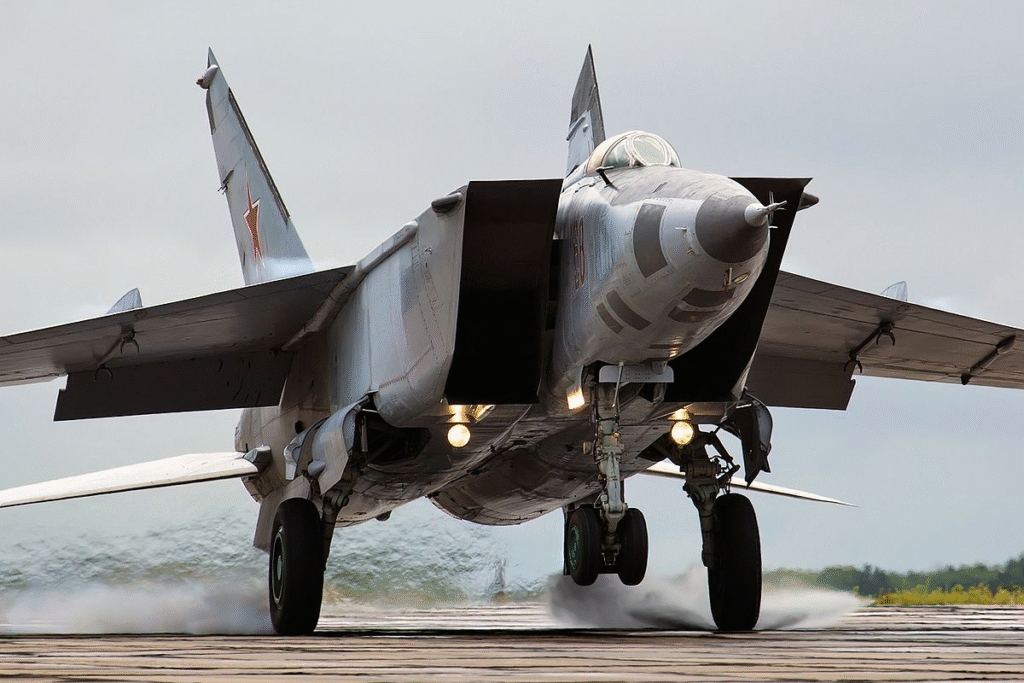
Few Cold War aircraft ever generated as much nervous excitement and conjecture as did the Mikoyan-Gurevich MiG-25, better known in NATO circles by the code designation “Foxbat.” When the first photos of the jet began leaking out of the Soviet Union, the Western watchers were left mystified. The huge airframe, open engine intakes, and stretched, purposeful wings gave the impression of a machine designed to dominate the skies at scorching speed.


To the Americans, it seemed a weapon years in advance of anything the United States could manufacture, and its presence acted to accelerate the F-15 Eagle’s production at lightning speed. But under that imposing shape was an aircraft with very narrow priorities, as well as limitations that quickly became impossible to ignore.

The MiG-25 was never meant to dominate dogfights or be a multi-tasking workhorse. Instead, it was created to respond to a very specific threat. In the late 1950s and early 1960s, American bomber projects had grown ambitious. Such planes as the B-58 Hustler and the XB-70 Valkyrie, with its shape that seemed from the future, could cruise supersonic all day long at the kind of altitudes the current Soviet interceptors weren’t even near.

Soviet planners were concerned with an armada of Mach 2 nuclear-powered bombers, and therefore asked for an aircraft that would thunder down the runway, dash to altitude, and swat aside the intruder before it reached its destination. Endurance, maneuverability, and multi-role capability were niceties sacrificed by the designers.


What emerged was a machine built around brute power rather than finesse. Rather than expensive alloys, the Foxbat’s fuselage was made primarily of nickel-steel, capable of withstanding Mach 2.8 temperatures but heavy and cumbersome in doing so. The two Tumansky R-15 turbojets that powered it were in themselves beasts, driving the airplane to sustained speeds of nearly Mach 2.8 and, in short but furious bursts, well above Mach 3.

The catch was that such intensities would so overheat the engines on a single flight. Its fuel consumption was equally merciless, leaving the MiG-25 with an extremely limited range that rendered it useful only for swift, decisive missions. The Foxbat could fly to record height—far in excess of 123,000 feet—and execute dazzling speed runs, but its airframe did not tolerate more than gentle G-forces. Employed in combat maneuvers, it was an unwieldy club, not a razor-sharp scalpel. Its huge radar system looked formidable, but was blind to low-flying aircraft, something as Western strike techniques started going downward rather than upward.

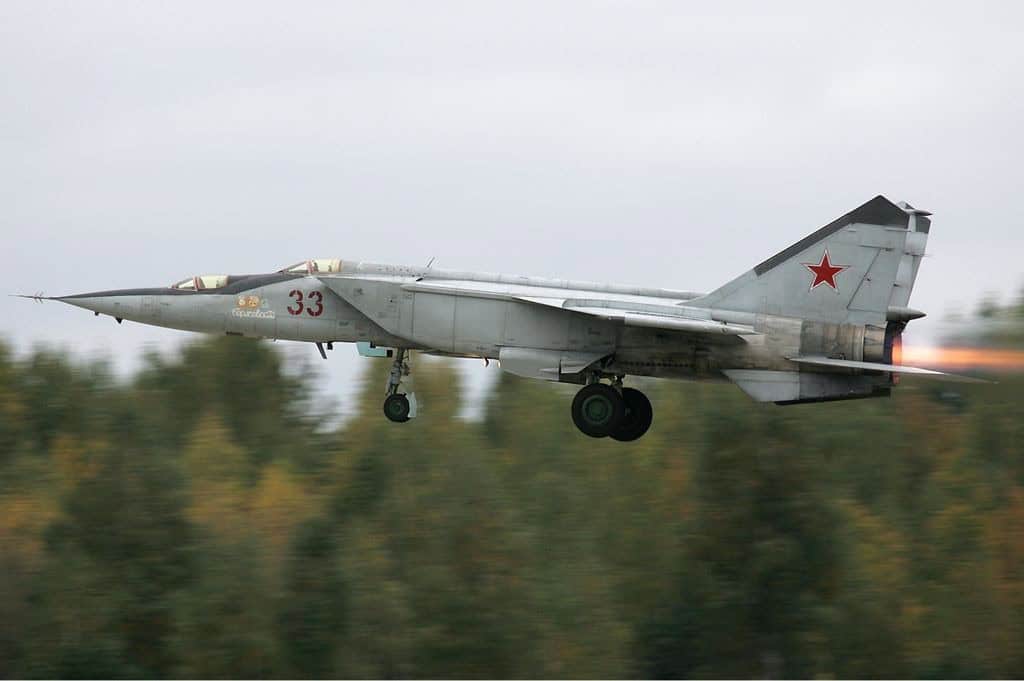
Upon arrival in combat zones, the aircraft’s record was spotty. Reconnaissance variants generally did well, using brute speed and altitude to outrun detection. In a few wars, such as the Iran-Iraq War and then the Gulf War, MiG-25s found some success, for example, downing an American. Navy F/A-18, but were also victims of more responsive and technologically superior American fighter jets such as the F-15. The aircraft’s aura of mystery was finally shattered in 1976, when Soviet pilot Viktor Belenko shocked the world by defecting to Japan on his MiG-25. Low on gas after a hair-raising escape, Belenko successfully landed and gave one of the Cold War’s most valuable intelligence dividends.


What Western observers had learned was appalling. The Foxbat was not the titanium-shelled marvel that had been feared, but one of steel, riveted body, and traditional vacuum-tube electronics. Its engines were not able to cruise at hypersonic speeds, safely reported in early reports. Even its missiles, once a potential worst-case fear of NATO bombers, were powerless against the SR-71 Blackbird, which could evade MiG-25s with ease by going faster and higher.
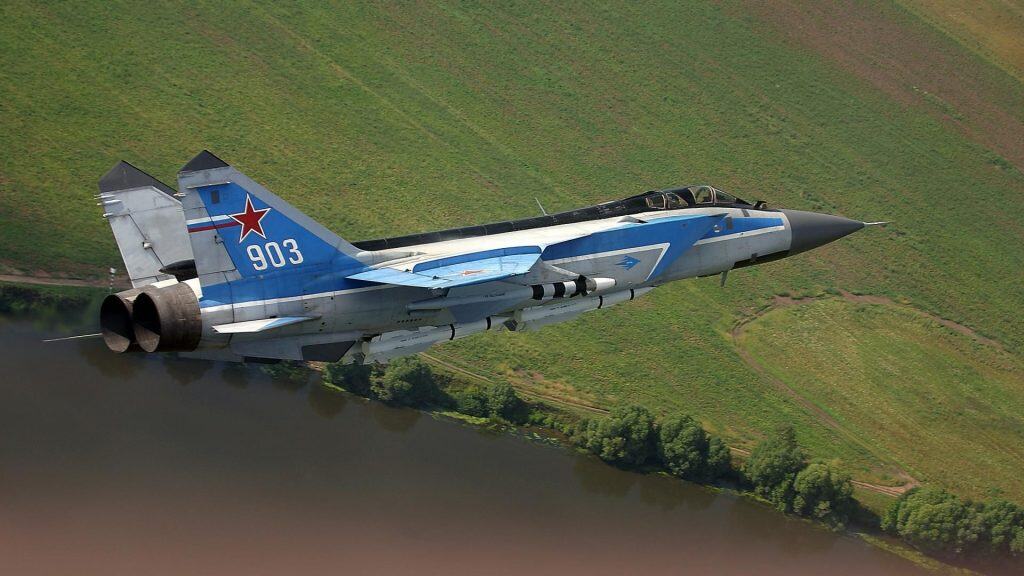
Belenko himself admitted that Soviet fighter pilots were told not to exceed Mach 2.5 on routine missions, as anything more than that would theoretically blow up the engines entirely. The legendary SR-71 appeared almost impenetrable in comparison, coasting out of range whenever Foxbats attempted to intercept it.


But for all its faults, the MiG-25 left its mark on the annals of aviation. It pushed the West to think about the specter of a Soviet super-fighter and reshaped American fighter development in doing so. More importantly, it was a test bed whose lessons were taken directly into its replacement, the MiG-31 Foxhound, a vehicle that inherited the raw speed of the Foxbat but added to it modern avionics, upgraded weapons, and the adaptability its progenitor didn’t have.


In the end, the MiG-25 was more specialist than all-purpose fighter, a creature of Cold War necessity and designed to respond to an enemy that never materialized on the scale that the Soviets thought it would. Its reputation may have been more impressive than the aircraft itself, but that reputation wielded its own powerful force on the skies of the Cold War.