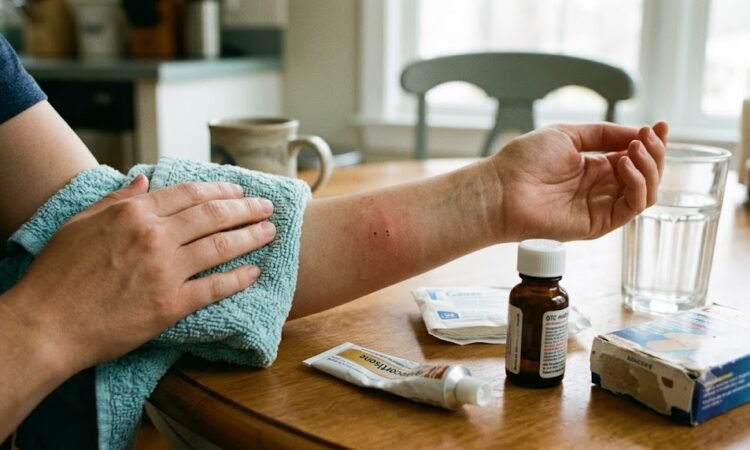
Spider bites can cause serious health concern, but the majority of spiders which we encountered in our daily life are harmless to humans. Out of over 3,500 spider species in North America, only a selected few species, such as the Black Widow and Brown Recluse, have possess fangs which are strong enough to puncture human skin and their venom can be potential enough to cause medical complications to we humans.
This article covers all the important information on spider bite identification, symptoms across dangerous and common spider species, step by step home remedies, and guidelines on when to seek emergency care after spider bite or reaction.
What Does a Spider Bite Look Like?
Most non-venomous spider bites are closely resemble other insect bites, appearing as small, red, itchy bumps on the skin. In contrast to insect stings, a classic spider bite often shows two distinct puncture marks in the center where the fangs have entered inside the skin.
Spider Bites vs Other Insect Bites Characteristics:
SPIDER BITE
• 2 central puncture marks
• May develop localized swelling or blister
• Pain can build hours after the initial bite
MOSQUITO BITE
• Single soft, puffy bump
• Immediate itching
BEE / WASP STING
• Central stinger dot or left-behind stinger
• Sharp, immediate burning pain
BED BUG BITE
• Small red dots in linear clusters (3 pack)
General Symptoms of Non-Venomous Spider Bites
- Skin Area redness and minor swelling.
- Mild itching or skin irritation.
- Minor pain or soreness lasting 24 to 48 hours.
High-Risk Spider Species & Severe Bite Symptoms
When venomous spiders bite, the reaction often extends beyond the regular skin irritation. Identifying specific symptoms helps to determine whether emergency medical treatment is required.
- Brown Recluse Spider (Loxosceles reclusa)
- Spider Appearance: Brown body (approx. 1/3 inch long) with a distinct dark, violin-shaped marking on its head/back.
Brown Recluse Spider Bite Progression:
- Spider Habitat: Dark, undisturbed areas like attics, basements, sheds, and closets.
- 0 to 2 HOURS
• Often painless or feels like a mild pinprick.
- 2 to 8 HOURS
• Itching, redness, and growing tenderness.
• Formation of a target-ring like round pattern.
24 to 72 HOURS
• Blister formation, central tissue turns dark/purple.
• Risk of necrosis (localized tissue death).
Symptoms: Fever, chills, body aches, nausea, and in rare severe cases, renal or systemic complications are observed.
- Black Widow Spider (Latrodectus)
- Spider Appearance: Shiny black body (Size approx. 0.5 inches long) with an hourglass-shaped red mark on the underside of the abdomen.
- Habitat: Woodpiles, leaf debris, beneath patio furniture, and inside outdoor sheds.
- Bite Symptoms: The bite itself may feel like a small prick, but the neurotoxic venom rapidly affects the body and brain central nervous system.
- Severe Muscle Cramping: Intense cramps starting near the bite area and spreading to the abdomen, chest, or back.
- Systemic Stress: Rapid increase in blood pressure, heavy sweating, high salivation, nausea, and anxiety.
- Hobo Spider (Eratigena agrestis)
- Spider Appearance: Brown, long-legged spider (Size of 0.5 to 0.75 inches long) commonly found in the Pacific Northwest Region.
- Bite Symptoms: Causes pain and numbness within 15 minutes. Within 8 hours, the area hardens and swells, and potentially forming a fluid-filled blister that ruptures and turns dark after 24 to 48 hours.
- Wolf Spider & Jumping Spider
- Wolf Spider Appearance: Large, hairy ground-hunters. A Single bite can break the skin upper layer, causing sharp pain, redness, and swelling, but it lacks of harmful neurotoxic or necrotic venom.
- Jumping Spider Appearance: Small, stout, hairy spiders that move in sudden jumps. Bites feel similar to a minor bee sting and the pain vanishes within a few days.
Identification & Symptom Comparison Matrix
- Spider Species: Brown Recluse, Venom Type: Cytotoxic (Necrotic), Primary Reaction: Bull’s-eye pattern, blistering, central tissue breakdown, Key Symptoms: Fever, chills, body aches, Medical Emergency?: Yes, (Prompt medical care is essential)
- Spider Species: Black Widow, Venom Type: Neurotoxic, Primary Reaction: 2 puncture marks, Skin redness, Key Symptoms: Muscle spasms, sweating, high BP, nausea, Medical Emergency?: Yes (Immediate medical help is needed)
- Spider Species: Hobo Spider, Venom Type: Cytotoxic, Primary Reaction: Swelling, fluid discharge, slow-healing ulcer, Key Symptoms: Headache, weakness, joint pain, Medical Emergency?: Yes
- Spider Species: Wolf Spider, Venom Type: Non-dangerous, Primary Reaction: Puncture tear, localized pain & swelling, Key Symptoms: None, Medical Emergency?: No (Home care)
- Spider Species: Jumping Spider, Venom Type: Non-dangerous, Primary Reaction: Minor red welt, short-term sting, Key Symptoms: None, Medical Emergency?: No (Home care is needed)
How to Treat a Non-Venomous Spider Bite at Home:
For minor spider bites that do not exhibit systemic or necrotic signs, follow this treatment protocol:
- Wash the Area: Clean the bite site thoroughly with mild soap and warm water to prevent bacterial infection.
- Apply Cold Therapy: Apply a cold compress or ice pack (Ice wrapped in a clean cloth) to the area for 10 minutes on and 10 minutes off to reduce swelling.
- Keep the Bite Area Elevated: If the bite is on an arm or leg, keep it elevated at upper side and above heart level to reduce fluid accumulation.
- Manage Itching & Pain: Use over the counter antihistamines such as diphenhydramine or cetirizine for itching, and ibuprofen or acetaminophen for minor pain.
- Apply Antibiotic Ointment: Protect any broken skin or minor blisters with a thin layer of topical antibiotic ointment.
When to Seek Emergency Medical Care
Seek immediate emergency medical care or call emergency services if any of the following symptoms found:
- Suspected Venomous Bite: You suspect a Black Widow, Brown Recluse, or Hobo Spider bite.
- Severe Muscle Cramps: Spasms or rigidity in the abdomen, back, or chest.
- Spreading Redness or Blackening Skin: The red area expands rapidly, or the center of the wound darkens, turns purple, or becomes an open ulcer.
- Symptoms / Signs: Difficulty in breathing, dizziness, rapid heart rate, severe nausea, vomiting, or high fever.
- Allergic Reaction / Anaphylaxis: Facial swelling, hives, throat tightness, or difficulty swallowing.
Prevention is care: How to Avoid Spider Bites
- Wear Protective Gears: Wear protective work gloves and coverall when moving boxes, woodpiles, or stored items in basements and attics.
- Keep Storage Area Clear: Don’t keep items piled or stacked up un-necessary in storage area or in room or courtyard, as such places can be hiding sports for spider like insects.
- Shake Out Clothing & Footwear before Wearing: Shake Carefully and Inspect shoes, boots, and clothing that have been sitting in closets or garages for long time before putting them on.
- Seal Insect Entry Points: Install tight-fitting, mesh etc. on windows and doors gaps, and seal cracks around floor to prevent spiders from entering in living spaces.
Insects bite can be general as well as critical, with the help of above article now you understand that how taking proper care helps to safeguarding yourself from insect bites is very important.

She is an Editor of segment Behavioural Wellness & Motivation
She is done her M.A. in Health Psychology, University of North Carolina | Certified Health Coach (NBHWC)
Rachel joined Gymbag in 2018 with a mission to help readers stay consistent, not just inspired. With more than a decade of experience in behavioral change, she specializes in building motivation, managing wellness setbacks, and turning small wins into lasting habits.