Cortisol is a very important steroid hormone produced by the adrenal glands, which is responsible for better regulating metabolism, reducing inflammation, and helping the body to respond with stress without affecting your health. However, when the essential cortisol levels stay high due to chronic physical or mental stress, then it not only disrupted the sleep cycles, but also triggers energy crashes, and affects long-term cardiovascular and immune health. In this article we are discuss about the Ways to Lower Cortisol Levels naturally and restore your mental and physical health.
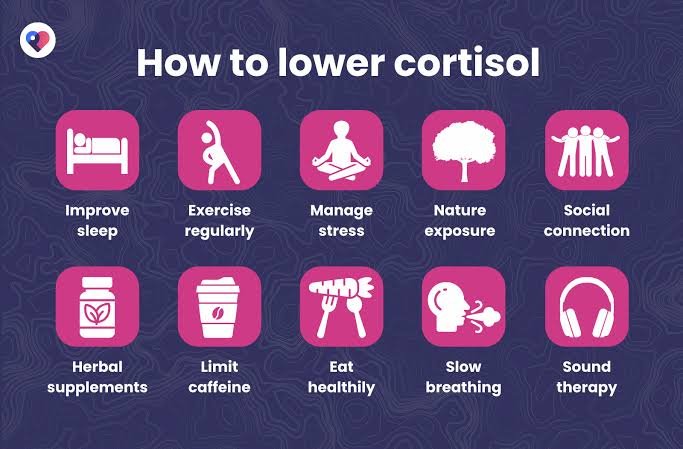
Here is a detailed breakdown of 10 evidence based strategies to keep your body cortisol level as healthy and balanced.
- Improve Sleep Quality:
Cortisol follows a strict circadian rhythm, it peaks roughly 30 to 45 minutes after your waking up, which is called as the Cortisol Awakening Response, to give you energy, and gradually recover its lowest point which comes around midnight.
- Maintain Sleep Schedule Consistency: Going to bed and waking up at the exact same time stabilizes your natural body clock.
- Optimize Sunlight Light Exposure: Exposure to natural sunlight early in the morning sets your natural circadian cycle, while limiting high-intensity blue light for 60 to 90 minutes before bed prevents melatonin suppression.
- Exercise Regularly:
Physical activity works as an acute stressor, that trains your nervous system to handle the stress with more efficiently.
- Balance Intensity: Moderate intensity aerobic exercise, strength training, walking, and yoga can help to lower long-term essential levels of cortisol inside your body.
- Avoid Over Exercise: Excessive, prolonged high-intensity training (HIIT) without adequate rest may triggers more cortisol level rise. Do Mix intense sessions with proper rest and recovery period can help to balance body cortisol levels.
- Manage Psychological Stress:
When your brain finds a threat, the hypothalamic-pituitary-adrenal (HPA) axis triggers cortisol release inside your body as a safety trigger.
- Mindfulness & Meditation: Regular daily meditation can reduces the HPA-axis hyper-reactivity, and maintains the basic required body cortisol levels over the time.
- Cognitive Reframing: Identifying chronic worries and breaking down stressors into actionable steps can reduce the subconscious fight or flight response of our body.
- Healthy Nature Exposure:
Spending more time outdoors, which is often referred to as ecotherapy or forest bathing, may directly alters physiological stress symptoms to healthier ones.
- Lower Parasympathetic Tone: Many recent medical Studies shows that spending 20 to 30 minutes in a park, forest, or green space may significantly drops salivary cortisol levels.
- Visual & Auditory Reset: Natural sunlight, greenery, and ambient outdoors sound may reduce the central nervous system fatigue compared to urban area environments.
- Cultivate Social Connections:
Strong social bonds works as a physiological buffer against the chronic stress.
- Oxytocin Release: Positive interactions with family, friends, or pets release more oxytocin, which naturally counters the critical effects of cortisol.
- Emotional Support: Sharing worries with your friends and family may reduce the feeling of isolation, keeping adrenal activation lower during tough situations.
- Consider Adaptogenic Herbal Supplements:
Few adaptogens and supplements may assist the body in resisting physical and chemical stress harmones, you should always check with a physician before starting any new supplements, so you can get a right advice on supplements which are needed for your health.
- Ashwagandha (Withania somnifera): Recent Clinical research indicates that Ashwagandha helps to lower serum cortisol and helps improves the body’s stress response.
- Rhodiola Rosea & Holy Basil (Tulsi): Known to support better adrenal function, enhances body energy production, and regulate stress-based fatigue.
- Limit Caffeine Intake:
Caffeine stimulates the central nervous system and triggers the adrenal glands to release adrenaline and cortisol.
- Delay Morning Intake: Drinking caffeine immediately upon waking up, when natural cortisol is already at its high levels, can cause unnecessary nervousness and energy crashes. Wait for 60 to 90 minutes post-waking for having your first cup of tea or coffee.
- Set a Cut-Off Time: Avoid drinking caffeinated drinks such as Tea or Coffee past 2:00 PM to ensure that it doesn’t disturb the night-time cortisol clearing and deep sleep cycles.
- Eat a Balanced, Nutrient-Dense Diet:
Fluctuating blood sugar levels shows that your body is under metabolic stress, by prompting the release of cortisol to mobilize glucose.
- Stabilize Blood Sugar: Combine complex carbohydrates, low fat proteins, healthy fats, and dietary fiber in your every daily meal to keep your body’s blood glucose at stable levels.
- Anti-Inflammatory Foods: Foods rich in omega-3 fatty acids such as flaxseeds, walnuts, fatty fish and polyphenols such as dark berries, dark chocolate, green tea may help to lower the oxidative stress and systemic inflammation.
- Practice Slow Deep Breathing:
Controlled respiration activates through the vagus nerve, helps in switching your nervous system from the sympathetic / fight or flight situation to the parasympathetic / rest and digest level.
- Physiological Sigh: Take two quick inhales through the nose, followed by one long, slow exhale by the mouth.
- Box Breathing: Inhale for 4 seconds, hold for 4, exhale for another 4 seconds, and hold empty for another 4 seconds. Just 3 to 5 minutes of this breathing repetitions can promote lowers heart rate and controlled cortisol release.
- Use Sound Therapy:
Auditory stimuli influence the brainwave frequencies and promote autonomic nervous system activity.
- Low-Frequency & Binaural Beats: Listening to calming acoustic music, ambient nature sounds, or binaural beats, specifically in the Alpha and Theta ranges helps to lower the heart rate variability stress indicators.
- Lowering Sympathetic Arousal: Sound therapy helps to quiet mental noise, and makes it easier to drift into deep sleep or achieve a deep state of relaxation.
We hope the above information will help you to become ready to control your body cortisol levels with easiest and healthiest way’s.

Editor
Professional Naturopathy, Holistic Wellness & Preventive Health Specialist
Doctor of Naturopathic Medicine, Bastyr University | Certified in Lifestyle Medicine (ACLM)
Dr. Blake takes a whole-body approach to health, blending medical knowledge with daily wellness practices. She’s worked in integrative clinics and now advises digital health platforms on sustainable self-care routines. on Gymbag4u.com, since 2019, she provides guidance on sleep, energy management, immune health, and how to balance wellness with real-world demands.