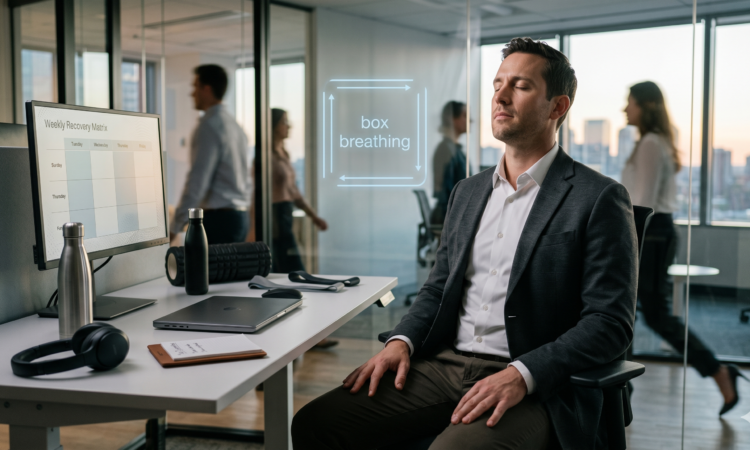
In todays professional area of work stress and high performance always create a hustling workday and are considered important to achieve a success. However, the most effective industry leaders have found shift in their routine with adding a dedicated time for taking care of their physical and mental health recovery. A reward for hard work, should be associated for self care is important as it helps to improve productivity under modern hybrid work environment.
If you are a busy professional juggling back-to-back business meetings, project deadlines, and the complexities of modern life, your physical and mental state is not enough to handle all this stress and physical work. Operating at 100% capacity without following a structured recovery plan may leads to a steady, invisible, and reduced mental focus, low decision-making quality, and long-term health.
This article will guide the readers to explores the most important science supported recovery routines for busy professionals, which is designed to seamlessly integrate in even the most hectic schedules, and will help you to regain the top and maintain sustainable high performance.
The Recovery Gap – Identifying Why Your Current Strategy is Failing:
When you push your body and mind without sufficient rest and recovery, then you are operating with a significantly reduced ability to handle the critical situations and routine work load. Recovery is not just taking rest or sleep, it is a complex natural process that will allow your body’s central nervous system to reset, your muscle tissues to repair, and your mental focus to return to normality.
For the modern working professional, the greatest risk is not just their physical stress, but it is also a chronic physiological stress. By failing to recover your exhaustion, you may remain in a state of stress and tiredness both physical and mental with reduced ability to think creatively, solve complex problems, and regulate emotions along with handling physical stretch. Adding a rest and better recovery routine in your daily schedule can be the smartest investment not only for your professional success but also for your physical and mental fitness.
- Micro-Recovery Breaks – The High-Impact In-the-Moment Reset:
You do not need to follow an intense two-hour of gym session every day to achieve a recover state of your body. In fact, for most of the busy professionals, a micro-recovery breaks can be less time consuming and more effective. These small, intentional tactical choices prevents the buildup of psychological and physical tension before before it impact’s on your health.
- The 30-Minute Posture Shift: Long hours of sitting, which is also called as sedentary lifestyle, may create significant damages to your body posture, tightness in the hip flexors, shoulders, and lower back. For Every 60 minutes, stand up for two minutes and do stretch or perform simple shoulder rolls or thoracic extensions to regain the balanced posture and required muscle relaxation after a long hours of desk work.
- Tactical Box Breathing: Between high-stress meetings, Do a 60 seconds of box breathing, i.e. inhale for four seconds, hold for another four, exhale for four, and hold again for four seconds. This simple activity signals your nervous system to be refresh. Stressed muscles and posture can be corrected through the parasympathetic ie. rest and recovery, which helps in lowering cortisol levels instantly and relaxes your muscles.
- The 20/20/20 Visual Reset: Digital eye stress can also contributes majorly to a daily work exhaustion. For Every 20 minutes, look at a far object, which is at least 20 feet away for 20 seconds. This optical exercise will help to relaxes the ciliary muscles in your eyes, and reduces the fatigue which can possible further cause to an afternoon headaches and reduced concentration.
- Active Recovery – Movement as Medicine:
Recovery is not just of doing nothing and just following more hours of sleeping. In fact, a complete inactivity often leads to stagnation and increased muscle soreness. Active recovery is engaging in regular low-intensity body movement, which helps in increasing blood flow, by clearing metabolic waste from muscles, and stimulating the better mood by releasing and regulating endorphins.
The Power of the regular body Movement during sedentary lifestyle:
Walking is perhaps the most underrated, but most beneficial activity available for working professionals. It facilitates gaining a diverse thinking ability, which can help to solve and adopt a creative thinking and will further helps in solving routine complex work environmental issues.
- The Lunchtime Body Activity: Exchange a 20 minutes of social media scrolling for a 20 minutes of brisk walk. This small change can make you mentally refresh, and allows your subconsciousness to process work challenges with more efficiency and with fully re-charging your body energy.
- Walking Meetings: Whenever a meeting does not require laptop screen-sharing or sitting in a meeting room, then go with voice meetings via phone or headset while doing it by walking. By turning a sedentary lifestyle in a regular low-intensity body movement, will make you multitasking as well as it reduce’s the need of finding extra timing from your busy routine for gym or home body workout.
- The Evening mantra of Mastering the Work Loop Closure:
One of the most common complaints among the working professionals today, is, an anxiety which is creation of higher mentally pressure. A structured evening relax creates a psychological boundary between your professional work and your personal life, which is essential for a deep, energy restoring sleep.
- The Brain Thoughts Dump Method: At the end of your busy work day, spend at-least five minutes in writing down your top three priorities for tomorrow as well as issues you phased today. This habit will automatically reduces your mental pressure of remembering the tasks, prevents the missing things which may cause pressure later.
- The Tech-Free Buffer: Avoid scree time before at least 30 to 60 minutes before going to bed. As, the screen emits Blue light which suppresses the body melatonin, the hormone which helps in better sleep time. Replace your screen time with spending time with family, light workout, stretching, breathing exercise or reading books etc.
- Bedtime Mobility Flow: Do 5 to 10 minutes of gentle yoga or stretching before going to sleep helps in improving your body oxygen level and muscle relaxing. Focus specifically on the hip flexors, hamstrings, and neck stretching as these three areas may severely compromised by prolonged desk sitting job’s. This will help to release the physical manifestations of the day’s stress, facilitating faster and refreshing sleep.
Strategic Planning of Recovery routine for Busy Professionals – The Weekly Recovery Matrix:
To make these routines to convert in daily habit, you must treat your rest and recovery routine with discipline. If it isn’t scheduled, then it doesn’t exist.
- Day Type: Work Days, Primary Focus: Micro-Recovery, Routine Action: Hourly stretches + 10-minute after lunch walk.
- Day Type: Active Recovery Days, Primary Focus: Blood Flow, Routine Action: 30-minute light cycle, swim, or yoga workout
- Day Type: Full Rest Days, Primary Focus: Nervous System Reset, Routine Action: Focus on sleep quality and offline social talk & connection building
Following Consistency Over Intensity:
The mistake most professionals make is attempting to do everything at a time for their fitness approach, but fails to keep their routine stable. You don’t need a perfect long hours of workout session once a week, you need to weave small, consistent body mobility actions every day in continuity to achieve health.
- Habit Stacking: Integrate your recovery into your daily routine habits. For example, do a two minutes of stretching while your are taking your coffee in the morning and evening.
- Tech as a Trigger: Set reminders on your mobile for short healthy workout breaks. Do not view them as interruptions, but as necessary actions to maintenance your body health.
- Monitor Performance Metrics: Daily Monitor your body energy levels, mental focus, and other body readings throughout the week. You will quickly find that those who recover consistently stay the sharpest under pressure.
Frequently Asked Questions (FAQ):
Q: Does sleep count as recovery?
A: Sleep is the base of better body energy and muscle damage recovery. Without 7 to 8 hours of high-quality sleep, no workout of foam rolling or light walking can fully repair your nervous system. Treat sleep as hygiene, a dark, cool room and consistent wake times, as your most important recovery activity.
Q: I work 10+ hours a day. How can I possibly fit this in?
A: If you don’t have time for a formal routine workout, then focus on healthy habit. Walking while on phone calls or doing isometric stretches at your desk are effective ways to recover without adding extra time to your daily schedule.
Q: Can these routines help with chronic back pain?
A: Often, chronic back pain in professionals is caused by following bad posture and the lack of routine body movement. While these routines can provide better relief, always consult with a physician if your pain is persistent or worsening.
The Competitive Edge, how to adjust the routine time for health:
In todays competitive age, free time is a luxury, but to those who manages their available time to make more energy and endurance for their body efficiently can be the winner in wellness race. Sustainable performance is built on a foundation of intelligent recovery.
Start today by scheduling your first 5 minutes of micro-break. When you prioritize your physical and mental health, you are not just becoming a successful employee or business owner, but you are building a better future life for yourself and your family.
Disclaimer: This information is for educational purposes and does not constitute medical advice. Always consult with a qualified healthcare professional before beginning any new exercise, stretching, or wellness program, especially if you having any existing health concerns or chronic pain situations.
Senior Editor, Functional Fitness & Everyday Strength
Qualified B.S. in Exercise Physiology, University of Colorado Boulder | Certified Personal Trainer (ACE)
Jake has been a founding editor at Gymbag since 2018. With over 12 years of coaching experience and a degree in physiology, he specializes in fitness that fits into real life.