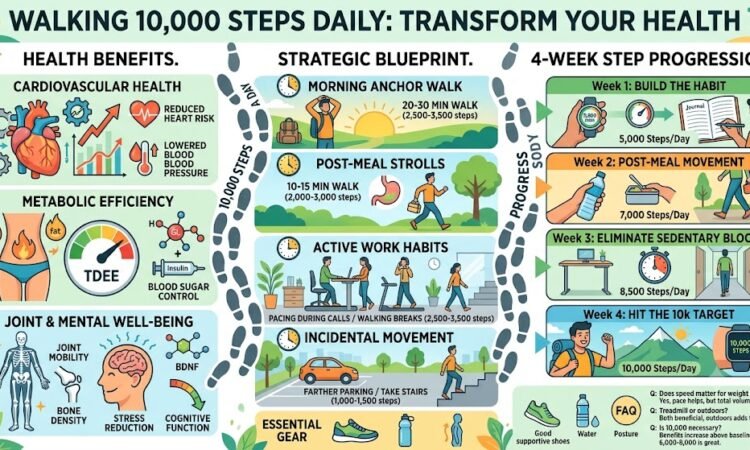
Walking 10,000 steps a day is equivalent to roughly 5 miles or 8 kilometers of walk, this is a new trend in health world which is helping out people with sedentary lifestyle and busy work schedule 10000 steps daily made the health efforts more accessible with better results in transforming their both physical and mental health. While the 10,000, step schedule trend is originally began as a Japanese marketing campaign for a pedometer in 1965, modern epidemiological research have proven that the extra daily step counts drastically reduces the risk of chronic disease, boost metabolic function, and extend lifespan.
Whether fitness your goal is of fat loss, cardiovascular health, or stress relief, increasing your daily body movement by self planned walking may provides a low-intensity base for long-term health without the need of any gym memberships or intense workout schedules.
Proven Health Benefits of Walking 10000 Steps Daily
- Cardiovascular Health & Longevity
Regular brisk walking enhances our heart function, lowers the resting heart rate, and improves the overall body fluid circulation.
- Reduced Mortality Risk: As per medical observational studies published in JAMA indicate that taking 8,000 to 10,000 steps per day results in around 40% to 50% reduction in risk of critical diseases if one is dealing with a sedentary lifestyle.
- Blood Pressure Regulation: Consistent aerobic walking stimulates the release of nitric oxide in our blood vessels, which helps in promoting vasodilation, lowering arterial stiffness, and helping to reduce systolic blood pressure.
- Lipid Profile Improvement: Daily continuous body movements boosts high production of lipoprotein (HDL or Good cholesterol) also it assists in clearing of triglycerides from the bloodstream.
- Metabolic Efficiency & Sustainable Weight Loss
While intense workouts burn calories quickly, physical activities spread throughout the day maximizes your Total Daily body Energy Expenditure (TDEE).
- Caloric Burn: Walking 10,000 steps results in burning an estimated 300 to 500 calories (depend on person’s body weight, walking speed, and area of walking i.e. climbing or walking on slope).
- Enhanced Insulin Sensitivity: Light physical activity after having meals on daily basis can helps to activate glucose transporter type 4 (GLUT4) proteins in our body skeletal muscle, which helps in pulling sugar out of the blood without any high insulin spikes. This prevents in post-meal energy loss and reduces body fat storage with betterment in digestion and effective waste removal process.
- Preservation of Healthy Muscle: Unlike aggressive calorie loss which comes with chronic high-intensity cardio, which can trigger muscle breakdown, as walking burns fat while keeping cortisol levels stable and preserving the healthy muscle mass.
- Joint Mobility, Bone Density & Mental Well-being
Joint Health: Cartilage lacks a direct blood supply, and to do its regular process, it is totally depend on joint movement to pump synovial fluid, which delivers oxygen and nutrients to knee and hip joints.
Bone Density Support: As a weight-bearing activity, walking stimulates osteoblasts such as bone-building cells, which helps in maintaining better bone mineral density and reduces age-related bone loss.
Stress & Mental Function: Walking lowers serum cortisol levels and stimulates the release of brain-based neurotrophic factor (BDNF), a protein essential for memory formation, neuroplasticity, and protection against cognitive decline.
Strategic way of Reaching to 10,000 Steps Daily
Attempting to do 10,000 steps in a single 90 minute session can feel difficult at start. But, The secret to hitting your daily target lies in strict habits, distributing movement into predictable daily routines.
- Strategy: Morning Walk, Implementation Method: Take a 20 to 30 minute brisk walk immediately after waking up to jumpstart your body rhythm, Approx. Step Count: 2,500 to 3,500.
- Strategy: Post-Meal walks, Implementation Method: Walk for 10 to 15 minutes right after lunch and dinner to aid digestion and regulate glucose levels, Approx. Step Count: 2,000 to 3,000.
- Strategy: Active Work Habits, Implementation Method: Use a walking pad at a standing desk, pace during voice-only calls, or do 5 minute body movement practice every hour, Approx. Step Count: 2,500 to 3,500.
- Strategy: Incidental Movement, Implementation Method: Park further away, take stairs instead of elevators, and walk during errands or breaks, Approx. Step Count: 1,000 to 1,500
4-Week Step Progression Plan for Beginners
If your current activity averages around 3,000 to 4,000 steps per day, then jumping immediately to next level immediately for 10,000, may cause foot soreness or pain. Gradually increasing your steps using this 4 week of progression:
- Week 1: Build the Habit (5,000 Steps a Day), plan this as your baseline and improve gradually.
Track your normal baseline using a phone pedometer or smartwatch. Add one dedicated 15 minutes of walk daily to consistently hit 5,000 steps.
- Week 2: Introduce Post-Meal Walks (7,000 Steps a Day), Start doing everyday post-meal walking.
adopt a habit of mandatory 10 minute walk afer every lunch and dinner. Focus on maintaining a brisk walk and may need less body stress and low efforts.
- Week 3: Eliminate Sedentary Blocks (8,500 Steps a Day), Adopt a better work routines.
Pace during phone conversations and replace desk breaks with short 5 minutes of activity for every hour to reduce a sedentary sitting time.
- Week 4: Hit the 10k Target (10,000 Steps a Day), Reach on a intense daily walking volume once you acheive endurance step by step.
By combining your morning walk, post-meal walks, and incidental movement to effortlessly achieve and maintain 10,000 daily steps.
Essential Gear & Injury Prevention Tips for Safe Walking Sessions:
To sustain a high step count without fatigue or foot pain, implement these below fundamental practices which will ease your efforts.
- Footwear Matters: Invest in comfortable walking or running shoes with proper design support and a cushioned midsole to absorb ground impact. Replace shoes for every 300 to 500 miles of walk.
- Focus on Posture: Walk with your head in upstraight, shoulders to be relaxed and at perfect distance from your ears, core slightly engaged, and swing your arms naturally from the shoulders rather than excess bending at the elbows.
- Stay Hydrated: Drink plenty of water throughout the day, especially when walking in warmer weather, to avoid muscular cramping and fatigue.
We hope you like above information about the latest trend of walking 10000 steps per day, and will be useful upon making it as a healthy habit on daily basis in your routine.
Frequently Asked Questions related to fitness trend of walking 10,000 steps every day
Does walking with speed matter for weight loss?
Yes, a faster walk increases heart rate and oxygen consumption, results in burning more calories per minute. However, total number of overall steps taken may remains the primary driver of achieving daily caloric reduction.
Do steps on a treadmill count the same as outdoors?
Yes, treadmill steps provide equivalent cardiovascular and metabolic benefits. Walking outdoors adds variation in terrain, fresh air outside your home or gym and better body balance, but treadmills offer convenience of walking at home or gym during the outside bad weather.
Is 10,000 steps necessary, or can I do less?
Health benefits begin to increasing around 6,000 to 8,000 steps per day. While 10,000 steps is an excellent target for weight loss and improved fitness, achieving consistent body movement during your sedentary lifestyle is important for achieving better fitness.

Senior Editor, Functional Fitness & Everyday Strength
Qualified B.S. in Exercise Physiology, University of Colorado Boulder | Certified Personal Trainer (ACE)
Jake has been a founding editor at Gymbag since 2018. With over 12 years of coaching experience and a degree in physiology, he specializes in fitness that fits into real life.