Building a home gym is one of the best investment for your long term health, longevity, and convenience. Whether you have transformed a unused home garage space into a powerlifting gym or dedicated a corner of your living room to do yoga and dumbbells lifting, the quality of your workout space directly impacts on your motivation to keep continuing with your workout routine to achieve better health. However, there is one aspect of home gym ownership that it is often discussed, of about how to clean Gym Equipment at Home.
Upon Left uncared, the gym equipment can be damage by corrosion or infected due to its continuous contact with your body sweat, dust, bacteria, and corrosion. Neglecting your routine workout gears not only compromises their hygiene but also shortens the lifespan of those costly gym equipment such as barbells, treadmills, and weight benches. This article will help you to know how you can DIY properly clean, sanitize, and maintain your gym equipment at home and ensures it remains safe for your daily fitness journey.
Why Routine Gym Maintenance is Very Important:
Firstly it is very important to understand about, Why many people treat their home equipment such as unused furniture, which are being cleaned up occasionally? Similarly, gym equipment are also mostly neglected by its users most of the time due to lack of knowledge:
- Hygiene and Bacterial Growth: Even if you only use your gym alone, still your own sweat contains organic matter that can impact on equipment. Combined with dead skin cells and the humid environment being created during a workout session, can become an ideal breeding ground for harmful bacteria, mold, and viruses.
- The Silent Killer: Corrosion is the most damaging reason of the valuable gym equipment, gym gear, such as bars and racks are made of steel and iron are vulnerable to corrosion due to long time contact with wet surfaces. Sweat is acidic and high in salt content, if it stayed left on surfaces of this metal equipment for a longer time then, that results in oxidizing the metal and causes a rusting which can further damage those equipment’s quality.
- Mechanical Wear: Moving parts of gym equipment, such as cable machines, rowers, or treadmills, requires friction-free movement. Dust, chalk, and powders works like obstacle sandpaper, which may jams the bearings and pulleys of those equipment’s, and, can further cause expensive repairs or replacements of the parts.
- Safety Assurance: A loose bolt, a slippery handle, or a cracked mat can create inconvenience during your ongoing gym session, and even it may create a major safety hazard. Regular inspection and maintenance of those equipment’s can helps you to catch the issues before they lead to workout related accidental injuries.
The Essential Home Gym Cleaning Toolkit:
You don’t need a specific detergent and cleaning products to clean your gym equipment, as you can easily clean them with a clean cotton cloth and regularly greasing the moving parts with lubricating oil to keep the equipment in running. In fact, cleaning chemicals may reduce the protective coating of gym equipment’s which is made from rubber and synthetic leather and damages the look and feel of that equipment.
What your home gym equipment maintenance kit should include?:
- Microfiber Cloths: These are best and easiest tool to do dusting and wiping up the moisture from your gym equipment without scratching its surfaces.
- Mild Dish Soap (pH Neutral): Can be used for removing the stickiness from plastic, rubber and metal surface and parts of gym equipment’s. Just take care of cleaning the wet surface with clean dry cloth to prevent rusting.
- White Vinegar and Distilled Water: It is one of the best natural, non-toxic disinfectant for highly touched surfaces of gym equipment’s and also helps in better bacteria prevention.
- Nylon Brush with Soft-Bristles: It is important for cleaning the grooves i.e. knurling on bars and dumbbells.
- Silicone-Based Lubricant: A must for treadmill belts and cable machines, so their moving parts can be greased for their continuous movement and performance.
- 3-in-One Oil or Specialized Barbell Oil: To protect metal and keep rotating sleeves moving smoothly.
- Vacuum Cleaner with Brush Attachment: For keeping your floor mats free of containments.
Step-by-Step Cleaning Process of Gym Equipments
- Barbells, Dumbbells, and Weight Plates:
These are the metal equipment’s which are the most-used equipment during routine workout.
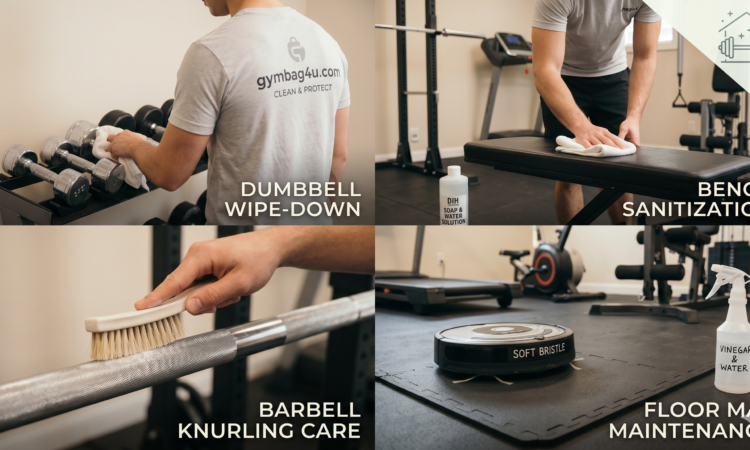
- Daily Wipe-down: After every session, spend at-least 30 seconds to carefully wipe a bar and handles with a dry microfiber cloth to remove the sweat.
- Deep Cleaning Knurling: Once is a week, mix a drop of dish soap with water. Use your nylon brush to scrub the knurling i.e. the grip area of gym equipment to remove dead skin and dust build-up, and, also make it dry immediately with a clean dry cloth.
- Rust Prevention: If you notice small spots of surface rust on a equipment steel bar, then put a few drop of 3 in One oil on a brush and scrub the spot gently, then wipe away excess oil with a clean cloth. The oil will help to make the surface clean and prevent from rusting further due to sweat.
- Benches and Upholstery
Vinyl, rubber or regzin made workout surface pads of gym equipment’s soaks up sweat, and starts to cracking and releasing odor.
- The Routine: Use a mixture of 1 part white vinegar to 3 parts water. Wipe the entire surface of the bench after every workout.
- Avoid Excessive Moisture: Never keep soaking your workout bench in sweat or water. If liquid seeps through the inside foam, then it not only damage it but also starts smelling permanently.
- Conditioning: For every few months, apply a vinyl protectant which are generally used for car interiors helps to keep the vinly material degreded and also prevents it from cracking.
- Rubber Mats and Flooring
Your floor is the base foundation of your home gym area. If the floor is dirty, then eventually the equipment which is putted on it also become dirty.
- Regular Sweeping/ Vacuuming: Use a soft broom or vacuum cleaner to clean your gym area & gym floor weekly basis. As, dust and other gym weight lifting chalk powder may cause friction and wearing down your shoes and equipment’s, hence routine cleaning of gym area is very important.
- Mopping: Once every two weeks, mop your Gym area with a mild dish soap and warm water. Avoid heavy chemical based bleaching solutions, as these can make the gym area rubber matting to damage over the time.
- Cardio Equipment (Treadmills, Rowers, Bikes):
These are the most complex gym equipment’s as they includes electronic and moving parts.
- Console Care: Never spray liquid directly on an electronic console or digital or button screen of your electronic gym equipment such as trade mills. Spray specialized cleaning solution on a microfiber dry cloth first, and then just wipe the surface carefully with the help of this cloth. This will help to prevents the moisture from leaking into the electronics of the equipment.
- The Belt/Chain: For treadmills, ensure that the area under the belt is free from dust builtup. For rowers, periodically wipe the monorail i.e. the track on which the seat slides on, to ensure a smooth glide. Use a silicone-based lubricant only if the manufacturer recommends for it to lubricate your cardio equipment.
Adopt a routine Gym Equipment Maintenance Schedule:
The secret to keep a clean your gym and gym gears is the consistency in hygiene routine. By breaking maintenance into manageable time gaps, so, it will help to reduce a higher time required to deep gym area clean work.
- Frequency: Every Workout, Maintenance Action: Wipe down equipment touchpoints (such as handles, bench, seat etc. with a dry cloth.
- Frequency: Weekly, Maintenance Action: Deep clean knurling, sanitize mats, vacuum the floor area.
- Frequency: Monthly, Maintenance Action: Inspect all nuts/bolts for tightness, lubricate moving parts such as cables, sleeves.
- Frequency: Quarterly, Maintenance Action: Full inspection of cardio machines, deep condition vinyl pads.
Advanced Maintenance Tips for Longevity:
- Humidity Control: If your home gym is in a basement or garage, consider using a dehumidifier. High humidity is the primary cause of rust in home gym equipment’s. Keeping the room below 50% of relative humidity which will may increase the life of your metal gear.
- The No-Shoe Rule: If you want to keep your mats and equipment pads clean, use a separate pair of gym shoes for gym area, to keep it free from outside shoes dirt. This will helps to prevents dirt, gravel, and outside pollutants from being gathered on your workout area surface.
- Chalk Management: While weightlifting and gym chalk is great for grip, but it is also terrible for gym equipment. It is highly hygroscopic, which means it absorbs moisture from the air, which it then holds on your gym metal bar’s, by creating an accelerated rusty environment. Brush off excess chalk after doing every single set of workout.
Final Thoughts: Protecting Your Investment:
Your home gym is more than just a room with weights, it is a space dedicated to your health and personal growth. By implementing these above mentioned gym equipment maintenance habits, you will not only ensures a better hygienic workout environment but also protects the possible financial cost of new or damaged gym equipment.
Consistency is essential for your gym home equipment cleaning and maintenance, just like your routine heath training regular, maintenance of home gym equipment’s are easier when it is done on regular basis. Spend at-least five to ten minutes every day after your workout to clean your workout area and equipment’s for a better hygiene of your next gym session.

Senior Editor, Strength & Conditioning
B.Sc. in Kinesiology, Punjab University | Certified Strength and Conditioning Specialist (NSCA)
Karan Gupta has been a core part of Gymbag4u.com Team since its foundation in 2018. With a background in Fitness, bodybuilding exercise science and a decade of coaching experience, he specializes in functional fitness, injury prevention, and Fitness Routine Guide.