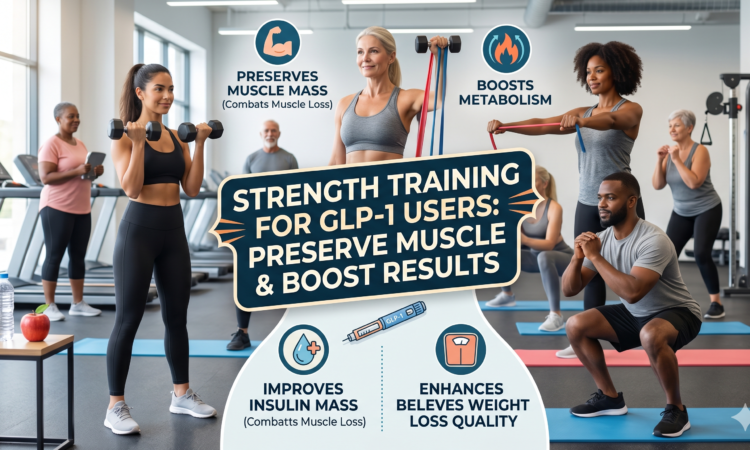
The rise of GLP-1 or Glucagon-like peptide-1 such as Ozempic, Wegovy, Mounjaro, and Zepbound has revolutionized the approach to medical based weight loss process. While these medications are incredibly effective at reducing appetite and losing extra weight, they come with a major health Impact, the potential for rapid muscle loss. In this article we will explore Strength Training for GLP-1 Users and its benefits.
If you are using a GLP-1 medication, strength training is no longer just an option, it is a clinical necessity. Without it, up to 40% of the weight you lose could come from lean muscle tissue rather than fat. This artile will explores why resistance training is your best tool for long-term success and how to build a routine that works with your body’s changing chemistry.
Why Essential Strength Training is very important on GLP-1 Users:
When your body is in a state of high caloric deficit, which GLP-1s facilitate by slowing gastric emptying, it looks for energy wherever it can find it. If you are not using your muscles through resistance, your body may burn your muscle protein for crating required energy.
- Preventing Skinny Fat Syndrome:
Rapid weight loss without exercise often results in a skinny fat body, where you weigh less but your body fat percentage remains high because you have lost muscle mass. Strength training ensures that the weight reduces from your body is primarily adipose tissue (fat), and preserves your healthy physical shape.
- Protecting Your Basal Metabolic Rate (BMR):
Muscle is metabolically active tissue. The more muscle you have, the more calories you burn during resting. Losing muscle slows your metabolism, hence, many people experience weight gain as soon they stop medication. By lifting weights, you keep your metabolic process in running.
- Bone Density Preservation:
Recent 2024 and 2025 medical studies have shown that GLP-1 users who do not exercise may see a decrease in bone density. Weight-based exercises such as squats and lunges, helps to put the required stress on your bones, and keep them strong.
Designing Your GLP-1 Strength Routine:
You don’t need to spend hours in the gym to see results. The goal is of consistency and progressive actions.
The Big Four Routine for Beginners:
Focus on Mix body movements that engages multiple muscle groups at once. Aim for 2 to 3 sessions per week, 20 to 30 minutes each.
- Exercise: Goblet Squats, Target Area: Legs & Glutes, Benefit: Builds lower body strength and bone density.
- Exercise: Push-Ups (or Kneeling), Target Area: Chest & Shoulders, Benefit: Essential for upper body functional strength.
- Exercise: Dumbbell Rows, Target Area: Back & Posture, Benefit: Counteracts the slouch often caused by fatigue.
- Exercise: Planks, Target Area: Core, Benefit: Protects the spine and improves balance.
Because GLP-1s can sometimes cause fatigue, consider the movement such as short 5 to 10 minutes of intense resistance workout such as wall sits or bodyweight squats, throughout the day to keep your muscles engaged without draining your body energy.
Managing Side Effects While Training:
GLP-1 medications can present unique challenges to a workout routine. Here is how to navigate them:
- Nausea & Timing: Don’t train immediately after a large meal. Since digestion is slowed, wait at least 2 to 3 hours. If you feel nauseous during a set, focus on deep nasal breathing.
- Dehydration: These medications can decrease your thirst. Drink 17 to 20 ounces of water two hours before your workout and continue sipping throughout.
- The Lethargy Phase: During dose escalations, you may feel tired. Shift your focus to maintenance lifting rather than trying to hit new personal records.
The Nutrition-Strength Connection:
You cannot build or preserve muscle on a GLP-1 without adequate protein. The medication makes you feel full quickly, so you must prioritize nutrient rich over volume.
- The Protein Formula: Aim for a daily range by multiplying your goal body weight by 0.7 to 1.0. If your goal weight is 150 lbs, target 105grams to 150grams of protein per day.
- Priority Proteins: Greek yogurt, egg whites, chicken breast, and edamame.
- Strategic Fiber: Fiber is important for managing the constipation side effects of GLP-1s, but too much right before a workout can cause bloating. Save high-fiber lentils or beans for post-workout meals.
Long-Term Outlook: Life After Medication:
One of the most compelling reasons to start strength training now is The Exit Strategy. Research indicates that individuals who maintain a supervised exercise program while on GLP-1s are significantly more successful at keeping the weight off a year after stopping the drug. You are not just losing weight, you are building a new, sustainable metabolic capacity.
FAQ: Strength Training on GLP-1s:
Q: Can I just do cardio?
Ans: Cardio is great workout for heart health, but it does not preserve muscle mass as effectively as resistance training. A 2024 Danish study found that a combination of both is the best for GLP-1 success.
Q: Will lifting weights make me bulk up?
Ans: No, Especially while on a GLP-1, your body is in a caloric deficit. Lifting weights will simply help you to maintain the muscle which you already have, which leads to more fitness benefits.
Q: How do I know if I am losing muscle?
Ans: Use a smart scale that measures body composition or track your functional strength. If the scale is going down but you find it harder to lift the same weights, you may need to increase your protein intake and also the intensity of your resistance training.

Senior Editor, Functional Fitness & Everyday Strength
Qualified B.S. in Exercise Physiology, University of Colorado Boulder | Certified Personal Trainer (ACE)
Jake has been a founding editor at Gymbag since 2018. With over 12 years of coaching experience and a degree in physiology, he specializes in fitness that fits into real life.